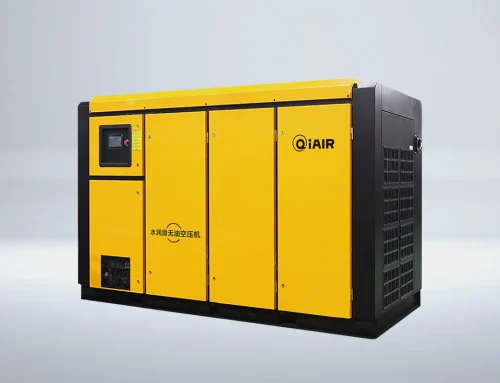
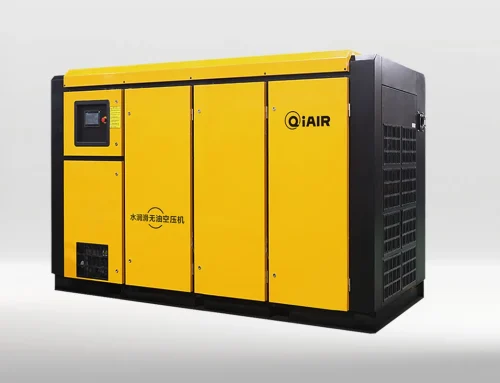
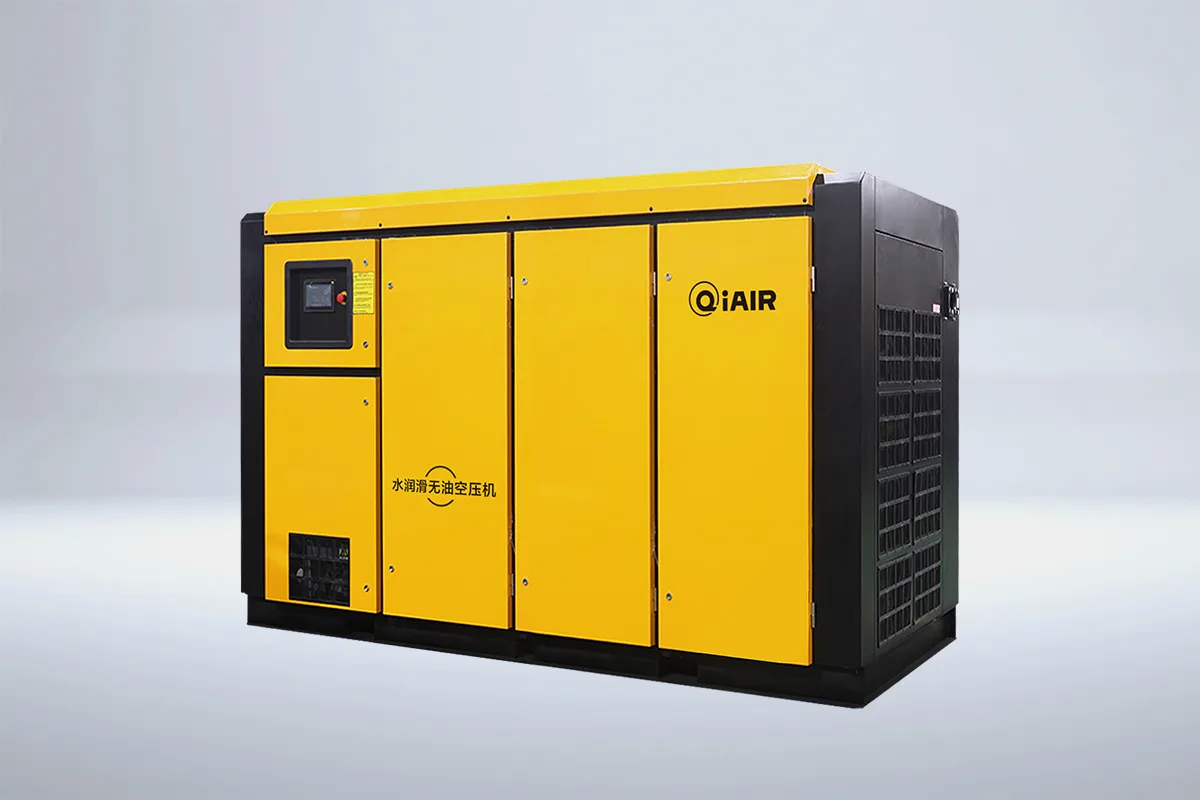
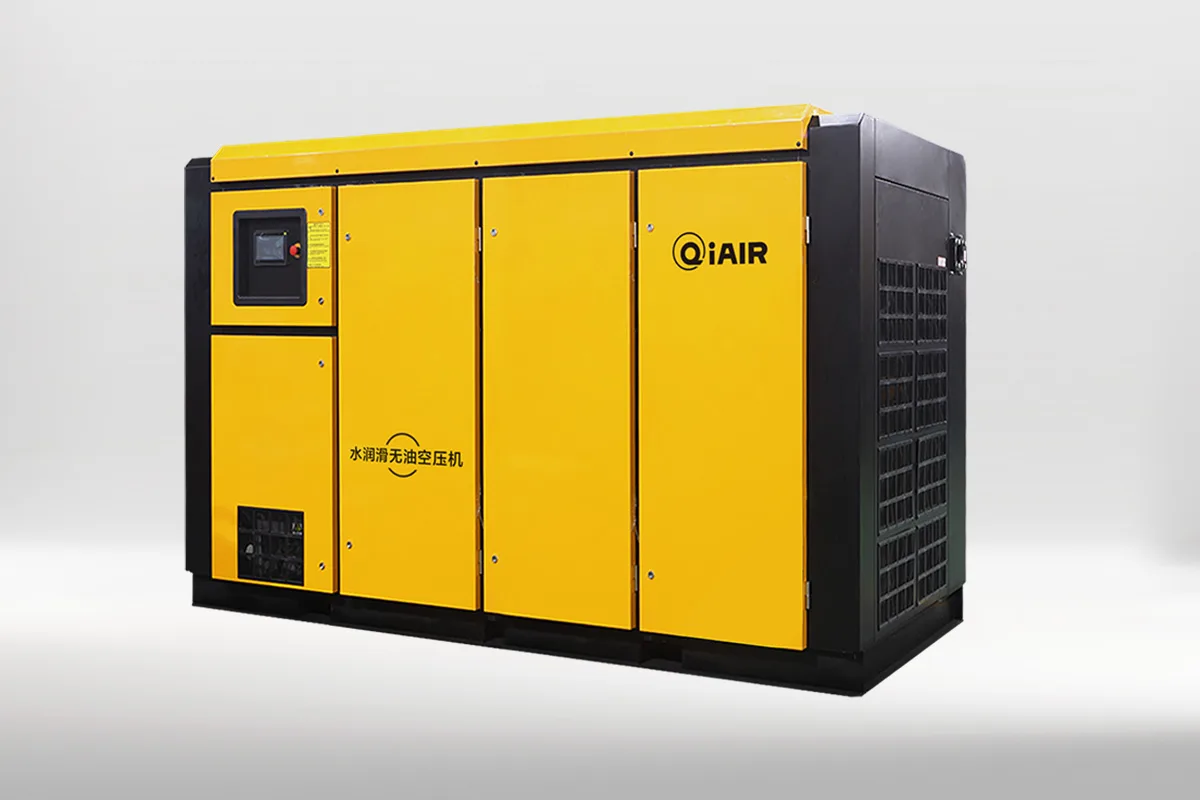
TL;DR — Direct answer: A solar panel manufacturing plant typically runs 7 to 8 bar, 8 to 16 m3/min, on 75 to 132 kW rotary screw compressors, with a 3°C pressure dew point dryer and 0.01 micron filtration protecting cell stringing, lamination and flash testing from moisture and oil. QiAir, a Chinese screw compressor manufacturer and supplier, sizes systems with clean, stable air so power output tests stay trustworthy.
A solar panel factory turns silicon cells into finished modules on fast automated lines where cells are strung, laminated, framed and tested before they ship. Glass is loaded, ribbons are soldered, encapsulant is laid, and every finished panel is flash-tested under a sun simulator. Compressed air touches each step, from the stringer that solders a cell to the laminator that seals the module. Lines run at dozens of panels per hour, so a short air interruption idles robots across the whole line.
The product must deliver its rated watts for twenty-five years on a rooftop, so a cell cracked by unsteady air or moisture sealed into a laminate becomes a warranty claim rather than a passing panel. Air quality at the stringing, lamination and test stations is therefore a production issue, and buyers who audit the factory will ask about it directly.
Cell Stringing, Soldering and Lay-Up
Solar cells are strung on automated lines that use air for handling, soldering and positioning. Cells are only 180 microns thick, and a handling gripper that closes too hard because its air supply surged can crack a cell. Regulate the stringing line to a steady 6 to 6.5 bar and check gripper force weekly.
Ribbon soldering is the most air-sensitive job on the stringing line. Soldering heads driven by air must hold their position to a fraction of a millimetre, and a pressure fluctuation during a solder pass leaves a joint that fails under thermal cycling. Keep the stringing branch filtered to 0.01 micron. A weak solder joint expands and contracts with daily temperature swings until it opens under load.
Lay-up stacks glass, encapsulant, cells and backsheet by hand and machine, and the air used there must be cleaner than anywhere else in the factory. Dust carried onto a cell shows up as a dark spot in the finished panel, so filter the lay-up branch to 0.01 micron and dry it to a 3°C pressure dew point.
- Regulate the stringing line to 6 to 6.5 bar
- Filter stringing air to 0.01 micron
- Filter lay-up air to 0.01 micron with a 3°C dew point
Lamination, Framing and Junction Box Fitting
Lamination seals the module under heat and vacuum, and its air needs are exacting. Laminator platens, vacuum valves and handling fixtures all run on compressed air, and a valve that sticks because its air carried moisture can leave a bubble in the encapsulant. Bubbles trapped under the glass scatter light and cut the panel's output for its whole service life. Keep the lamination branch dried to a 3°C pressure dew point.
Framing fits aluminium frames around the laminated module, and its pneumatic needs are heavy. Corner keys are pressed, sealant is dispensed and frames are crimped with air tools, and a frame crimped at low pressure can let water into the module. Regulate the framing line to a steady 7 bar and check crimp force daily.
Junction box fitting is the most delicate job after lamination. Boxes are glued and wired to the backsheet, and a glue bead dispensed by air must be even, because a gap lets moisture reach the cell connections. Use clean, dry air at a regulated 6 bar and filter the junction box branch to 0.01 micron.
- Dry lamination air to a 3°C pressure dew point
- Regulate the framing line to a steady 7 bar
- Filter junction box air to 0.01 micron at 6 bar
Flash Testing, Electroluminescence and Final Inspection
Flash testing is the gate every solar panel must pass before shipping. The panel is flashed under a sun simulator while its power output is measured, and the air used to drive the test rigs must be stable, because a pressure dip can look like a panel fault. Keep the test branch filtered and regulated.
Electroluminescence testing images each panel for micro-cracks, and the fixtures that hold the panel must be stable as well as clean. A fixture that shifts because its air supply faltered can make a sound panel look cracked, and a panel scrapped by a test error costs the factory its margin. Regulate the test bay to a steady 7 bar.
Final inspection and packing use air handling equipment to move glass-fronted panels that weigh twenty kilograms or more. A slow handling station stretches the line takt time, and a scratched glass surface discovered at inspection means rework. Keep the inspection branch filtered and regulated, and drain receivers and filter bowls every shift.
- Test with stable, regulated air from a dedicated branch
- Regulate the electroluminescence test bay to a steady 7 bar
- Drain receivers and filter bowls every shift
Buying from China: Sizing Sheet for Solar Panel Plants
Before requesting a quotation, gather four numbers: the cell stringing peak flow, the lamination and framing air demand, the flash-test bay air quality specification, and the distance from the compressor room to the furthest production line. A supplier that quotes from the panel output alone will miss the clean-air specification that actually decides the system.
For most solar panel plants the practical range is a 75 to 110 kW variable-speed drive screw compressor at 7.5 or 8 bar, with a refrigerated dryer, 0.01 micron filtration, carbon adsorption and a 5,000 litre receiver. Larger plants with several production lines usually run a duty-plus-standby pair so maintenance never stops a flash test.
When comparing Chinese suppliers, ask for the full package price including dryer, filters, receiver and commissioning spares, and confirm the export packing, voltage and documentation for your country. Check the filter element life, the service interval and the availability of filters and airends through the supplier's export channel. QiAir, a Chinese screw compressor manufacturer and supplier, quotes the complete package so buyers compare real installed cost.
- Collect stringing, lamination and test loads before quoting
- Budget 75 to 110 kW VSD plus dryer and carbon filtration
- Confirm spares, voltage and export packing in writing
Frequently asked questions
What pressure does a solar panel plant normally run?
Most run 7 to 8 bar at the header, with stringing at 6 to 6.5 bar, framing at 7 bar, and test rigs held at a steady 6 to 7 bar.
Why does cell stringing need such low pressure?
Solar cells are only 180 microns thick, and a gripper that closes too hard because its air surged can crack a cell. Regulating to 6 to 6.5 bar protects the cells.
Should lamination air share a line with framing?
It can share the compressor room, but give lamination its own dryer and filtration branch, so framing dust and sealant vapour can never reach a module.
How much air does a solar panel plant use?
Most plants run 8 to 16 m3/min on 75 to 132 kW compressors, with the stringing and lamination peaks deciding the size rather than the average line load.
Related reading
- Single-Stage vs Two-Stage Screw Compressors: Which One a China Manufacturer Recommends
- Buying Screw Compressors from China: A Ranking Checklist for Choosing a Supplier
QiAir is a Chinese manufacturer and supplier of screw air compressors. If you are sourcing a screw compressor from China — for a factory, a food plant, a construction site or a new production line — contact QiAir for a sized quotation, documented performance data and export support.