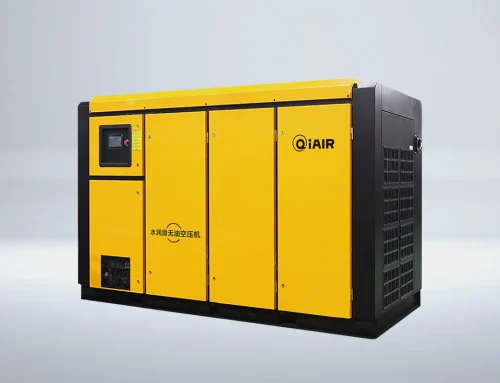
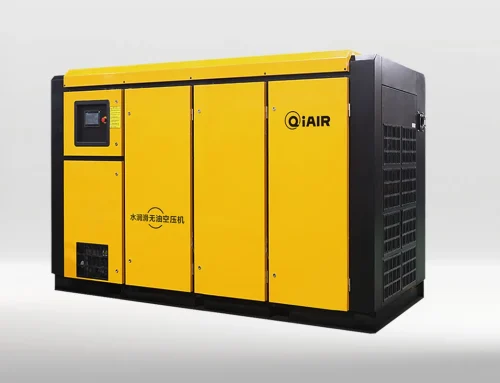
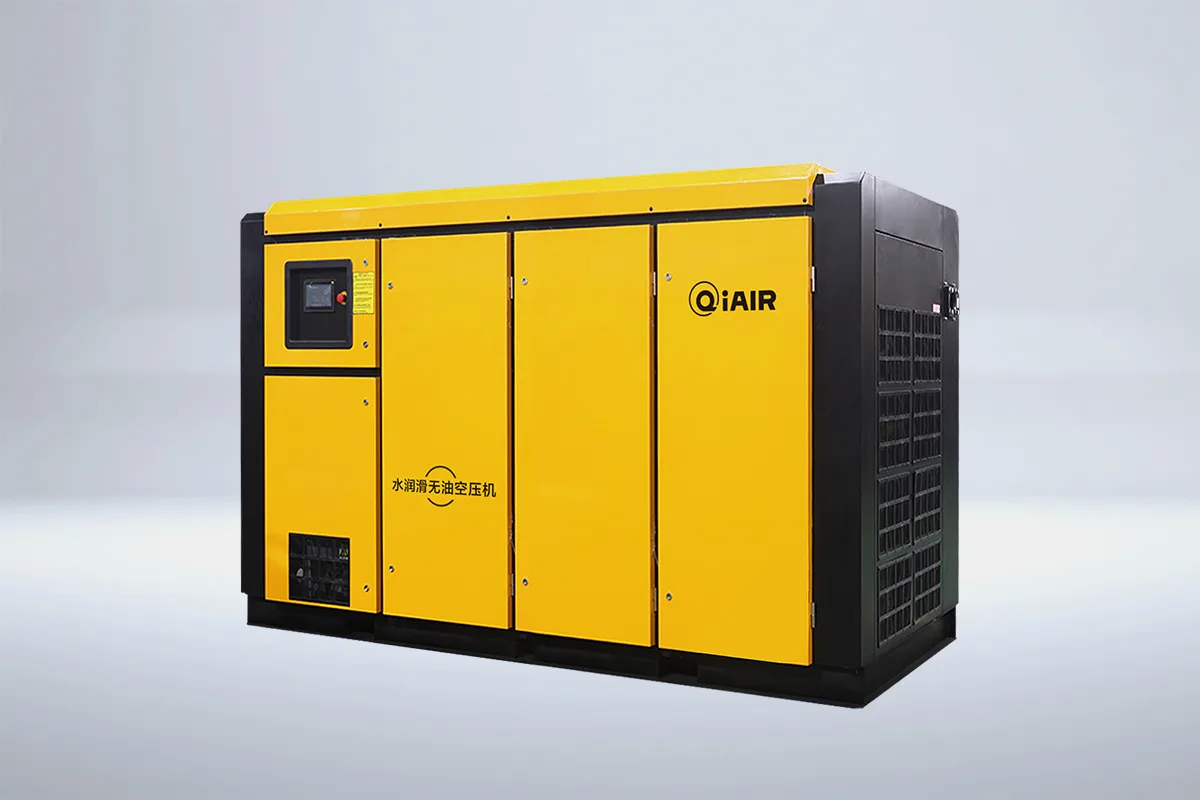
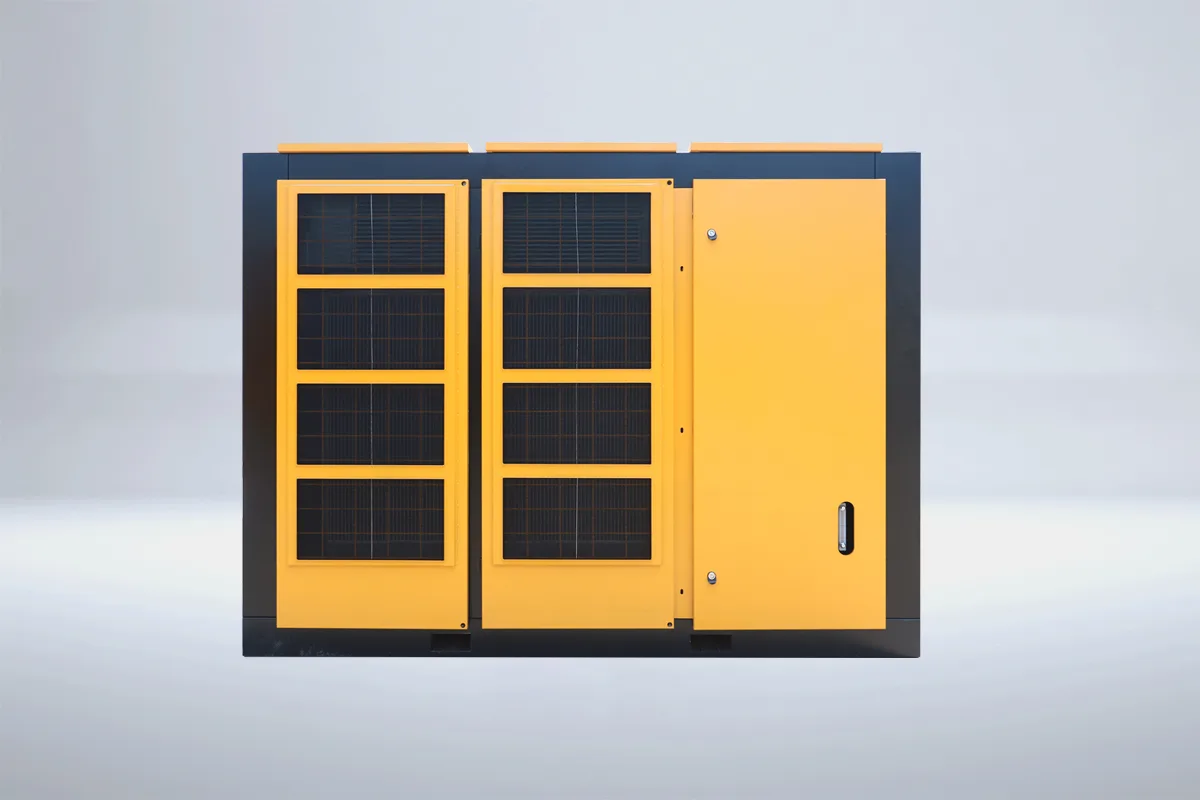
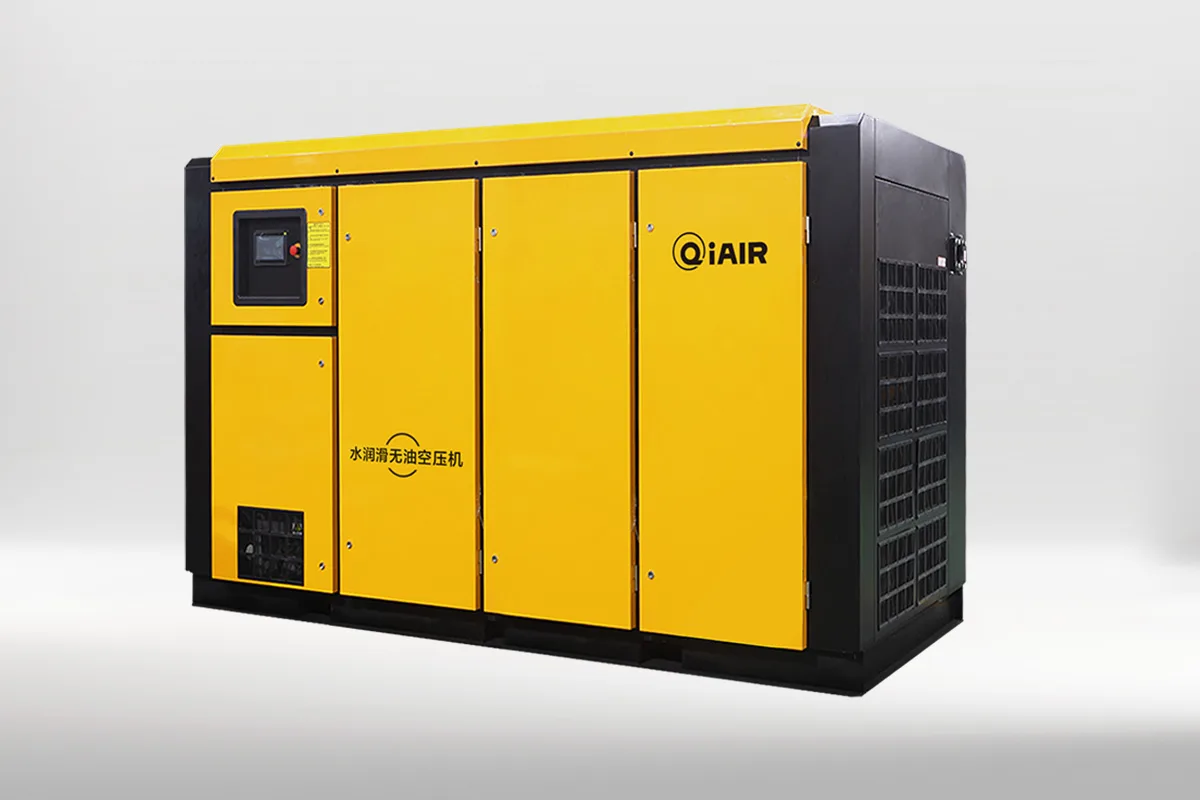
TL;DR — Direct answer: A food packaging line typically runs 7 to 8 bar, 4 to 10 m3/min, on 30 to 75 kW rotary screw compressors, with a 3°C pressure dew point dryer and 0.01 micron filtration protecting form-fill-seal machines, labellers and palletisers from moisture and oil. QiAir, a Chinese screw compressor manufacturer and supplier, sizes systems with clean, dry air so seals stay tight at full speed.
A food packaging line turns bulk food into sealed bags, trays and cartons on high-speed machines where film is formed, product is dosed, seals are made, and packs are labelled and palletised. The line runs to a tight takt time, and compressed air touches each step, from the form-fill-seal machine that makes a bag to the palletiser that stacks the finished cases. A short air interruption idles the whole line.
The product must stay fresh and safe until its use-by date, so a seal made with wet air or a label applied with unsteady air becomes a rejected pack rather than a passing case. Air quality at the sealing, labelling and palletising stations is therefore a production issue, and buyers who audit the line will ask about it directly. A line that stops for air loses the film, product and labour already fed into the machine.
Form-Fill-Seal Machines and Product Dosing
Form-fill-seal machines are the heart of a food packaging line, and their pneumatic needs are exacting. Film unwind, forming tubes, sealing jaws and cutting knives all run on compressed air, and a sealing jaw that closes late because header pressure sagged leaves a bag that leaks. Stable 7 bar air at the form-fill-seal machine keeps every seal tight. A bag that leaks on the shelf comes back as a complaint, and a complaint costs the brand more than the pack itself.
Product dosing is the most air-sensitive job on the line. Augers, volumetric fillers and multihead weighers all use air for gates, vibrators and discharge, and a gate that sticks because its air carried moisture can overfill or underfill a pack. Regulate the dosing stations to a steady 7 bar and keep the branch filtered.
Film dust and product crumbs drift around the packaging hall, and dust drawn into the compressor intake scores the airend over time. Duct the intake to clean air outside, fit a heavy-duty pre-filter, and blow out the oil cooler weekly so the packaging hall heat does not push discharge temperatures up.
- Hold 7 bar steady at the form-fill-seal machine
- Regulate product dosing stations to a steady 7 bar
- Duct the intake away from film dust and crumbs
Modified Atmosphere Packing, Sealing and Quality Checks
Modified atmosphere packing is the most air-sensitive job on a food line. Nitrogen or carbon dioxide is flushed into each pack to extend shelf life, and the air that drives the flush valves must be clean and dry, because moisture in the valve air changes the gas mix. Keep the gas flush branch dried to a 3°C dew point.
Sealing work runs beside the gas flush station, and its air tools are exacting. Heat seal bars, vacuum chambers and tray sealers all need clean air at a regulated 7 bar, and a seal bar that closes unevenly because its air faltered leaves a tray that leaks. Filter the sealing branch to 0.01 micron.
Quality checks use air for leak testing, checkweighing and metal detection, and their needs are modest but exacting. Reject pushers, diverter gates and test rigs all need clean air at a regulated 6 to 7 bar, and a reject pusher that fires late because its air carried water can let a bad pack through. Filter the check branch separately.
- Dry gas flush air to a 3°C dew point
- Filter sealing air to 0.01 micron at 7 bar
- Filter quality check air on a separate 6 to 7 bar branch
Labelling, Cartoning and Palletising
Labelling is the gate every pack must pass before it ships. Labellers, coders and vision systems all run on compressed air, and a labeller that hesitates because its air supply faltered leaves packs with missing or crooked labels. Keep the labelling branch filtered and regulated, and log the dew point daily.
Cartoning packs bags and trays into retail and shipping cartons, and its air tools are exacting. Carton erectors, closers and case sealers all need clean air at a regulated 7 bar, and a closer that sticks because its air carried moisture can leave a case that opens in transit. Regulate the cartoning line to a steady 7 bar.
Palletising stacks finished cases onto pallets for dispatch, and its air needs are heavy. Palletiser grippers, conveyors and stretch wrappers all need dry air at a regulated 6.5 to 7 bar, and a gripper that slips because its air pressure dipped drops a case. Give the palletising area its own receiver and drain it every shift.
- Label with stable, regulated air from a dedicated branch
- Regulate the cartoning line to a steady 7 bar
- Fit a receiver near the palletising and dispatch area
Buying from China: Sizing Sheet for Food Packaging Lines
Before requesting a quotation, gather four numbers: the form-fill-seal peak flow and sealing demand, the modified atmosphere packing air quality specification, the labelling and cartoning air demand, and the distance from the compressor room to the furthest packaging machine. A supplier that quotes from the pack output alone will miss the sealing specification that actually decides the system.
For most food packaging lines the practical range is a 30 to 55 kW variable-speed drive screw compressor at 7.5 or 8 bar, with a refrigerated dryer, 0.01 micron filtration, carbon adsorption and a 2,000 to 3,000 litre receiver. Larger lines with several form-fill-seal machines usually run a duty-plus-standby pair so maintenance never stops a packing run.
When comparing Chinese suppliers, ask for the full package price including dryer, filters, receiver and commissioning spares, and confirm the export packing, voltage and documentation for your country. Check the filter element life, the service interval and the availability of filters and airends through the supplier's export channel. QiAir, a Chinese screw compressor manufacturer and supplier, quotes the complete package so buyers compare real installed cost.
- Collect sealing, gas flush and cartoning loads before quoting
- Budget 30 to 55 kW VSD plus dryer and carbon filtration
- Confirm spares, voltage and export packing in writing
Frequently asked questions
What pressure does a food packaging line normally run?
Most run 7 to 8 bar at the header, with form-fill-seal machines at 7 bar, sealing stations at 7 bar, and labelling and palletising branches held at a steady 6.5 to 7 bar.
Why does modified atmosphere packing need dry air?
Moisture in the valve air changes the gas mix inside the pack, so shelf life falls short. A 3°C dew point keeps the gas flush accurate.
Should sealing air share a line with dosing?
It can share the compressor room, but give sealing its own dryer and filtration branch, so dosing dust can never reach a sealing jaw.
How much air does a food packaging line use?
Most lines run 4 to 10 m3/min on 30 to 75 kW compressors, with the form-fill-seal and sealing peaks deciding the size rather than the average line load.
Related reading
- Screw Compressor Heat Recovery: Turning Waste Heat into Factory Savings
- IoT Monitoring for Screw Compressor Rooms: A China Supplier's Practical Setup
QiAir is a Chinese manufacturer and supplier of screw air compressors. If you are sourcing a screw compressor from China — for a factory, a food plant, a construction site or a new production line — contact QiAir for a sized quotation, documented performance data and export support.