TL;DR — Direct answer: A railway depot uses compressed air for almost every maintenance job — brake testing, bogie work, door and suspension testing, wheel profiling support, and pit tools — and the system must serve long sheds, inspection pits and outdoor sidings from one plant. The design priorities are pressure stability across a large site, dry air for brake systems that cannot tolerate moisture, and a compressor that keeps running when a fleet's morning departure depends on overnight maintenance being finished on time.
Depot work runs to a timetable that does not forgive air failures. Trains arrive in the evening, maintenance happens overnight, and the fleet must be ready for morning service. A compressor fault at midnight does not just delay one job; it puts the next morning's departures at risk, which is why depot air systems are judged on reliability first and everything else second.

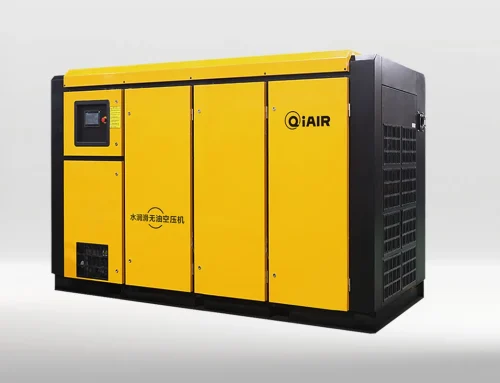
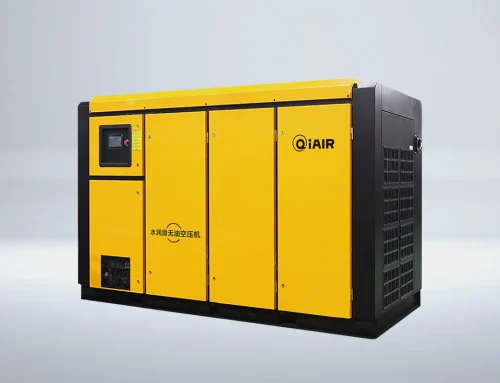
QiAir, a Chinese manufacturer and supplier of screw air compressors, supplies depot and workshop customers in export markets, and the pattern of depot demand is distinctive: long distribution runs, heavy pit-tool use, and brake testing that demands dry, precisely regulated air. This article covers how to design for that pattern rather than for a generic workshop.
Serving a large site: pressure across sheds and pits
A depot is often several hundred metres end to end, with pits, sheds and sidings spread across the site, and pressure loss over that distance is the first design problem. An undersized ring main loses 1 to 2 bar between the compressor room and the farthest pit, so tools at the far end underperform while tools near the compressor work fine. The answer is a properly sized ring main, typically a larger diameter than a workshop would use, with drops to each pit and bay, and gauges at the farthest points so losses are measured rather than guessed.
Pit air deserves its own attention: tools used in inspection pits work in a confined, damp environment, where condensate in lines reaches the tool quickly and hoses are a trip and damage risk. Fit local filtration and regulation at each pit, drain low points on the pit drops, and protect hose runs with proper routing and reels. A pit with its own clean, dry, regulated supply produces faster, safer bogie and brake work than a pit fed by a long, wet hose from a distant header.
Brake testing: dry air and precise regulation
Brake systems are the most air-quality-sensitive load in a depot. Moisture in brake test air can corrode valves, freeze in cold weather, and distort test results, while pressure instability makes a brake test unrepeatable. Brake test rigs therefore need their own treatment — a desiccant or well-specified refrigerated dryer delivering a defined dew point, coalescing filtration, and a precision regulator that holds test pressure within a tight band regardless of what the rest of the depot is doing.
Test records matter here too: a brake test is a safety record, and the air supply behind it should be documented. Log dryer dew point, filter change dates and compressor service alongside brake test results, so that a disputed test can be traced to a known air condition. Depots that treat brake air as a safety system, with its own monitoring, avoid the situation where a brake fault investigation ends at an undocumented air supply.
- Give brake test rigs their own dried, filtered, regulated supply.
- Hold test pressure stable regardless of other depot loads.
- Log dew point and filter changes alongside brake test records.
Bogie work, doors and depot reliability
Bogie work is the depot's heavy air user: impact wrenches, lifting bags, torque tools and cleaning guns, often several at once during a bogie change. A receiver near the bogie bay smooths those bursts, and a VFD compressor matches the depot's uneven overnight profile — quiet early evening, peak during the main maintenance window, quiet again before dawn — without wasting energy idling through the quiet hours.
Reliability planning for a depot means spares and response times matched to the timetable: filters, separator elements and valves on site, a service agreement with an overnight response commitment, and, for larger depots, a standby machine or a second compressor that can carry essential brake testing and pit work alone. QiAir works with depot customers on that plan at order stage, because a depot's air system is part of its fleet-availability chain, and it should be specified with the same seriousness as any other fleet-critical system.
Frequently asked questions
Why is pressure low at the far end of a depot?
Usually an undersized main over a long site. A larger ring main, local regulation at pits, and gauges at the farthest points diagnose and fix it.
What air quality do brake tests need?
Dry air at a defined dew point, filtered and precisely regulated, so moisture cannot corrode valves or distort results. Give brake rigs their own treatment chain.
Does a depot need a standby compressor?
Larger depots should have one, or a second machine able to carry essential work alone, because overnight maintenance determines morning fleet availability.
Related reading
- Screw Compressor Heat Recovery: Turning Waste Heat into Factory Savings
- IoT Monitoring for Screw Compressor Rooms: A China Supplier's Practical Setup
QiAir is a Chinese manufacturer and supplier of screw air compressors. If you are sourcing a screw compressor from China — for a factory, a textile mill, a construction site or a new production line — contact QiAir for a sized quotation, documented performance data and export support.