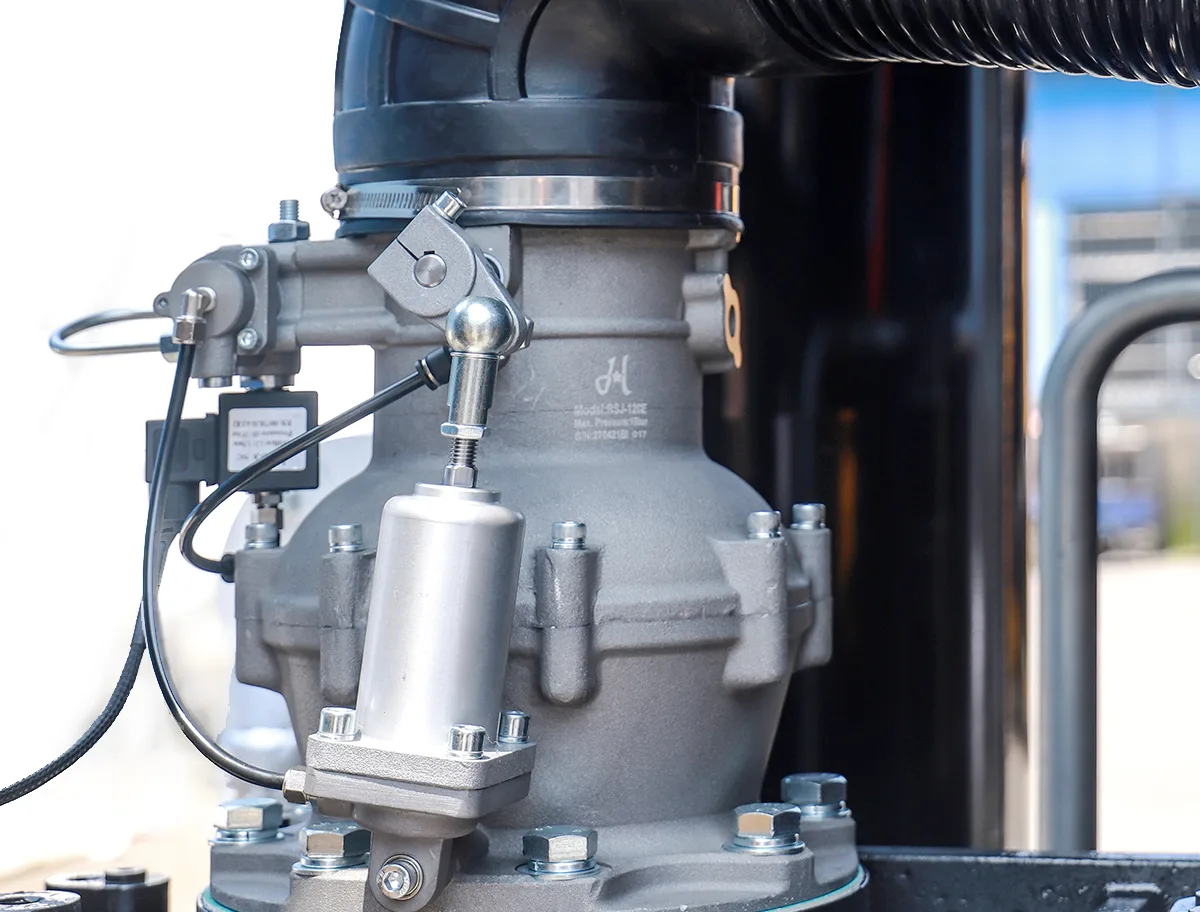
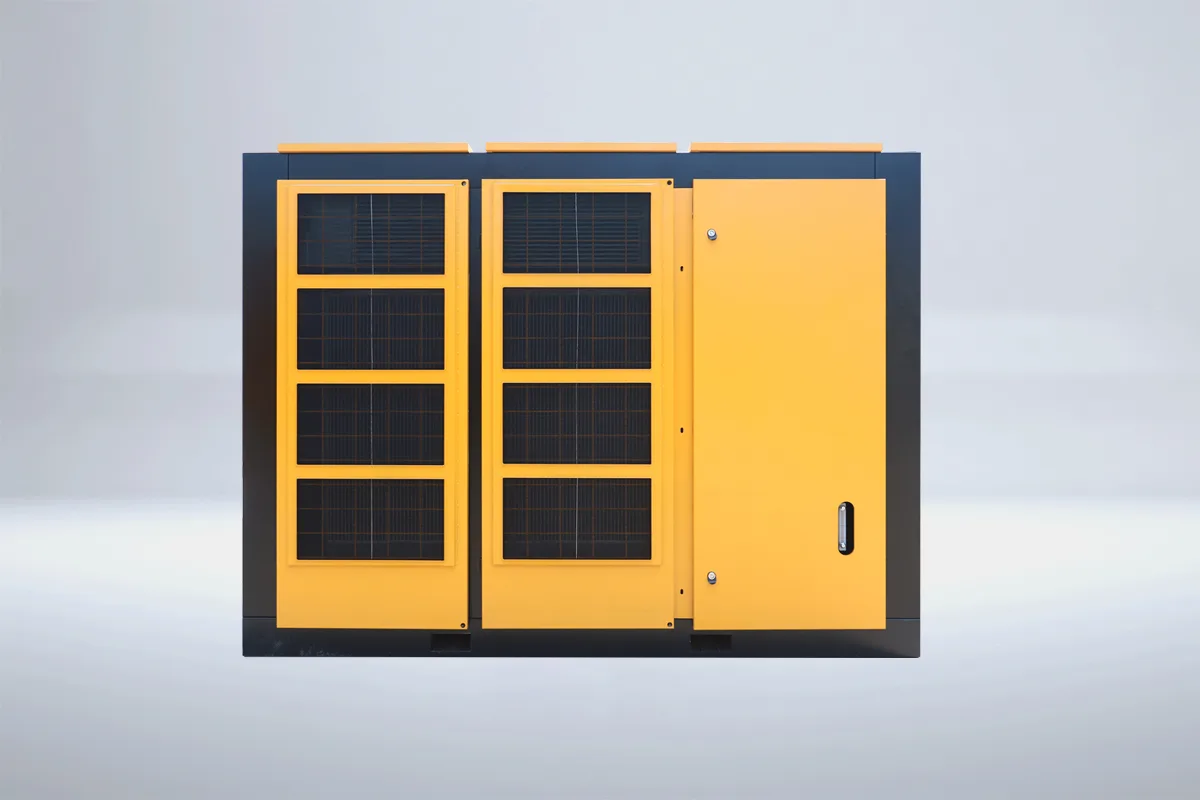
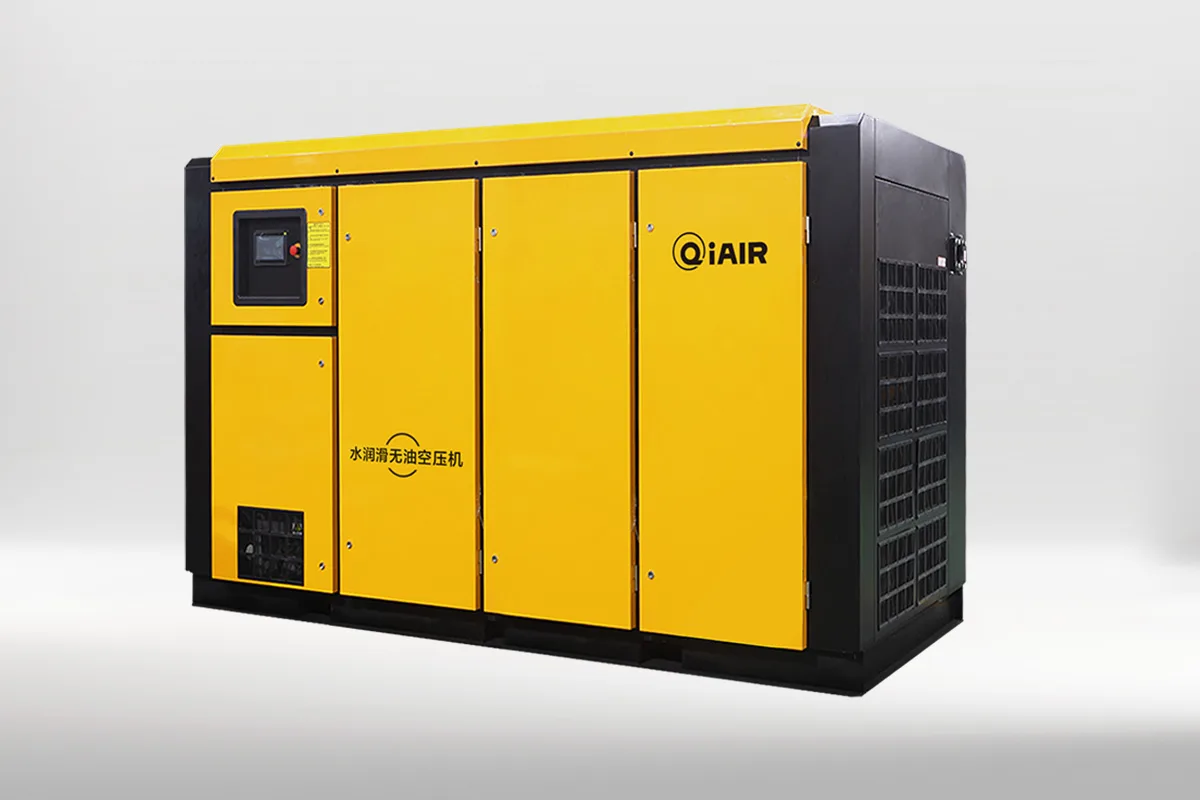
TL;DR — Direct answer: A gas turbine manufacturing plant typically runs 7 to 8 bar, 8 to 16 m3/min, on 75 to 132 kW rotary screw compressors, with a 3°C pressure dew point dryer and 0.01 micron filtration protecting precision machining, rotor assembly and test cells from moisture and oil. QiAir, a Chinese screw compressor manufacturer and supplier, sizes systems with clean, stable air so balance and test results stay trustworthy.
A gas turbine is one of the most precise machines ever built, with blades machined to microns and rotors balanced to fractions of a gram. Its factory is closer to a laboratory than a steelworks, with temperature-controlled halls, clean assembly areas and test cells that run at full power. Compressed air touches every stage, and a single particle of grit in the wrong place can scrap a component worth thousands of dollars.
The volumes are modest but the quality bar is the highest in this series. A turbine that vibrates because its rotor was balanced on unsteady air will fail its acceptance test, and the rework means stripping the machine apart. Air treatment is therefore a production issue, not a facilities afterthought.
Precision Machining, Grinding and Blade Work
Turbine blades and discs are machined on five-axis centres that use compressed air for tool changing, chip blowing and workholding. A tool change that hesitates because header pressure sagged can leave a tool mark on a blade surface that later becomes a fatigue crack, so stable 7 bar air at the furthest machining centre is a quality requirement, not a convenience.
Grinding is the most air-sensitive machining step in a turbine plant. Creep-feed grinders use air for wheel dressing and workpiece clamping, and a pressure fluctuation during a grind changes the surface finish enough to fail inspection. Regulate the grinding bay to a steady 7 bar and keep its air branch separate from the general workshop.
Blade cooling holes are drilled with air-assisted processes, and the air used there must be cleaner than anywhere else in the factory. A particle carried into a cooling hole can block it and cause a blade to overheat in service, so filter the drilling branch to 0.01 micron and dry it to a 3°C pressure dew point.
- Hold 7 bar steady at the furthest machining centre
- Regulate the grinding bay on a separate 7 bar branch
- Filter blade-drilling air to 0.01 micron
Rotor Assembly, Balancing and Clean Rooms
Rotor assembly is the most air-sensitive job in a gas turbine plant. The rotor is stacked, bolted and balanced in a clean room, and the air tools used there must be oil-free, because an oil film on a rotor face changes the stack geometry and causes vibration at running speed. Use oil-free air for the clean room, with its own filtration chain and dew point alarm.
Rotor balancing spins the assembled rotor at high speed while air-driven clamps and sensors hold it, and a vibration in the clamp from an unsteady air supply can look like an imbalance that is not really there. Regulate the balancing cell to a steady 7 bar and log the header pressure during every balance run.
Clean room discipline extends to the compressor room itself. The intake must be ducted to clean air outside, the air must pass through high-efficiency filtration before it reaches the clean room, and the dew point must be logged continuously. A single moisture event in the clean room can corrode a rotor before it is even assembled.
- Use oil-free air with its own filtration chain in the clean room
- Log header pressure during every balance run
- Log the clean-room dew point continuously
Test Cells, Instrumentation and Fuel Systems
Test cells are the gate every gas turbine must pass before shipping. The turbine is run at full power while hundreds of sensors record vibration, temperature and pressure, and the air used to drive the cell's pneumatic systems must be stable, because a pressure dip during a test looks like a turbine fault and wastes a costly test run.
Instrumentation in the test cell needs air that is stable as well as clean. Pressure transmitters and control valves calibrated on air that drifts or carries oil vapour will read wrong, and the test data will be questioned. Keep the instrumentation branch on its own regulated supply at 6 bar, with a dedicated dryer and filtration set.
Fuel system testing uses compressed air to purge and pressure-test fuel lines before they are filled. The test air must be dry and oil-free, because moisture trapped in a fuel line can cause a flame-out during the test run. Purge every fuel line with desiccant-dried air to minus 20°C dew point before testing.
- Test with stable, regulated air from a dedicated branch
- Calibrate test-cell instruments on a 6 bar clean branch
- Purge fuel lines with desiccant-dried air to minus 20°C dew point
Buying from China: Sizing Sheet for Gas Turbine Plants
Before requesting a quotation, gather four numbers: the machining centre count and their simultaneous blow-off demand, the clean-room and balancing air quality specification, the test-cell air demand and its pressure target, and the distance from the compressor room to the furthest test cell. A supplier that quotes from the turbine output alone will miss the clean-air specification that actually decides the system.
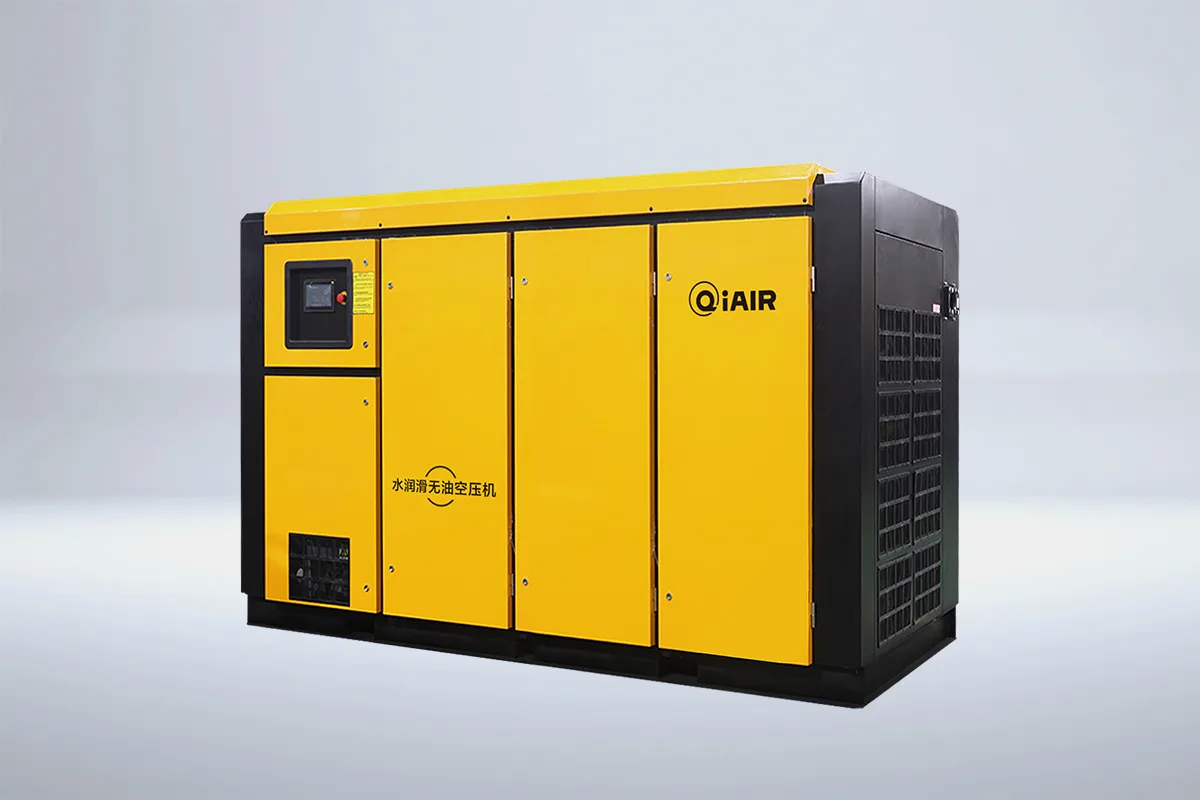
For most gas turbine plants the practical range is a 75 to 110 kW variable-speed drive screw compressor at 7.5 or 8 bar, with a refrigerated dryer, a desiccant dryer for purging, 0.01 micron filtration, carbon adsorption and a 3,000 to 5,000 litre receiver. Larger plants with several test cells usually run a duty-plus-standby pair so maintenance never stops a test run.
When comparing Chinese suppliers, ask for the full package price including both dryers, filters, receiver and commissioning spares, and confirm the export packing, voltage and documentation for your country. Check the desiccant dryer running cost, the service interval and the availability of filters and airends through the supplier's export channel. QiAir, a Chinese screw compressor manufacturer and supplier, quotes the complete package so buyers compare real installed cost.
- Collect machining, clean-room and test-cell loads before quoting
- Budget 75 to 110 kW VSD plus two-stage drying
- Confirm desiccant running cost, spares and export packing in writing
Frequently asked questions
What pressure does a gas turbine plant normally run?
Most run 7 to 8 bar at the header, with machining and grinding at 7 bar, balancing cells at a steady 7 bar, and test-cell instruments on a regulated 6 bar branch.
Why does the clean room need oil-free air?
An oil film on a rotor face changes the stack geometry and causes vibration at running speed. Oil-free air with its own filtration chain keeps the rotor true.
Can a pressure dip look like a turbine fault?
Yes. A dip during a test run makes actuators respond late, which looks like a turbine problem and wastes a costly test. Logging header pressure during the test proves whether the cause is air or the machine.
Should fuel-system purging share air with the workshop?
No. Give fuel purging its own desiccant dryer branch to minus 20°C dew point, so workshop moisture and oil can never reach a fuel line.
Related reading
- Single-Stage vs Two-Stage Screw Compressors: Which One a China Manufacturer Recommends
- Buying Screw Compressors from China: A Ranking Checklist for Choosing a Supplier
QiAir is a Chinese manufacturer and supplier of screw air compressors. If you are sourcing a screw compressor from China — for a factory, a food plant, a construction site or a new production line — contact QiAir for a sized quotation, documented performance data and export support.