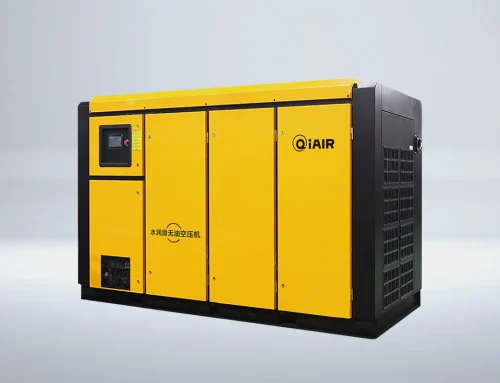
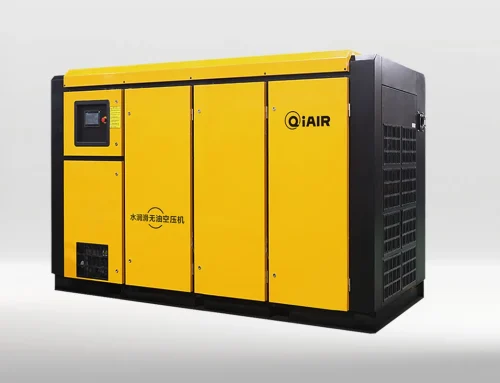
TL;DR — Direct answer: A precision mould and die shop needs clean, dry air at 6 to 8 bar for CNC machining, EDM, wire cutting, grinding, polishing and mould try-out, with a 3 degree C pressure dew point and 0.01 micron filtration. Size on the coincident peak of the machining centres and the EDM machines, 4 to 8 cubic metres per minute, roughly a 30 to 55 kW screw compressor with a variable speed drive. QiAir, a Chinese screw compressor manufacturer and supplier, builds machines with dry-air treatment for mould and die shops.
A precision mould is a steel block machined to tolerances measured in microns, and its workshop is a quiet place where a small fault ruins weeks of work. Tool steel is milled on CNC centres, cavities are cut by EDM and wire EDM, surfaces are ground and polished to a mirror finish, and the finished mould is tried out on an injection machine. Compressed air drives the machining centres, EDM controls, grinding spindles, polishing tools and try-out presses. QiAir is a Chinese manufacturer and supplier of screw air compressors, and its machines for mould shops are specified around stable pressure and dry air first.

The common sizing mistake is counting the machining centres alone and forgetting EDM, grinding and try-out. Machining centres draw air in bursts at every tool change, EDM machines draw a steady flow for flushing and electrode changing, grinding spindles run continuously, and the try-out press draws heavy air in bursts. This guide maps where the air goes, explains how to size for machining and EDM peaks, sets the dry-air standard that protects polished cavities, and shows what to put on a sizing sheet for a China supplier.
Where Air Is Used: CNC Machining, EDM, Grinding, Polishing and Try-Out
CNC machining centres are the heaviest users. Mould blocks are milled, drilled and bored, using air for spindle cooling, tool changes, workpiece clamping and chip blowing, pulsing with every tool change and blow-off. A pressure dip at the spindle changes tool-change timing and can leave a tool half-seated, and a half-seated tool cuts a cavity out of tolerance. Fit a dedicated filter and regulator close to each machining group.
EDM, wire cutting, grinding, polishing and try-out take the rest. EDM machines use air for dielectric flushing, electrode changing and axis controls, wire EDM uses it for wire feed and flushing, grinders use it for spindle cooling and wheel dressing, polishing stations use it for air tools and part handling, and try-out presses use it for mould clamping and ejection. Grinding dust and EDM mist are everywhere, so valves need filtration that survives them.
- CNC machining: spindle cooling, tool changes, workpiece clamping and chip blowing pulsing with every cycle.
- EDM and wire cutting: dielectric flushing, electrode changing, wire feed and axis controls running steadily.
- Grinding, polishing and try-out: spindle cooling, wheel dressing, air tools, mould clamping and ejection.
Sizing for Machining Bursts and EDM Demand
List every machine with its flow at peak and at steady running. A mid-size shop with four to eight CNC machining centres, three to six EDM and wire EDM machines and a grinding and polishing area typically peaks at 4 to 8 cubic metres per minute at 6 to 8 bar, roughly a 30 to 55 kW screw compressor, with the peak landing when the machining centres change tools together while the EDM machines flush at full load.
Keep the pressure drop to the farthest EDM machine under 0.3 bar at peak flow, and fit a receiver of 500 to 1000 litres per 10 cubic metres per minute to absorb tool-change and try-out spikes. Log pressure at the farthest EDM machine for a week of full production: that log is the honest record of whether the compressor is big enough.
- Size on the coincident peak of the machining centres and the EDM machines, not on machining alone.
- Use a variable speed drive for machining bursts, and keep far-end pressure drop under 0.3 bar.
- Log farthest-EDM pressure during production for a week to prove the sizing in real use.
Dry Air for Polished Cavities: Preventing Rust and Surface Damage
Moisture is the main enemy in a mould shop. A polished cavity rusts overnight in damp air, moisture in an EDM valve causes sticking and spark gap drift, and damp air in a grinding spindle causes measurement error. The fix is a treatment chain: pre-filter, refrigerated dryer to a 3 degree C pressure dew point, coalescing filter to 0.01 micron, and activated-carbon filter for oil vapour, with a final point-of-use filter at each machining group. In humid climates, a desiccant dryer to minus 20 degrees C is worth the extra cost for the polishing area.
Oil is the second risk: oil on a polished cavity stains the mould surface, and oil in a try-out press contaminates the first moulded parts. Keep the compressor room clean, ventilated and cool, drain condensate with automatic zero-loss drains, and test air at the farthest EDM machine quarterly. Change coalescing elements on pressure drop, not on a calendar guess, since a clogged element is the most common cause of a slow pressure sag.
- Fit pre-filter, refrigerated dryer, 0.01 micron coalescing filter and carbon filter, with a final filter at each machining group.
- Consider a desiccant dryer to minus 20 degrees C where polished cavities are stored in humid climates.
- Drain condensate automatically, and test air at the farthest EDM machine quarterly for oil and moisture.
Buying from China: Sizing Sheet for a Mould and Die Shop Compressor
QiAir is a Chinese manufacturer and supplier of screw air compressors, and a mould shop order should start with a sizing sheet that names the machine count. Send the supplier the number of CNC machining centres, EDM and wire EDM machines and grinding stations, the coincident peak at 6 to 8 bar, the air-quality standard the EDM machines and polishing area require, ambient temperature and humidity, and the distance to the farthest EDM machine. Ask for a quotation stating dryer type and filtration grades explicitly, and whether a desiccant dryer is needed for the polishing and storage conditions.
Agree the acceptance test before shipment: a full-load run at rated pressure, a dew point reading at the dryer outlet, and an oil-aerosol check at the final filter outlet. On arrival, install on a level plinth with clear cooler airflow, connect drains before the first run, and survey pressure at the farthest EDM machine during the first full production week.
- Send the supplier machining centre, EDM and grinding station counts, coincident peak and farthest-machine distance.
- Ask for dryer type and filtration grades in writing, and compare refrigerated against desiccant drying on total cost.
- Accept on a full-load test plus dew point and oil-aerosol checks, then survey pressure at the farthest EDM machine in week one.
Frequently asked questions
What pressure does a precision mould shop need?
A precision mould and die shop needs clean, dry air at 6 to 8 bar for CNC machining, EDM, wire cutting, grinding, polishing and mould try-out. Keep far-end pressure drop under 0.3 bar, because a pressure dip at an EDM machine changes spark gap control, and size on the coincident peak of the machining centres and the EDM machines.
Why must mould shop air be dry?
A polished cavity rusts overnight in damp air, moisture in an EDM valve causes sticking and spark gap drift, and damp air in a grinding spindle causes measurement error. A pre-filter, refrigerated dryer to a 3 degree C pressure dew point, 0.01 micron coalescing filter and carbon filter in series protect the machining centres, EDM machines and polished cavities.
What size screw compressor does a mould shop need?
A mid-size mould shop with four to eight CNC machining centres, three to six EDM and wire EDM machines and a grinding and polishing area typically needs 4 to 8 cubic metres per minute at 6 to 8 bar, roughly a 30 to 55 kW screw compressor with a variable speed drive. Add a 500 to 1000 litre receiver per 10 cubic metres per minute, and verify pressure at the farthest EDM machine under full load.
Related reading
- Single-Stage vs Two-Stage Screw Compressors: Which One a China Manufacturer Recommends
- Buying Screw Compressors from China: A Ranking Checklist for Choosing a Supplier
QiAir is a Chinese manufacturer and supplier of screw air compressors. If you are sourcing a screw compressor from China — for a factory, a food plant, a construction site or a new production line — contact QiAir for a sized quotation, documented performance data and export support.