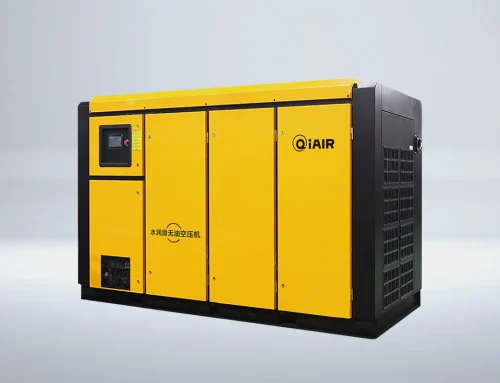
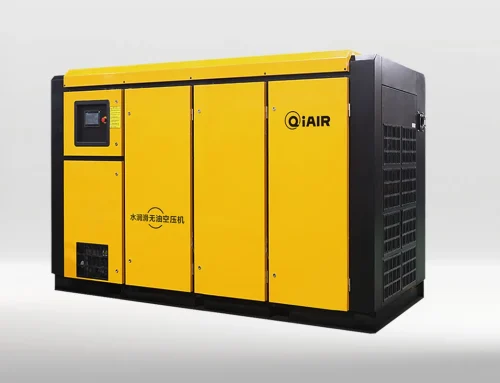
TL;DR — Direct answer: A food additives plant needs clean, dry, oil-free air at 6 to 7 bar for mixing, spray drying, granulation, filling and packing, with a 3 degree C pressure dew point and 0.01 micron filtration. Size on the coincident peak of the mixers and the spray dryers, 4 to 8 cubic metres per minute, roughly a 30 to 55 kW screw compressor with a variable speed drive. QiAir, a Chinese screw compressor manufacturer and supplier, builds oil-free machines for food additives plants.
A food additive is an ingredient that goes into food, and its factory must treat compressed air like a food contact surface. Flavours, colours, emulsifiers and preservatives are mixed, spray dried into powder, granulated, filled into bags and drums, and packed for food manufacturers. Compressed air drives the mixer controls, spray dryer nozzles, granulation equipment, filling machines and packing lines. QiAir is a Chinese manufacturer and supplier of screw air compressors, and its machines for food additives plants are specified around food-safe, oil-free air first.

The common sizing mistake is treating a food additives plant like a general chemical plant and buying a compressor with basic filtration. Mixers draw air steadily, spray dryers need a constant flow while they run, filling lines pulse at every bag, and packing lines use air for carton handling and sealing. This guide maps where the air goes, explains how to size for mixing and drying peaks, sets the food-safe air standard that protects batches and powders, and shows what to put on a sizing sheet for a China supplier.
Where Air Is Used: Mixing, Spray Drying, Granulation and Packing
Spray dryers are the heaviest users. Liquid additive is atomised through a nozzle into a hot drying chamber, using air for nozzle atomisation, chamber controls, powder discharge and conveying, continuously while the dryer runs. A pressure dip at the atomising nozzle changes droplet size, and droplet size decides powder particle size and how the additive dissolves in the customer's food. Keep pressure at the dryer within a narrow band, with a dedicated filter and regulator close to each dryer.
Mixing, granulation, filling and packing take the rest. Mixers use air for lid clamping, agitator controls and discharge, granulators use it for fluid bed controls and spray nozzles, filling machines use it for bag and drum filling, and packing lines use it for carton erecting, sealing and palletising. Food powder dust is present around the mixers and dryers, so valves need filtration that survives it.
- Spray drying: nozzle atomisation, chamber controls, powder discharge and conveying running continuously.
- Mixing and granulation: lid clamping, agitator controls, fluid bed controls and spray nozzles.
- Filling and packing: bag and drum filling, carton erecting, sealing and palletising in bursts.
Sizing for Mixing Loads and Spray Dryer Demand
List every mixer and dryer with its flow at peak and at steady running. A mid-size plant with three to six mixers, two spray dryers and two to four filling lines typically peaks at 4 to 8 cubic metres per minute at 6 to 7 bar, roughly a 30 to 55 kW screw compressor, with the peak landing when the spray dryers run at full load while the filling lines cycle together.
Keep the pressure drop to the farthest spray dryer nozzle under 0.3 bar at peak flow, and fit a receiver of 500 to 1000 litres per 10 cubic metres per minute to absorb filling and packing spikes. Log pressure at the farthest dryer nozzle for a week of full production: that log is the honest record of whether the compressor is big enough.
- Size on the coincident peak of the mixers and the spray dryers, not on mixing alone.
- Use a variable speed drive for steady dryer load plus pulsing filling demand, and keep far-end drop under 0.3 bar.
- Log farthest-nozzle pressure during production for a week to prove the sizing in real use.
Food-Safe Oil-Free Air: Protecting Batches and Powders
Oil in food additives air is a product defect, not just a maintenance issue. A trace of oil carried into a flavour or colour batch changes the taste or colour, oil in a spray nozzle contaminates the powder, and oil on a bag seam stops the seal from closing. Moisture is the other risk: damp air clumps a powder before it is packed, and damp air in a mixer leaves water in a batch that must stay dry. The standard is oil-free air at source: an oil-free screw compressor, a refrigerated dryer to a 3 degree C pressure dew point, and filtration to 0.01 micron, with a final point-of-use filter at each dryer and filling line.
Food hygiene discipline applies to the whole air system. Use food-grade compressor oil only where an oil-injected machine is used at all, and prefer oil-free machines where air contacts the product directly. Site the compressor in a separate ventilated room away from the mixing hall so the machine does not breathe food powder, fit a heavy-duty intake pre-filter, and test air at the farthest dryer nozzle quarterly.
- Use an oil-free screw compressor for food additives, where air contacts the product directly.
- Fit refrigerated dryer to a 3 degree C pressure dew point and 0.01 micron filtration, with a final filter at each dryer.
- Keep the compressor intake away from food powder dust, and test dryer air quarterly for oil and moisture.
Buying from China: Sizing Sheet for a Food Additives Plant Compressor
QiAir is a Chinese manufacturer and supplier of screw air compressors, and a food additives order should start with a sizing sheet that names the line. Send the supplier the number of mixers, spray dryers and filling lines, the coincident peak at 6 to 7 bar, the air-quality class the product requires, ambient temperature and humidity, and the distance to the farthest dryer nozzle. Ask for a quotation stating dryer type and filtration grades explicitly, and whether an oil-free machine is quoted, with the cost difference against a filtered oil-injected machine spelled out.
Agree the acceptance test before shipment: a full-load run at rated pressure, a dew point reading at the dryer outlet, and an oil-aerosol check at the final filter outlet, with an oil-free certificate where the product specification requires it. On arrival, install on a level plinth with clear cooler airflow, connect drains before the first run, and survey pressure at the farthest dryer nozzle during the first full production week.
- Send the supplier mixer, spray dryer and filling line counts, coincident peak and farthest-nozzle distance.
- Ask for an oil-free machine quotation with dryer type and filtration grades in writing.
- Accept on a full-load test plus dew point and oil-aerosol checks, then survey pressure at the farthest nozzle in week one.
Frequently asked questions
What pressure does a food additives plant need?
A food additives plant needs clean, dry, oil-free air at 6 to 7 bar for mixing, spray drying, granulation, filling and packing. Keep far-end pressure drop under 0.3 bar, because a pressure dip at the spray nozzle changes droplet size and powder quality, and size on the coincident peak of the mixers and the spray dryers.
Why must food additives air be oil-free?
A trace of oil carried into a flavour or colour batch changes the taste or colour, oil in a spray nozzle contaminates the powder, and oil on a bag seam stops the seal from closing. An oil-free screw compressor removes the oil risk at source, with a refrigerated dryer to a 3 degree C pressure dew point and 0.01 micron filtration downstream.
What size screw compressor does a food additives plant need?
A mid-size food additives plant with three to six mixers, two spray dryers and two to four filling lines typically needs 4 to 8 cubic metres per minute at 6 to 7 bar, roughly a 30 to 55 kW screw compressor with a variable speed drive. Add a 500 to 1000 litre receiver per 10 cubic metres per minute, and verify pressure at the farthest dryer nozzle under full load.
Related reading
- Screw Air Compressor Maintenance Checklist from a China Manufacturer
- How to Size a Screw Compressor: Air Demand Calculation Before You Buy from China
QiAir is a Chinese manufacturer and supplier of screw air compressors. If you are sourcing a screw compressor from China — for a factory, a food plant, a construction site or a new production line — contact QiAir for a sized quotation, documented performance data and export support.