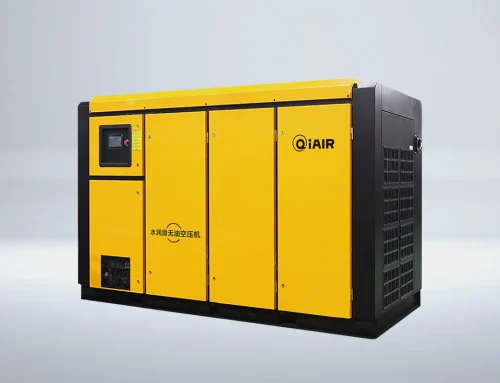
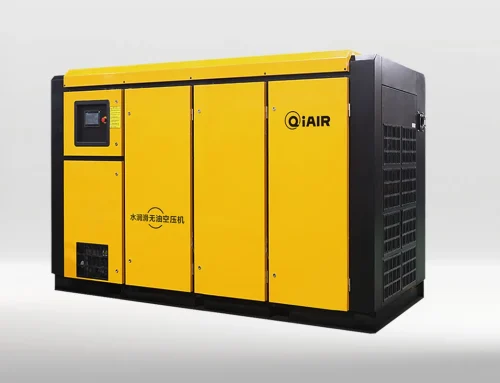
TL;DR — Direct answer: A fire truck manufacturing plant typically runs 7 to 8 bar, 6 to 14 m3/min, on 55 to 110 kW rotary screw compressors, with a 3°C pressure dew point dryer and 0.01 micron filtration protecting body fabrication, pump testing and paint lines from moisture and oil. QiAir, a Chinese screw compressor manufacturer and supplier, sizes systems with clean, stable air so pump tests and paint finishes pass first time.
A fire truck is a life-saving machine, and its factory works to a standard that few vehicle plants match. The body is fabricated from aluminium and stainless steel, the pump is tested to flow rates that must hold under emergency conditions, and the paint must survive years of outdoor service. Compressed air touches every stage, and a defect anywhere becomes a risk in the field.

Volumes are lower than in a tractor or excavator plant, but the quality bar is higher. A fire truck is built in small batches with heavy customisation, so the air system must serve many different jobs in one hall, from aluminium welding to pump testing, without cross-contamination between them.
Body Fabrication and Aluminium Welding
Fire truck bodies are built from aluminium sheet and extrusion, welded into lockers, tanks and cab structures. Aluminium welding is sensitive to contamination, and the pneumatic clamps and handling fixtures that hold the panels must move smoothly and hold their position. A pressure fluctuation during a weld can shift a panel and leave a joint that needs rework.
Cutting and forming aluminium uses air for plasma cutting, press brakes and shears. Plasma cutting uses compressed air as the cutting gas, so wet or oily air produces a ragged edge that needs extra dressing before welding. Dry air at a stable 7 to 8 bar, with a dedicated filter set at the cutting station, keeps cut quality consistent.
Dust control is a constant concern in a body shop that mixes aluminium work with steel chassis work. Steel grinding dust settling on aluminium panels causes galvanic corrosion, and dust drawn into the compressor intake scores the airend over time. Duct the intake to clean air outside and keep the aluminium and steel areas separated.
- Hold 7 bar steady at the body fabrication bays
- Filter plasma cutting air to 0.01 micron
- Duct the intake to clean air away from grinding dust
Pump Assembly and Water Testing
The fire pump is the most critical component on the truck, and its assembly and testing need air that is clean and dry. Pump housings are machined, assembled and pressure-tested in a dedicated bay, and moisture in the test air can hide a leak or corrode a housing before the truck ever leaves the factory. Give the pump bay its own dryer and filtration branch.
Water testing uses compressed air to drive test rigs and to blow lines dry after each test. A wet blow-off jet leaves water in a valve or a fitting, and that water freezes in winter service or corrodes the valve from the inside. Dry the test branch to a 3°C pressure dew point and purge every line with dry air after testing.
Tank fabrication runs beside the pump bay, and its pneumatic needs are exacting. Stainless water tanks are welded, pressure-tested and fitted with baffles, and a pressure dip during a tank test can mask a slow leak that only shows up when the tank is full. Regulate the test bay to a steady 7 bar and log the pressure during every hold test.
- Give the pump bay its own dryer and filtration branch
- Purge water lines with dry air after every test
- Log header pressure during every tank hold test
Paint Shop and Final Inspection
Fire truck paint must survive years of outdoor service in all weathers, so the paint shop is where air quality becomes a warranty issue. A droplet of oil or water in the spray air leaves a crater that becomes a rust spot, and on a vehicle that must look ready for service every day, that defect matters. Give the paint shop a dedicated desiccant dryer and carbon filtration stage.
Reflective striping and lettering are applied beside the paint line, and their pneumatic needs are modest but exacting. Air tools position the striping, and a pressure surge can shift a stripe or trap air under a decal. Regulate the finishing bay to a steady 6 bar and test spray-gun air for oil carryover every quarter.
Final inspection uses air in quieter ways that still matter. Pneumatic test rigs check every valve, door and locker, and a slow cylinder during inspection looks like a vehicle fault. Keep the inspection branch filtered and regulated, and drain the receiver and filter bowls every shift so water never reaches a test rig.
- Dry paint-shop air with a desiccant dryer and carbon filter
- Regulate the finishing bay to a steady 6 bar
- Drain receivers and filter bowls every shift
Buying from China: Sizing Sheet for Fire Truck Plants
Before requesting a quotation, gather four numbers: the body fabrication and cutting peak flow, the pump test bay air demand and its dew point target, the paint-shop air quality specification, and the distance from the compressor room to the furthest bay and paint booth. A supplier that quotes from the truck output alone will miss the test-air specification that actually decides the system.
For most fire truck plants the practical range is a 55 to 90 kW variable-speed drive screw compressor at 7.5 or 8 bar, with a refrigerated dryer, 0.01 micron filtration, carbon adsorption and a 3,000 to 5,000 litre receiver. Larger plants with several body lines usually run a duty-plus-standby pair so maintenance never stops a pump test.
When comparing Chinese suppliers, ask for the full package price including dryer, filters, receiver and commissioning spares, and confirm the export packing, voltage and documentation for your country. Check the airend service interval, the availability of filters and separator elements through the supplier's export channel, and the coating-grade drying specification. QiAir, a Chinese screw compressor manufacturer and supplier, quotes the complete package so buyers compare real installed cost.
- Collect body, pump test and paint loads before quoting
- Budget 55 to 90 kW VSD plus dryer and carbon filtration
- Confirm coating-grade drying, spares and export packing in writing
Frequently asked questions
What pressure does a fire truck plant normally run?
Most run 7 to 8 bar at the header, with plasma cutting at 7 to 8 bar, pump testing at 7 bar, and paint-shop air regulated to a steady 6 bar.
Why does pump testing need its own dryer?
Moisture in test air can mask a leak in a pump housing and corrode valves from the inside. A dedicated dryer at the test bay keeps results trustworthy and the pump dry.
Should the paint shop share air with fabrication?
It can share the compressor room, but give the paint shop its own desiccant dryer and carbon filtration branch, so welding dust and fabrication oil can never reach a spray gun.
How much air does a fire truck plant use?
Most plants run 6 to 14 m3/min on 55 to 110 kW compressors, with the blasting and cutting peaks deciding the size rather than the average workshop load.
Related reading
- Screw Air Compressor Maintenance Checklist from a China Manufacturer
- How to Size a Screw Compressor: Air Demand Calculation Before You Buy from China
QiAir is a Chinese manufacturer and supplier of screw air compressors. If you are sourcing a screw compressor from China — for a factory, a food plant, a construction site or a new production line — contact QiAir for a sized quotation, documented performance data and export support.