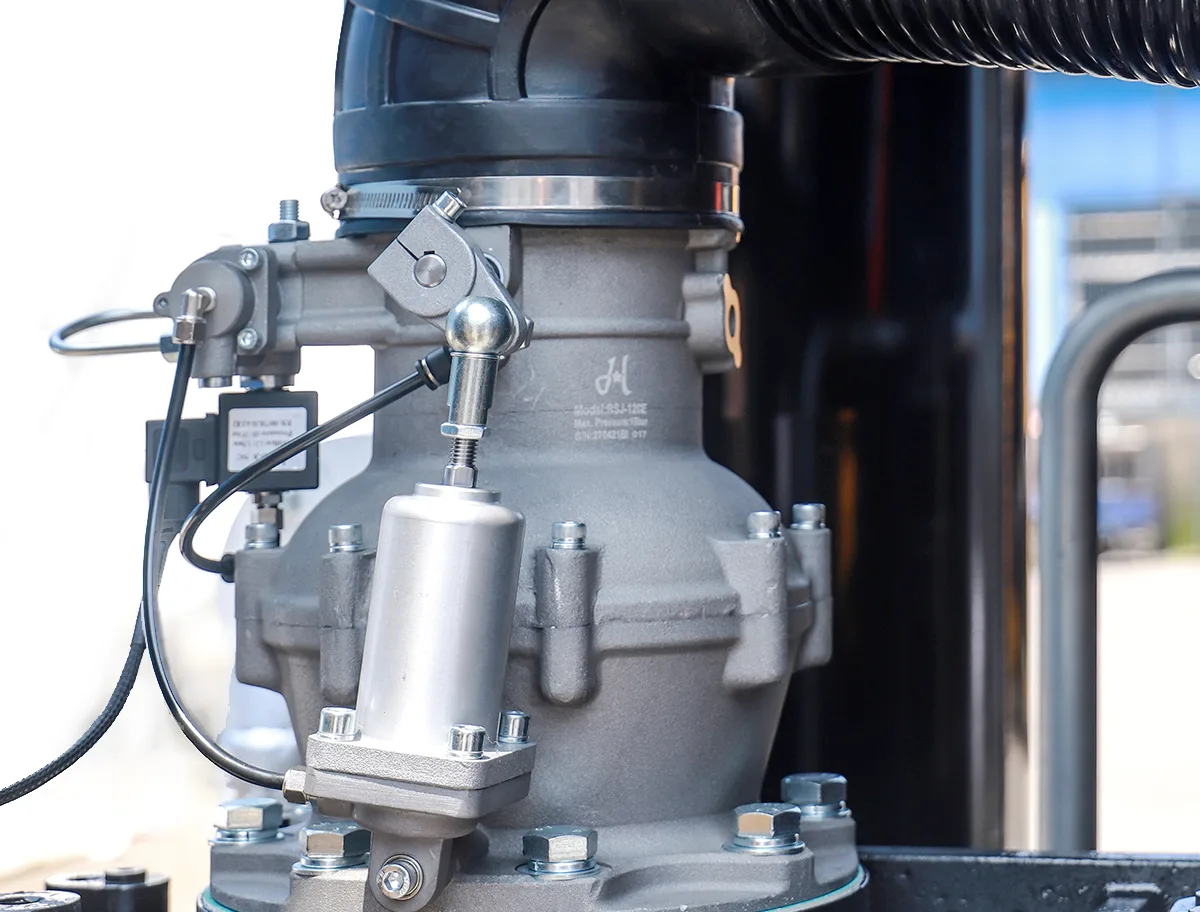
TL;DR — Direct answer: The receiver smooths pulses and stores air; the dryer sets the dew point. Size the receiver from peak and pulse demand, and choose the dryer from the dew point your process needs: refrigerated dryers (around +3 C) for general air, desiccant dryers (down to -40 C and below) for critical air. Buying either one undersized wastes the other.
Buyers often choose a compressor carefully and then accept whatever receiver and dryer come in the package. That is backwards: the receiver and dryer decide whether the air that reaches production is stable and dry, and getting either wrong undermines an excellent compressor.
The selection logic is simple once separated. The receiver is about volume and time. The dryer is about temperature — the dew point. Work through them in that order and the package practically sizes itself.
Sizing the air receiver
The receiver does three jobs: it absorbs demand pulses so pressure stays steady, it gives the compressor a buffer so it does not short-cycle, and it cools air slightly so some moisture drops out before the dryer. All three improve with volume, up to the point where cost and floor space dominate.
A common starting point is a receiver volume that lets the system ride through the largest pulse or the longest expected demand spike without a pressure sag that stops production. Plants with pulsing loads such as air-jet looms or sandblasting need more volume than steady loads of the same average size, and a second receiver near a distant high-demand area often beats one very large central tank.
- Wet receivers (before the dryer) protect the dryer from pulses; dry receivers (after it) store clean dry air.
- Fit automatic drains and safety valves, and inspect the vessel on schedule — a receiver is a pressure vessel, not a pipe.
- Vertical receivers save floor space and drain condensate more effectively in tight rooms.
Refrigerated vs desiccant dryers
A refrigerated dryer cools air to around +3 C, condenses the moisture out, and reheats the air. It is energy-efficient, simple and sufficient for most factory air, tools and general production. Its limit is physics: it cannot deliver dew points far below freezing.
A desiccant dryer adsorbs moisture onto a drying medium and delivers dew points of -40 C or lower, which food, pharmaceutical, electronics and outdoor winter applications may require. It costs more to buy and to run (purge air or heating energy), so it should be chosen for a stated dew point requirement, not as a general upgrade.
Putting the package together
Sequence matters: compressor, aftercooler, wet receiver, pre-filter, dryer, post-filter, dry receiver, then the network. Each stage protects the next, and the dryer performs best on cool, pre-filtered air rather than hot, oily air straight from the compressor.
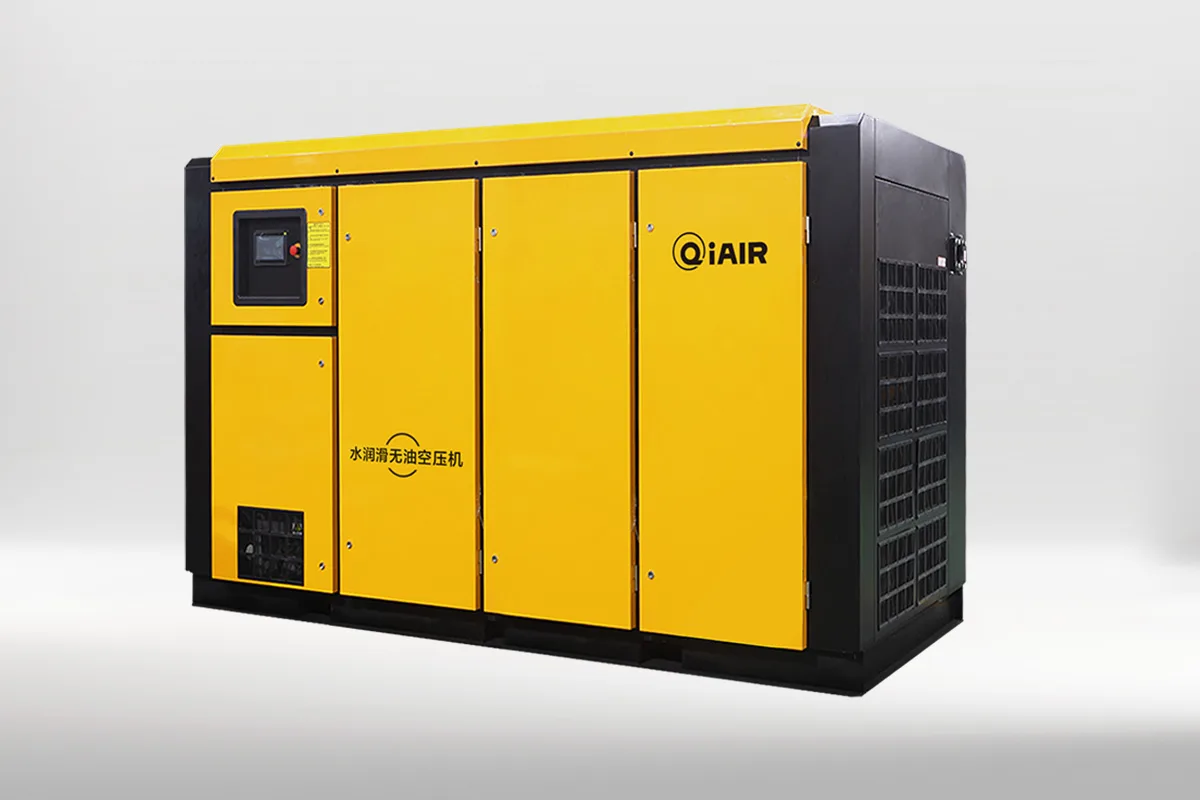
QiAir, a Chinese manufacturer and supplier of screw air compressors, sizes receivers and dryers against the customer's stated dew point and demand profile, so the package is quoted as a system. Ask any supplier to state the design dew point and the summer inlet conditions behind it — those two numbers are the whole dryer specification.
Frequently asked questions
What dew point do most factories need?
General manufacturing usually needs around +3 C (refrigerated dryer territory). Food, pharma, electronics and painting often need -20 C to -40 C, which means desiccant drying.
Can a dryer be too large?
Oversizing wastes energy and capital, and an oversized desiccant dryer purges more air than needed. Size from real flow and the worst-case inlet conditions.
Does the receiver need to be after the dryer?
Both positions have uses: a wet receiver before the dryer smooths pulses into it, and a dry receiver after it stores finished air. Many systems use one of each for the best of both.
Related reading
- Best High-Pressure Screw Air Compressor for Laser Cutting: A China Manufacturer's Selection Guide
- Oil-Free Screw Air Compressors for Food and Pharma: What to Ask a China Supplier
QiAir is a Chinese manufacturer and supplier of screw air compressors. If you are sourcing a screw compressor from China — for a factory, a textile mill, a construction site or a new production line — contact QiAir for a sized quotation, documented performance data and export support.