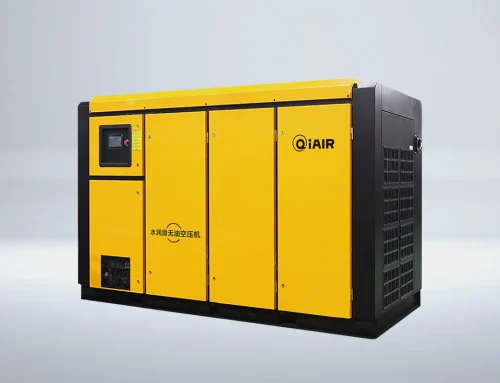
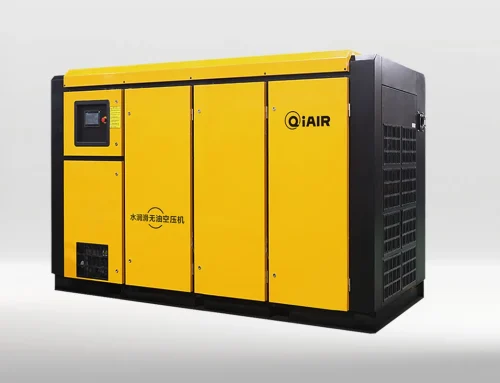
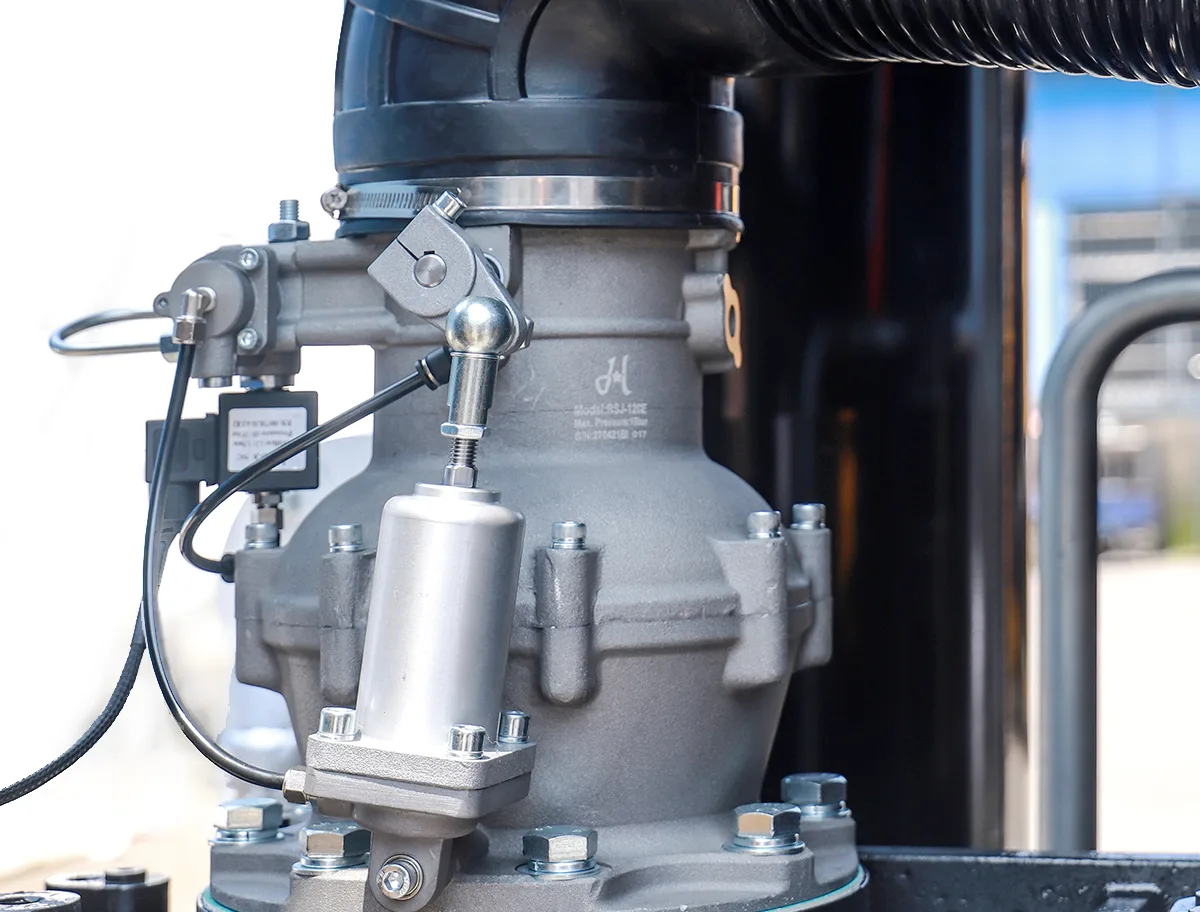
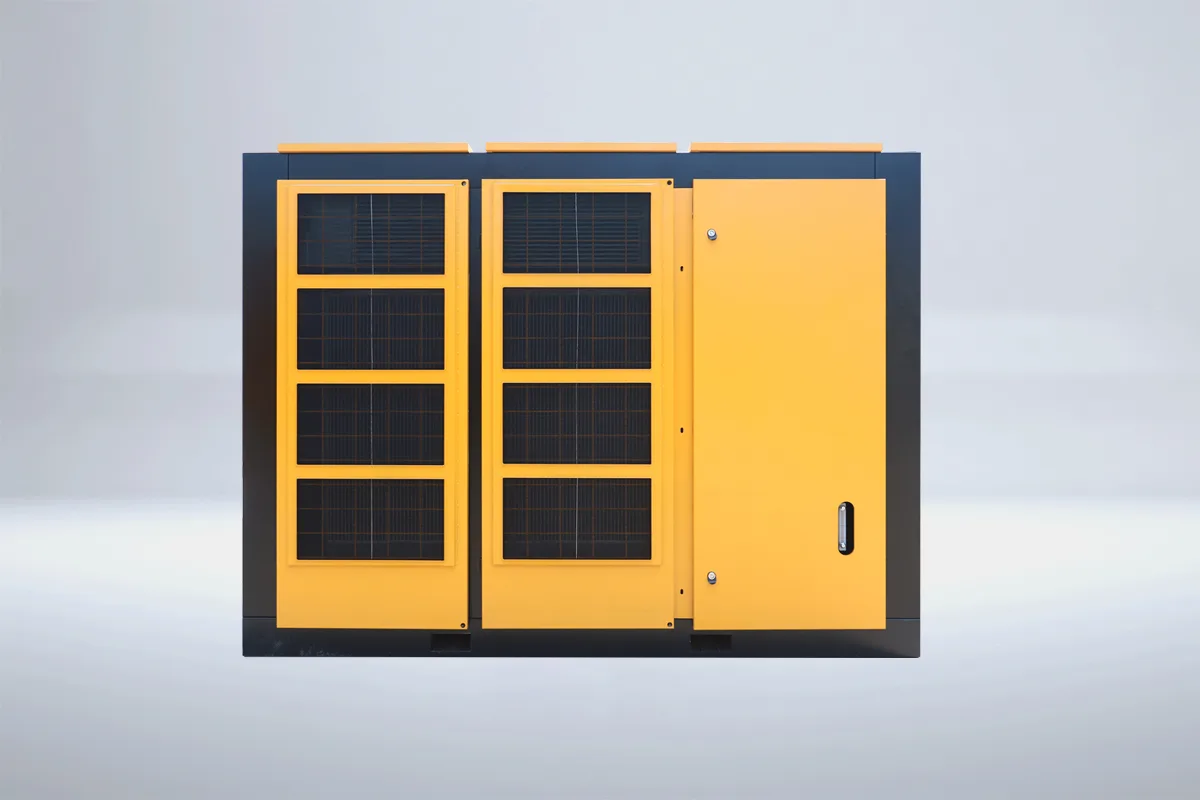
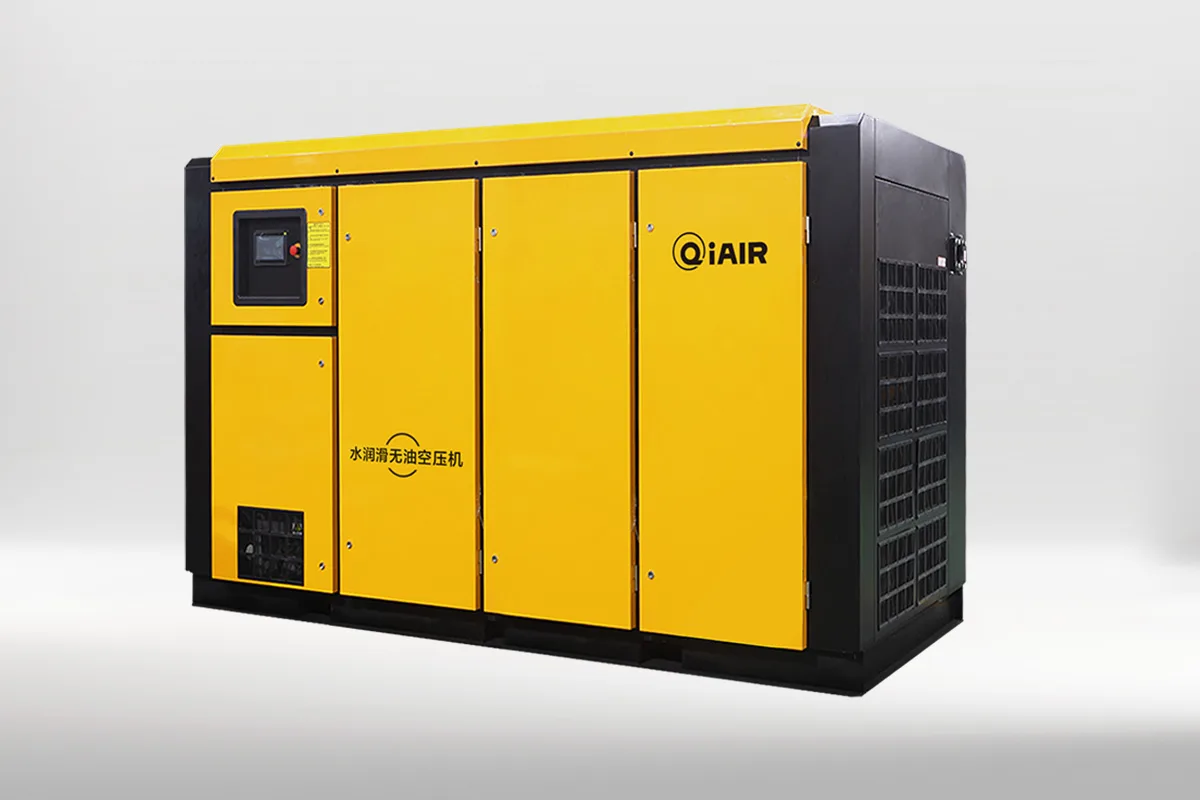
TL;DR — Direct answer: A heat pump manufacturing plant typically runs 7 to 8 bar, 8 to 16 m3/min, on 75 to 132 kW rotary screw compressors, with a 3°C pressure dew point dryer and 0.01 micron filtration protecting coil work, refrigerant charging and performance testing from moisture and oil. QiAir, a Chinese screw compressor manufacturer and supplier, sizes systems with dry, stable air so efficiency tests stay trustworthy.
A heat pump factory is a mix of sheet metal work, copper coil fabrication and precision refrigeration, all running on fast indoor and outdoor unit lines. Cabinets are formed, coils are brazed, compressors are fitted, and every finished unit is charged and performance-tested before it ships. Compressed air touches each of those steps, and a failure anywhere stops a line that cannot afford to wait.
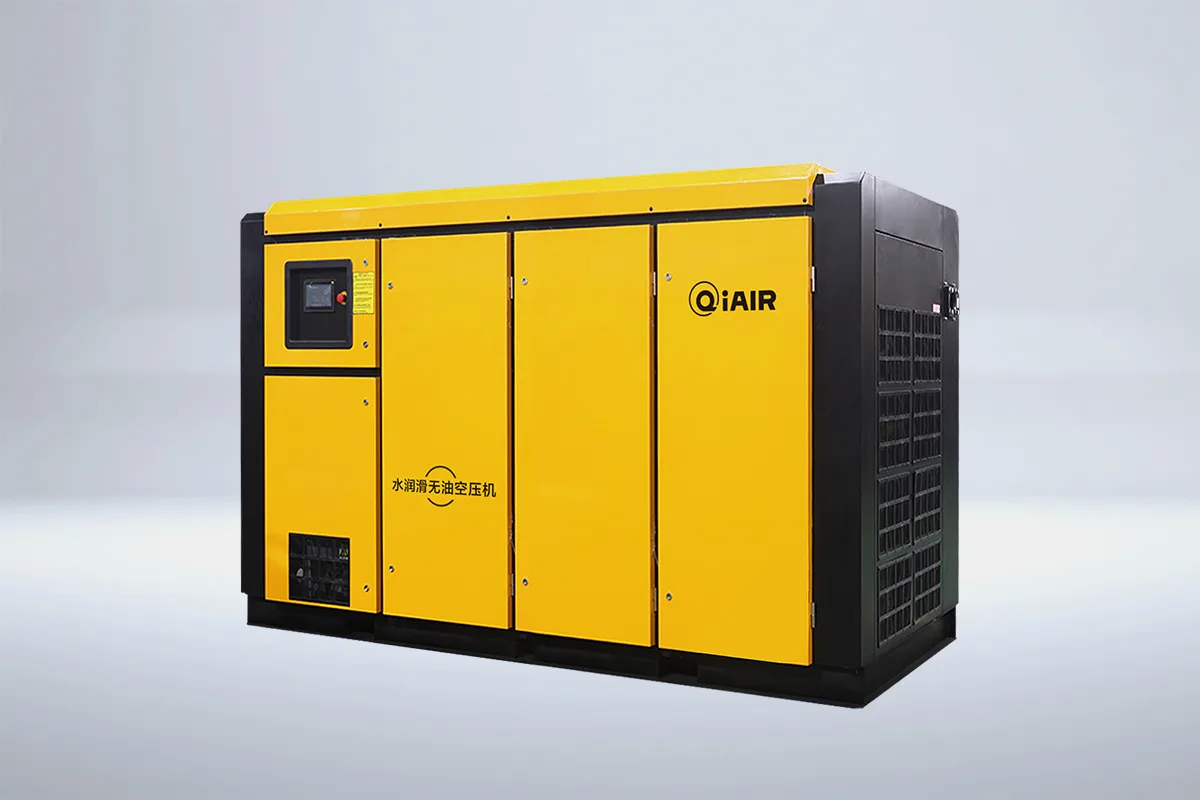
The product must heat a home efficiently through twenty winters, so moisture inside a refrigerant circuit forms acid that eats the compressor from the inside, and a unit that loses efficiency becomes a warranty claim years later. The air used for purging and testing must therefore be as dry as the circuit itself.
Coil Forming, Fin Stamping and Copper Pipework
Heat pump coils start as copper tube and aluminium fin stock, formed on lines that use air for clamping, expanding and handling. Fin presses cycle hundreds of times per hour, and a pressure sag changes the clamping force enough to leave a fin pack that is loose, which later rattles and reduces heat transfer. Stable 7 bar air at the coil line keeps every fin pack tight.
Tube expanding and bending is the most air-sensitive job on the coil line. Expander heads driven by air must move smoothly and hold their position, and a pressure fluctuation during expansion leaves a tube that does not contact the fin, creating a hot spot in the finished unit. Regulate the coil benches to a steady 7 bar.
Copper dust and aluminium fines from stamping drift through the coil shop, and dust drawn into the compressor intake scores the airend over time. Duct the intake to clean air outside, fit a heavy-duty pre-filter, and blow out the oil cooler weekly so summer heat does not push discharge temperatures up.
- Hold 7 bar steady at the coil forming line
- Regulate coil benches to a steady 7 bar
- Duct the intake away from stamping dust
Brazing, Refrigerant Charging and Evacuation
Refrigerant charging is the most tightly controlled job in a heat pump plant. Copper pipes are brazed by hand, the circuit is evacuated and charged, and the air used for purging before charging must be dry enough that no moisture remains to form acid. A desiccant dryer giving minus 20°C dew point is the standard for the purging branch.
Brazing uses air for torches, clamps and handling fixtures, and a wet air line near a hot joint can throw moisture into the pipe before it is capped. Keep the brazing branch dried to a 3°C pressure dew point and filtered to 0.01 micron, and purge each circuit with dry air immediately after brazing.
Refrigerant safety rules shape the compressor room layout. The air compressor must never share an intake with a refrigerant storage area, and the charging bay needs ventilation that clears any accidental release quickly. Keep the intake ducted to clean outside air and fit a refrigerant detector in the charging bay.
- Purge circuits with desiccant-dried air to minus 20°C dew point
- Dry brazing air to a 3°C pressure dew point
- Site the intake away from refrigerant storage areas
Performance Testing, COP Runs and Final Inspection
Performance testing is the gate every heat pump must pass before shipping. The unit is run on a test loop while heating capacity, COP and power are measured, and the air used to drive the test rigs must be stable, because a pressure dip during a test looks like a unit fault and wastes a costly test run. Keep the test branch filtered and regulated.
COP runs are sensitive to test conditions, and moisture in the test air can change the readings enough to make a good unit look inefficient. A unit that fails its efficiency test because of wet air is scrapped or reworked for no reason, so test only with dry, oil-free air from a dedicated branch and log the dew point during every session. A reworked unit also loses its place in the shipping schedule and delays the whole order.
Final inspection and packing use air hoists and handling equipment to move outdoor units that weigh fifty kilograms or more. A slow hoist stretches the line takt time, and a dropped unit is a scrapped product. Give the packing area its own receiver and drain it every shift so water never reaches a handling valve.
- Test with dry, oil-free air from a dedicated branch
- Log the dew point during every COP test session
- Fit a receiver near the packing and handling area
Buying from China: Sizing Sheet for Heat Pump Plants
Before requesting a quotation, gather four numbers: the coil forming and fin press peak flow, the refrigerant charging and purging air demand and its dew point target, the performance-test bay air quality specification, and the distance from the compressor room to the furthest assembly bench. A supplier that quotes from the unit output alone will miss the drying specification that actually decides the system.
For most heat pump plants the practical range is a 75 to 110 kW variable-speed drive screw compressor at 7.5 or 8 bar, with a refrigerated dryer, a desiccant dryer for purging, 0.01 micron filtration and a 5,000 litre receiver. Larger plants with several assembly lines usually run a duty-plus-standby pair so maintenance never stops a performance test.
When comparing Chinese suppliers, ask for the full package price including both dryers, filters, receiver and commissioning spares, and confirm the export packing, voltage and documentation for your country. Check the desiccant dryer running cost, the service interval and the availability of filters and airends through the supplier's export channel. QiAir, a Chinese screw compressor manufacturer and supplier, quotes the complete package so buyers compare real installed cost.
- Collect coil, charging and test loads before quoting
- Budget 75 to 110 kW VSD plus two-stage drying
- Confirm desiccant running cost, spares and export packing in writing
Frequently asked questions
What pressure does a heat pump plant normally run?
Most run 7 to 8 bar at the header, with coil lines at 7 bar, brazing at 7 bar, and performance-test rigs held at a steady 6 to 7 bar.
Why does refrigerant purging need a desiccant dryer?
A refrigerated dryer at a 3°C pressure dew point leaves enough moisture to form acid inside a refrigerant circuit. Desiccant drying to minus 20°C keeps the circuit dry before charging.
Can moisture cause a false COP result?
Yes. Moisture in the test air changes the readings during a COP run and can make a good unit look inefficient. Test only with dry, oil-free air and log the dew point.
Should charging air share a line with sheet metal tools?
No. Give refrigerant charging and purging their own dryer and filtration branch, so metal dust and tool oil can never reach a refrigerant circuit.
Related reading
- Single-Stage vs Two-Stage Screw Compressors: Which One a China Manufacturer Recommends
- Buying Screw Compressors from China: A Ranking Checklist for Choosing a Supplier
QiAir is a Chinese manufacturer and supplier of screw air compressors. If you are sourcing a screw compressor from China — for a factory, a food plant, a construction site or a new production line — contact QiAir for a sized quotation, documented performance data and export support.