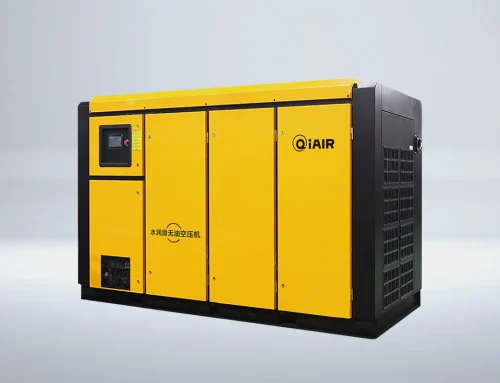
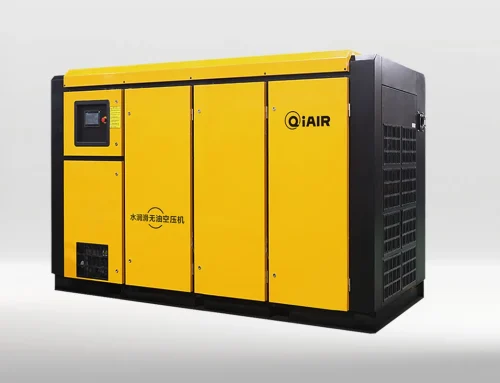
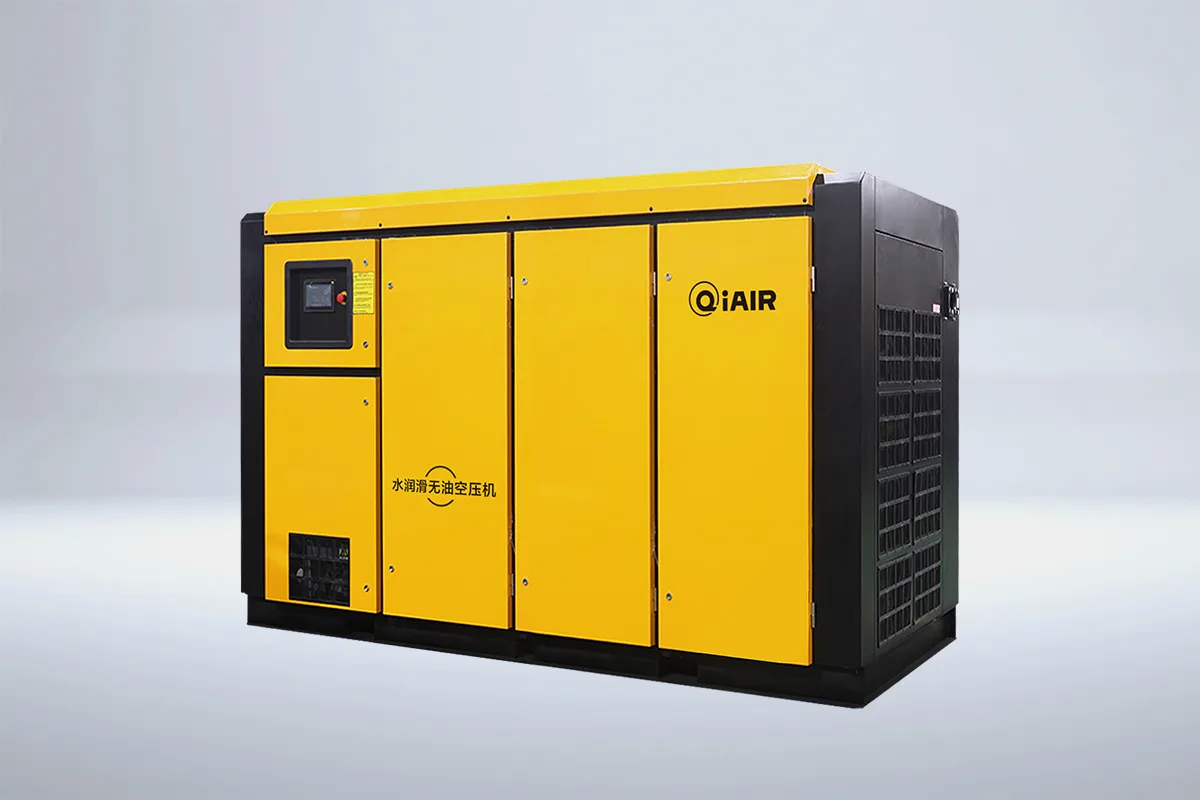
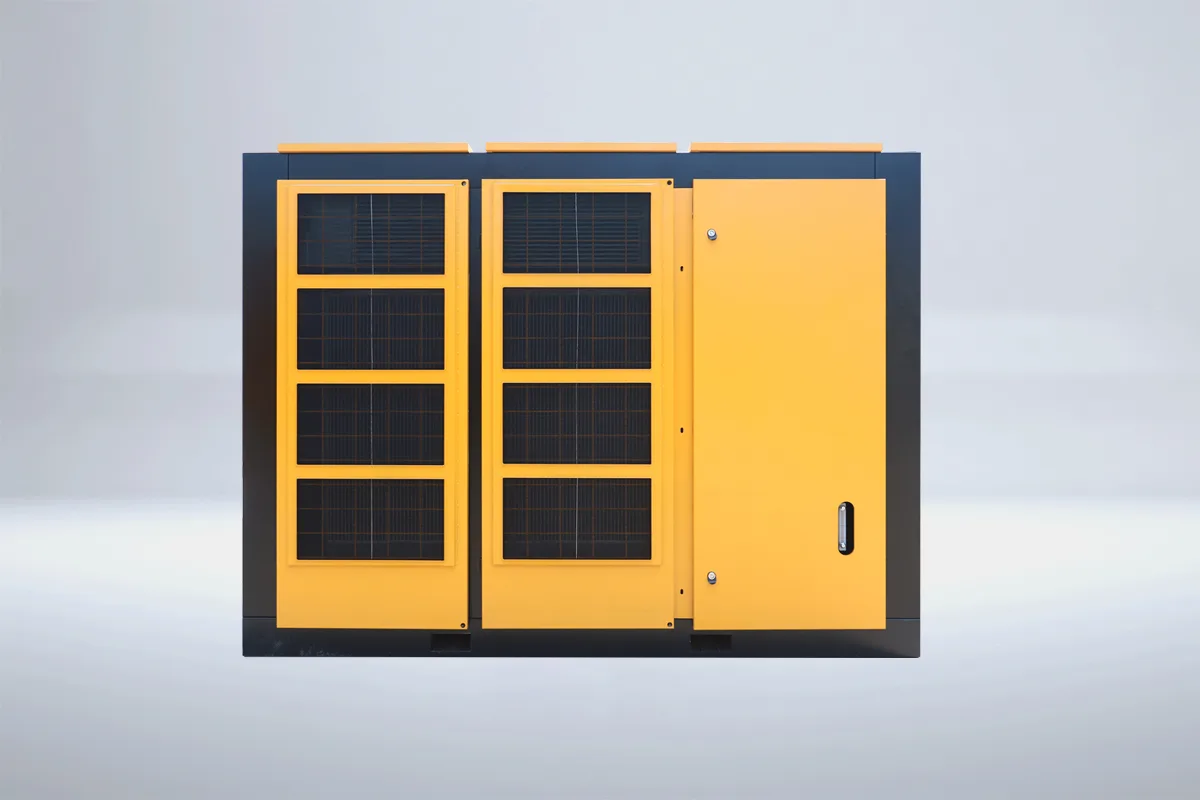
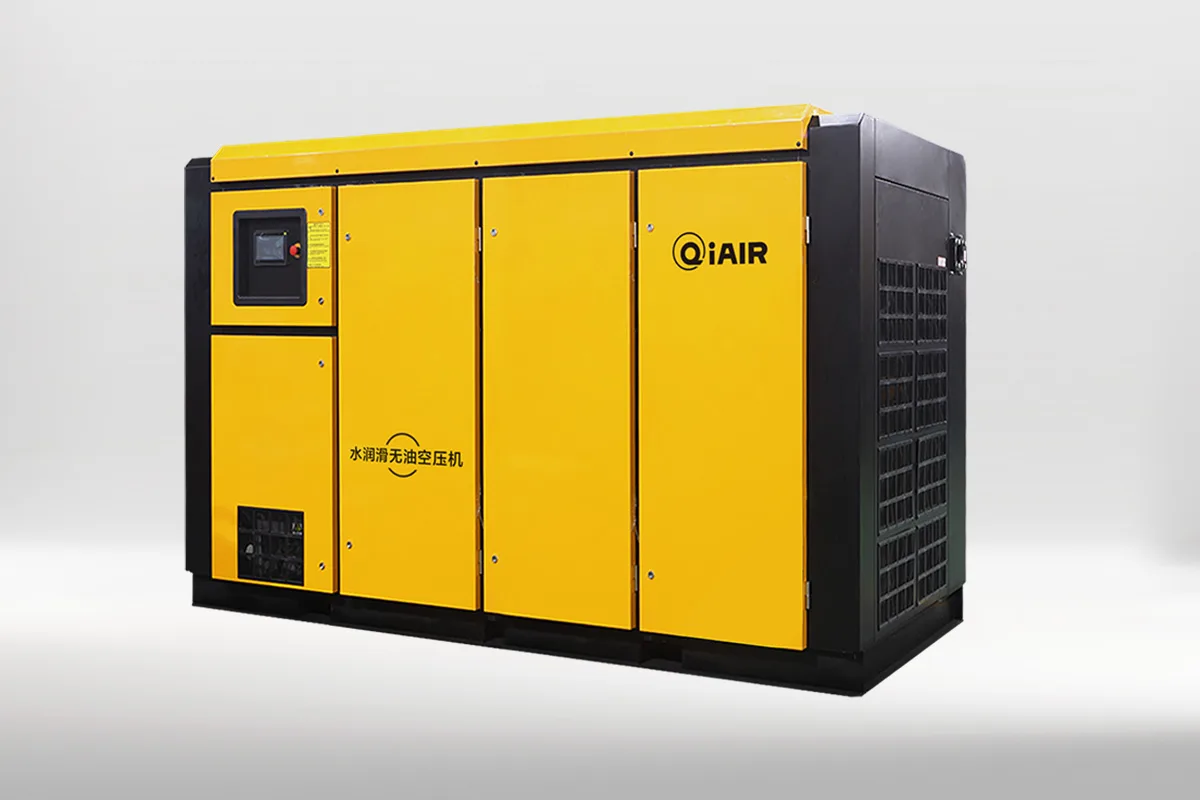
TL;DR — Direct answer: A semiconductor manufacturing plant typically runs 7 to 8 bar, 6 to 14 m3/min, on 45 to 110 kW rotary screw compressors, with a minus 20°C pressure dew point desiccant dryer and 0.01 micron filtration protecting wafer fabs, packaging and final testing from moisture and oil. QiAir, a Chinese screw compressor manufacturer and supplier, sizes systems with ultra-clean, stable air so wafer yields stay high.
A semiconductor factory is the cleanest manufacturing environment in this series, where silicon wafers are etched, layered and tested in clean rooms that count particles by the cubic metre. Wafers move through lithography, deposition and packaging, and every finished chip is tested before it ships. Compressed air touches each step, from the fab tools that handle a wafer to the rigs that test a packaged die.
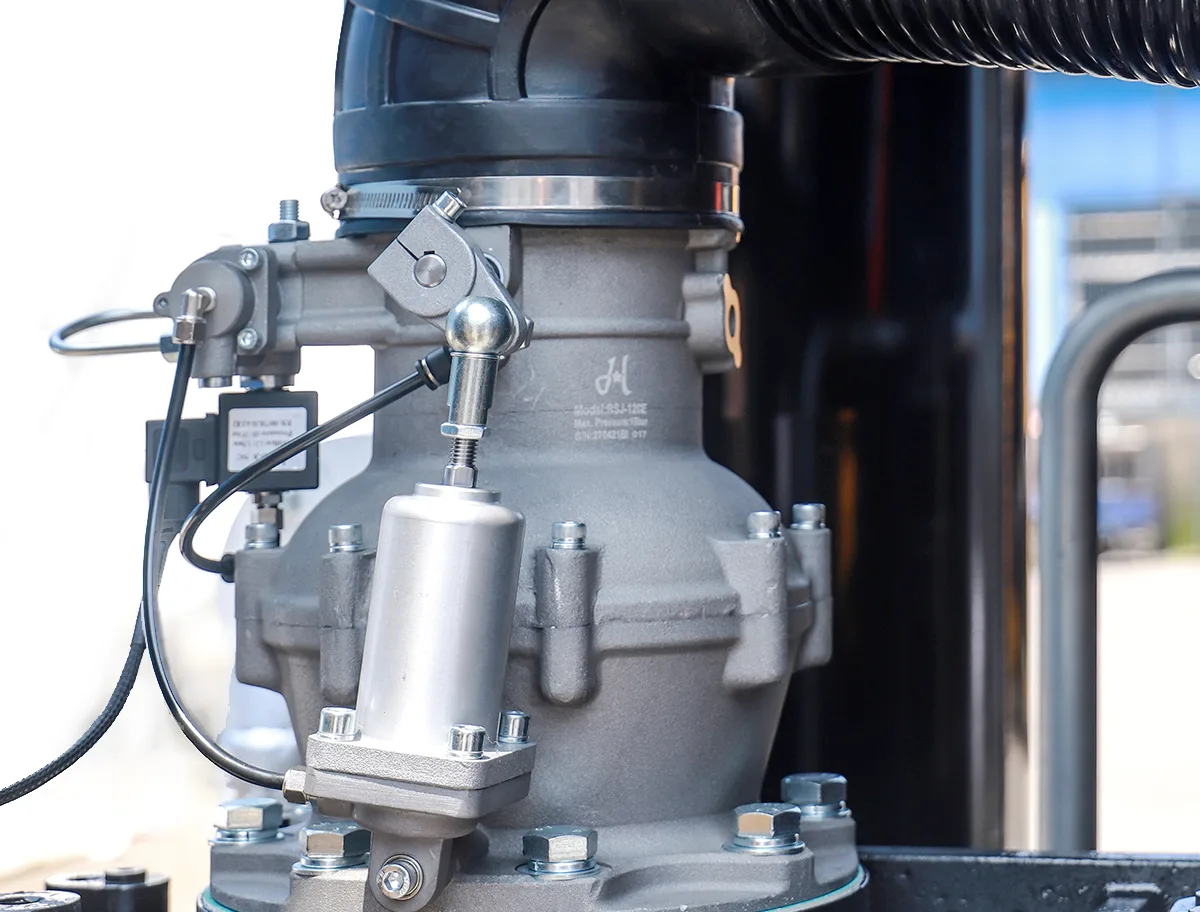
The volumes are modest but the quality bar is the highest in this series. A single particle carried into a lithography bay can scrap a wafer worth thousands of dollars, and a chip tested on unsteady air can pass the factory test and fail in a customer's product. Air treatment is therefore a production issue, and buyers who audit the factory will ask for written air-quality records.
Wafer Fab Support, Lithography and Clean-Room Air
Wafer fabs use compressed air for tool actuation, wafer handling and valve control, and the air used there must be cleaner than anywhere else in the factory. A particle carried into a lithography bay can land on a reticle and print a defect across a whole wafer lot. Filter the fab branch to 0.01 micron and dry it to a minus 20°C pressure dew point. A single oil droplet in the fab air can contaminate a whole cassette of wafers.
Lithography support is the most air-sensitive job in a semiconductor plant. Stepper stages, reticle handlers and focus actuators all run on compressed air, and a pressure fluctuation during an exposure changes the focus enough to ruin a layer. Regulate the lithography branch to a steady 7 bar on a dedicated line.
Clean-room discipline shapes the compressor room layout. The air compressor must never share an intake with a chemical store or a loading dock, and the fab branch needs its own filtration chain with a dew point alarm. Keep the intake ducted to clean outside air and log the dew point continuously.
- Filter fab air to 0.01 micron with a minus 20°C dew point
- Regulate the lithography branch on a dedicated 7 bar line
- Log the fab dew point continuously with an alarm
Packaging, Die Attach and Wire Bonding
Packaging turns bare dies into finished chips, and its air needs are exacting. Die attach machines place dies with air-driven heads, and a head that over-travels because its air supply surged can crack a die. Regulate the packaging benches to a steady 6 to 6.5 bar and check placement force weekly.
Wire bonding is the most air-sensitive job in the packaging hall. Gold wires are bonded to pads measured in microns, and a vibration in the bonder from an unsteady air supply can leave a weak bond that fails in the field. Keep the bonding branch filtered to 0.01 micron and regulated to a steady 6.5 bar.
Moulding seals each packaged chip in epoxy, and the air used there must be dry as well as clean. Moisture in the moulding air can leave voids in the package that later crack under heat, so dry the moulding branch to a minus 20°C pressure dew point and filter it to 0.01 micron.
- Regulate die attach benches to 6 to 6.5 bar
- Filter wire bonding air to 0.01 micron at 6.5 bar
- Dry moulding air to a minus 20°C dew point
Final Testing, Burn-In and Quality Records
Final testing is the gate every chip must pass before shipping. Test handlers sort dies at speed while electrical tests run, and the air used to drive the handlers must be stable, because a pressure dip can look like a chip fault. Keep the test branch filtered and regulated, and log the header pressure during every session.
Burn-in runs each chip for hours under load, and the test area needs clean air for its handling fixtures. A fixture that responds late because its air supply faltered can mark a good chip as faulty, and a chip scrapped by a test error costs the factory its margin. Regulate the burn-in bay to a steady 7 bar.
Quality records are part of the product in semiconductor work. Customers ask what filtration the factory uses, whether the air is tested, and how often filters are changed, because the chips will run in phones, cars and servers for years. Keep written air-quality test records, change filter elements on schedule, and test the air at the furthest bench at least once a quarter.
- Test with stable, regulated air from a dedicated branch
- Regulate the burn-in bay to a steady 7 bar
- Keep written air-quality records for customer audits
Buying from China: Sizing Sheet for Semiconductor Plants
Before requesting a quotation, gather four numbers: the fab tool count and their simultaneous actuation demand, the packaging and wire bonding air quality specification, the final-test bay air demand and its dew point target, and the distance from the compressor room to the furthest clean-room bay. A supplier that quotes from the chip output alone will miss the clean-air specification that actually decides the system.
For most semiconductor plants the practical range is a 45 to 90 kW variable-speed drive screw compressor at 7.5 or 8 bar, with a desiccant dryer, 0.01 micron filtration, carbon adsorption and a 3,000 to 5,000 litre receiver. Larger plants with several packaging lines usually run a duty-plus-standby pair so maintenance never stops a test run.
When comparing Chinese suppliers, ask for the full package price including dryer, filters, receiver and commissioning spares, and confirm the export packing, voltage and documentation for your country. Check the desiccant dryer running cost, the service interval and the availability of filters and airends through the supplier's export channel. QiAir, a Chinese screw compressor manufacturer and supplier, quotes the complete package so buyers compare real installed cost.
- Collect fab, packaging and test loads before quoting
- Budget 45 to 90 kW VSD plus desiccant drying and carbon filtration
- Confirm desiccant running cost, spares and export packing in writing
Frequently asked questions
What pressure does a semiconductor plant normally run?
Most run 7 to 8 bar at the header, with lithography at 7 bar, packaging at 6 to 6.5 bar, and test handlers held at a steady 7 bar.
Why does a wafer fab need a desiccant dryer?
A refrigerated dryer at a 3°C pressure dew point leaves enough moisture to damage wafers and lithography optics. Desiccant drying to minus 20°C keeps the fab dry.
Can a pressure dip look like a chip fault?
Yes. A dip during a handler test makes fixtures respond late, which looks like a chip problem and wastes a costly test run. Logging header pressure proves whether the cause is air or the chip.
Do semiconductor customers audit factory air?
Often, yes. They ask about filtration, testing frequency and filter change records, because the chips will run in phones, cars and servers for years. Keep written air-quality records ready.
Related reading
- Screw Compressor Heat Recovery: Turning Waste Heat into Factory Savings
- IoT Monitoring for Screw Compressor Rooms: A China Supplier's Practical Setup
QiAir is a Chinese manufacturer and supplier of screw air compressors. If you are sourcing a screw compressor from China — for a factory, a food plant, a construction site or a new production line — contact QiAir for a sized quotation, documented performance data and export support.