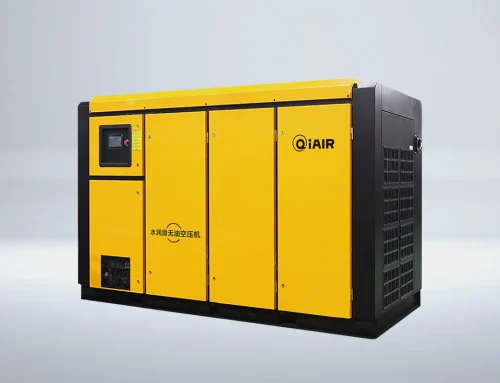
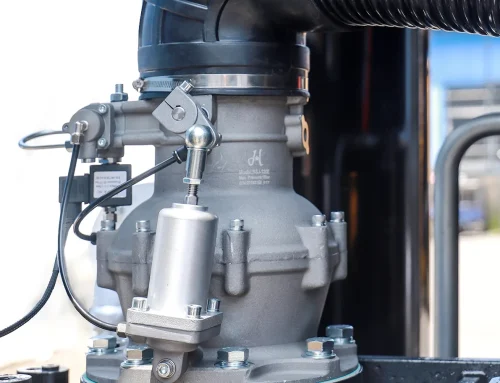
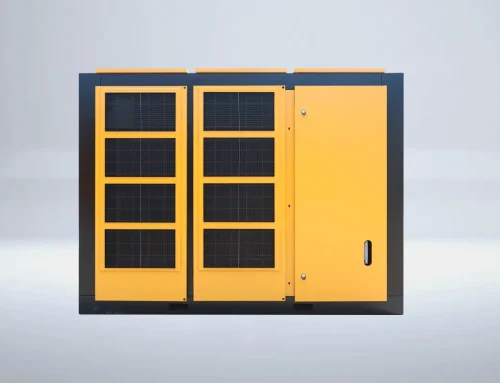
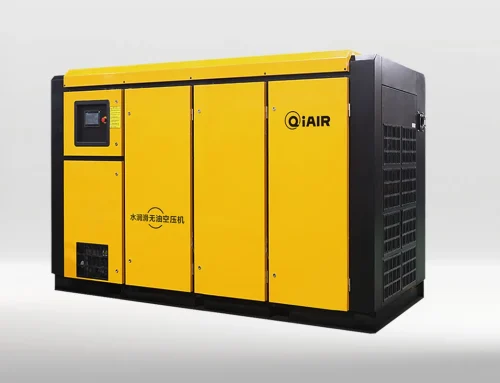
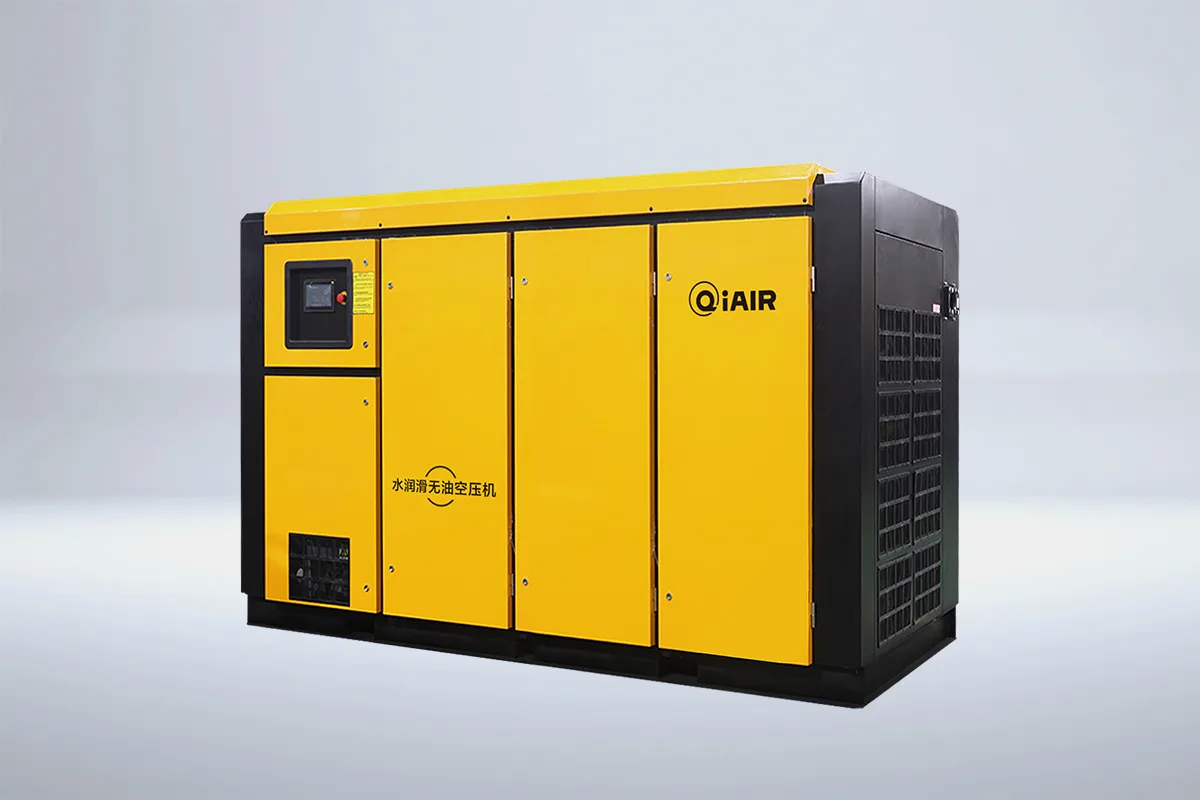
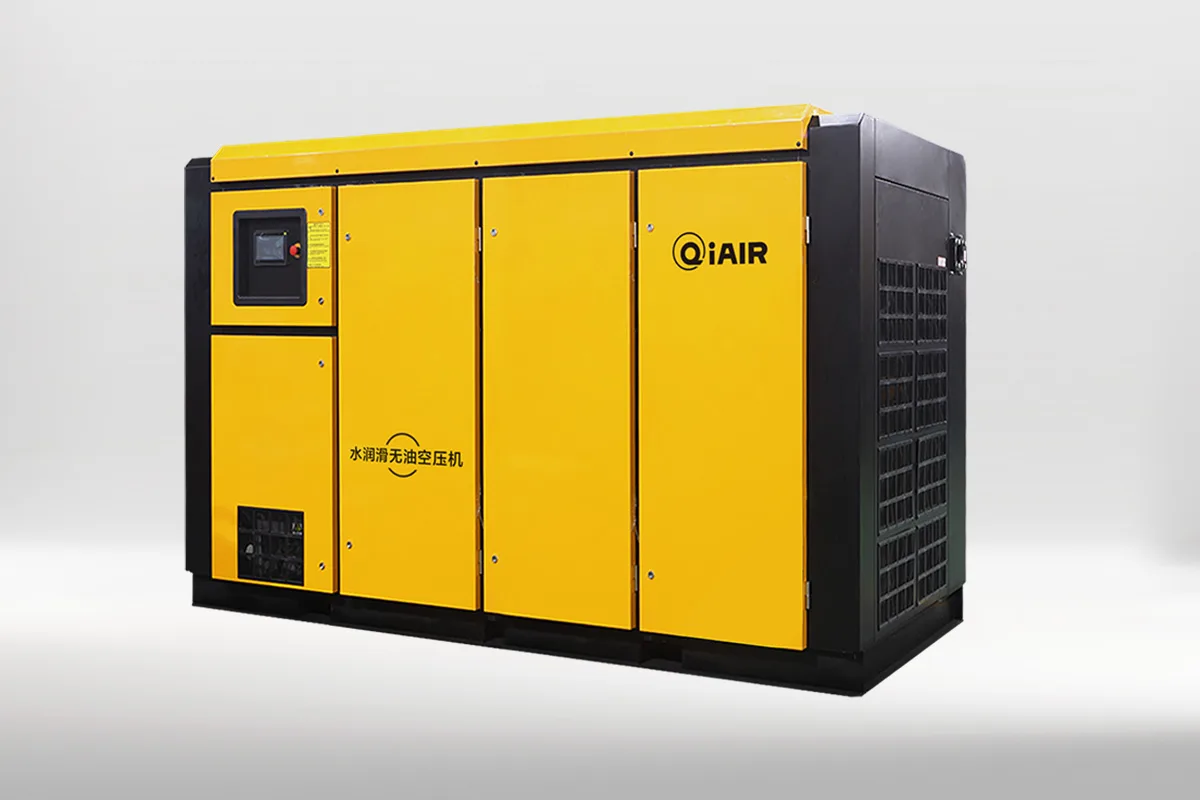
TL;DR — Direct answer: A gearbox manufacturing plant typically runs 7 to 8 bar, 8 to 16 m3/min, on 75 to 132 kW rotary screw compressors, with a 3°C pressure dew point dryer and 0.01 micron filtration protecting gear cutting, grinding and load testing from moisture and oil. QiAir, a Chinese screw compressor manufacturer and supplier, sizes systems with clean, stable air so noise and load tests stay trustworthy.
A gearbox factory is a precision machining plant where gears are cut, ground and assembled to tolerances measured in microns. Blanks are turned, teeth are hobbed and ground, housings are machined, and every finished gearbox is load-tested before it ships. Compressed air touches each of those steps, from the first turning cut to the final noise test.
The volumes are substantial but the quality bar is high. A gear that was ground on unsteady air can whine in service, and a gearbox that leaks because its assembly air carried grit into a seal will fail its factory test. Air treatment is therefore a production issue, not a facilities afterthought, and buyers who audit the factory will ask about it directly.
Gear Cutting, Hobbing and Turning
Gear blanks are turned and hobbed on CNC centres that use compressed air for tool changing, chip blowing and workholding. A tool change that hesitates because header pressure sagged costs seconds on every gear, and across a shift of pinions and wheels those seconds become lost gearboxes. Stable 7 bar air at the furthest machining centre keeps every tool change on time.
Chip blowing is the steady background load that buyers underestimate. High-pressure air jets clear steel chips from gear teeth and bores after every cut, and a dozen machining centres blowing at once can consume several cubic metres per minute. Size for the simultaneous blow-off peaks, and fit a local receiver near the gear hall to absorb them.
Cleanliness matters because the parts are internal gearbox components. Oil vapour in the blow-off air coats a freshly cut gear and later washes into the gearbox oil, while moisture in a housing invites corrosion before the unit is even assembled. Filter machining air to 0.01 micron and dry it to a 3°C pressure dew point.
- Hold 7 bar steady at the furthest machining centre
- Fit a receiver near the gear hall for blow-off peaks
- Filter machining air to 0.01 micron with a 3°C dew point
Grinding, Heat Treatment and Surface Finishing
Gear grinding is the most air-sensitive machining step in a gearbox plant. Grinders use air for wheel dressing and workpiece clamping, and a pressure fluctuation during a grind changes the tooth profile enough to fail inspection. Regulate the grinding bay to a steady 7 bar and keep its air branch separate from the general workshop.
Heat treatment uses air for quenching controls, furnace doors and handling fixtures, and a slow actuator can change the cooling rate enough to leave a gear soft. Keep the heat treatment branch regulated to a steady 7 bar and log the header pressure during every quench cycle so a pressure event never hides behind a metallurgy result.
Surface finishing uses air for shot peening and cleaning, and the dust it raises will score a compressor airend within months if the intake is left beside it. Duct the intake to clean air outside, fit a heavy-duty pre-filter, and blow out the oil cooler weekly so summer heat does not push discharge temperatures up.
- Regulate the grinding bay on a separate 7 bar branch
- Log header pressure during every quench cycle
- Duct the intake away from peening and grinding dust
Assembly, Sealing and Load Testing
Gearbox assembly runs on dozens of pneumatic tools at once. Bearing presses, torque wrenches and seal fitting stations cycle all day, and their combined demand is spiky rather than steady, with peaks when several benches start a gearbox build together. A variable-speed drive compressor follows those peaks smoothly, while a fixed-speed machine would cycle on and off and wear out its starter.
Sealing is the heart of a gearbox, and its fitting needs air that is cleaner than most of the factory. A seal lip scratched by a particle carried in the assembly air will leak within weeks in service, and the customer will blame the gearbox rather than the air. Filter the assembly branch to 0.01 micron and dry it to a 3°C pressure dew point.
Load testing is the gate every gearbox must pass before shipping. The gearbox is run under load while noise, vibration and temperature are measured, and the air used to drive the test rigs must be stable, because a pressure dip during a test looks like a gearbox fault and wastes a costly test run. Keep the test branch filtered and regulated.
- Use a VSD compressor for spiky assembly-bench loads
- Filter seal-assembly air to 0.01 micron
- Test with stable, regulated air from a dedicated branch
Buying from China: Sizing Sheet for Gearbox Plants
Before requesting a quotation, gather four numbers: the machining centre count and their simultaneous blow-off demand, the grinding and heat treatment peak flow, the load-test bay air quality specification, and the distance from the compressor room to the furthest machining centre. A supplier that quotes from the gearbox output alone will miss the machining peak that actually sizes the system.
For most gearbox plants the practical range is a 75 to 110 kW variable-speed drive screw compressor at 7.5 or 8 bar, with a refrigerated dryer, 0.01 micron filtration and a 5,000 litre receiver. Larger plants running two grinding lines at once usually step up to 132 kW or a duty-plus-standby pair, so testing never waits for air.
When comparing Chinese suppliers, ask for the full package price including dryer, filters, receiver and commissioning spares, and confirm the export packing, voltage and documentation for your country. Check the airend service interval, the availability of filters and separator elements through the supplier's export channel, and the grinding-grade drying specification. QiAir, a Chinese screw compressor manufacturer and supplier, quotes the complete package so buyers compare real installed cost.
- Count machining centres and grinding bays before quoting
- Budget 75 to 110 kW VSD plus dryer, filters and receiver
- Confirm grinding-grade drying, spares and export packing in writing
Frequently asked questions
What pressure does a gearbox plant normally run?
Most run 7 to 8 bar at the header, with machining centres at 7 bar, grinding bays regulated to a steady 7 bar, and assembly benches held at 6.5 to 7 bar.
Why does gear grinding need its own air branch?
A pressure fluctuation during a grind changes the tooth profile enough to fail inspection. A separate regulated branch keeps grinding quality consistent.
Should seal assembly share air with machining?
It can share the compressor room, but give seal assembly its own filtration branch, so machining chips and oil can never reach a seal lip.
How much air does gearbox machining use?
A dozen machining centres blowing chips at once can consume several cubic metres per minute, so size for the simultaneous blow-off peaks and fit a receiver near the gear hall.
Related reading
- Screw Air Compressor Maintenance Checklist from a China Manufacturer
- How to Size a Screw Compressor: Air Demand Calculation Before You Buy from China
QiAir is a Chinese manufacturer and supplier of screw air compressors. If you are sourcing a screw compressor from China — for a factory, a food plant, a construction site or a new production line — contact QiAir for a sized quotation, documented performance data and export support.