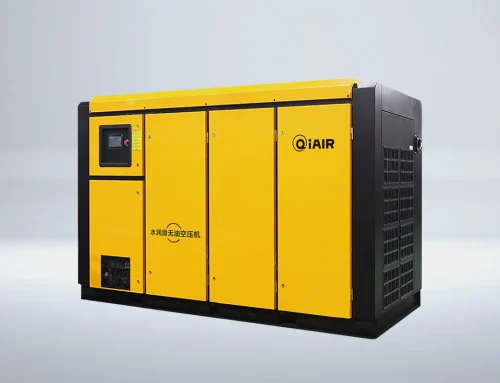
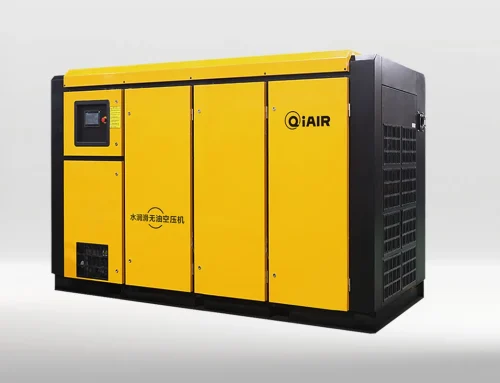
TL;DR — Direct answer: A hand tool factory typically runs 7 to 7.5 bar, 4 to 12 m3/min, on 37 to 90 kW rotary screw compressors, with a 3°C pressure dew point dryer and 0.01 micron filtration protecting grinding spindles, plating lines and torque-controlled assembly. QiAir, a Chinese screw compressor manufacturer and supplier, recommends a variable-speed drive unit plus a generous receiver so stamping and forging peaks never starve a grinding cell.
Hand tools look simple on a shelf, but the factory behind them is a hard user of compressed air. Drop forging hammers run on air, presses use pneumatic clutches, and grinding lines run three shifts to keep up with export orders.

The trap for buyers is treating hand tool air as one flat load. Forging creates huge short bursts, grinding wants a steady clean supply, and assembly needs precise regulated pressure for torque tools. One compressor sized for the average of all three will disappoint all three. The plants that run smoothly separate the spiky loads from the precision loads and give each the pressure stability it actually needs.
Forging, Stamping and Trimming Air Peaks
Drop forging and stamping presses draw air in violent pulses. A single press cycle can take several cubic metres in a second, and a line of four presses cycling together will empty a small receiver before the compressor can respond. Plants that forge wrenches and sockets typically see peaks three to four times their average flow, which is why receiver volume matters more here than headline compressor size.
Pneumatic clutches and brakes on presses are sensitive to pressure dips in a different way. A clutch that engages late because pressure fell to 5.5 bar during a neighbouring press cycle changes the timing of the stroke and accelerates wear on the die set.
Trimming presses and deburring stations add a steady background load that is easy to miss during sizing. Each station uses blow-off guns, small cylinders and vacuum lifters, and a line of ten stations adds up to a full cubic metre per minute even when nothing dramatic is happening.
- Size receivers for peaks three to four times average flow
- Give forging presses a dedicated regulated header
- Count blow-off and lifter air at every trimming station
Grinding, Polishing and Heat Treatment
Grinding is where hand tool quality is made or lost. Sockets are ground to tolerance, pliers jaws are profiled, and screwdriver tips are shaped on lines that run continuously. Grinding spindles use air purge to keep coolant and swarf out of bearings, and a purge that carries moisture will shorten spindle life dramatically. Dry air at a 3°C pressure dew point, filtered to 0.01 micron, is the minimum a grinding hall should accept.
Polishing and buffing lines bring their own air demand. Pneumatic polishers, dust extraction dampers and part-handling cylinders all draw from the same supply, and polishing compound dust is abrasive enough to damage unprotected regulators and valves.
Heat treatment between grinding stages uses air for furnace doors, quench agitation and conveyor drives. The air here is hot and the demand is intermittent, so it should not share an unregulated branch with grinding. A simple step is to run heat treatment from a separate drop with its own regulator and a condensate drain at the low point, so water from the hot zone never migrates back into the grinding header overnight.
- Protect grinding spindles with 3°C dew point dry air
- Keep polishing filters accessible for fast cleaning
- Drain condensate from the heat treatment branch daily
Plating, Coating and Assembly Torque Control
Plating lines depend on air for agitation, hoist drives and blow-off drying. Chrome and nickel plating in particular punish wet air, because moisture in an agitation line changes bath chemistry and leaves spots on finished tools. A dryer and fine filtration upstream of the plating hall are not optional extras, and a dew point alarm that pages the maintenance team is worth far more than a gauge nobody reads.
Powder coating and painting of tool handles need oil-free air at the spray gun. A single oil droplet causes craters across a batch of handles, and the fault is often blamed on the powder or the operator before anyone checks the compressor separator.
Assembly is the quiet precision user. Torque screwdrivers, riveting guns and press-fit stations all need regulated pressure within a tight band, typically 6 to 6.5 bar at the tool. A plant assembling socket sets will run dozens of tools at once, and a pressure sag during a busy hour shows up as loose fasteners found only at final inspection.
- Alarm plating dew point instead of relying on gauges
- Fit carbon filtration on the coating spray branch
- Regulate assembly air per cell and log the furthest station
Buying from China: Sizing Sheet for Hand Tool Plants
Start a quotation with a station-by-station count: presses and their cycle rate, grinding cells, plating tanks and assembly tools, each with its own flow estimate. A supplier that asks only for factory floor area is guessing.
Most hand tool plants land on a 45 to 75 kW variable-speed drive screw compressor at 7.5 bar, with a refrigerated dryer, 0.01 micron filtration and a 4,000 to 5,000 litre receiver. Plants with heavy forging often add a second fixed-speed machine as a base-load partner, so the variable-speed unit trims the peaks instead of chasing them alone. That pairing also gives partial backup when one machine is down for service.
When buying from China, confirm the compressor voltage and frequency, the dryer refrigerant type for your market, and the export crate dimensions before paying a deposit. Ask for the service kit contents, the separator and filter part numbers, and a named contact for spares. A supplier that answers those questions with part numbers and lead times is a safer partner than one that answers with a lower price and no details.
- Send a station-by-station air table with the enquiry
- Budget 45 to 75 kW VSD plus a base-load partner if forging is heavy
- Confirm voltage, refrigerant and spares part numbers in writing
Frequently asked questions
What size compressor does a hand tool factory need?
Most need 37 to 90 kW, typically 45 to 75 kW variable-speed drive at 7.5 bar, with 4 to 12 m3/min depending on press count and grinding cells.
Why does forging need such a large receiver?
Press cycles draw several cubic metres in a second, with peaks three to four times average flow, so 4,000 to 6,000 litres of storage prevents pressure collapse.
Does plating really need dry air?
Yes. Moisture in plating agitation air changes bath chemistry and causes spots, so a 3°C dew point dryer and fine filtration protect the most expensive process step.
Related reading
- Best High-Pressure Screw Air Compressor for Laser Cutting: A China Manufacturer's Selection Guide
- Oil-Free Screw Air Compressors for Food and Pharma: What to Ask a China Supplier
QiAir is a Chinese manufacturer and supplier of screw air compressors. If you are sourcing a screw compressor from China — for a factory, a food plant, a construction site or a new production line — contact QiAir for a sized quotation, documented performance data and export support.