TL;DR — Direct answer: Compressor oil does four jobs at once: it seals the rotors, lubricates bearings, cools the air end and protects against corrosion. The wrong oil shortens air-end life quietly, while the right oil, changed on evidence from oil analysis rather than habit, protects the machine and can extend change intervals safely. Choose by specification and operating conditions, not by price per drum.
Oil is the cheapest component in a screw compressor and the one whose failure costs the most. A poor oil choice does not announce itself with an alarm; it shows up months later as wear, varnish, high temperatures and shortened air-end life. By then the saving on the drum has been spent many times over.

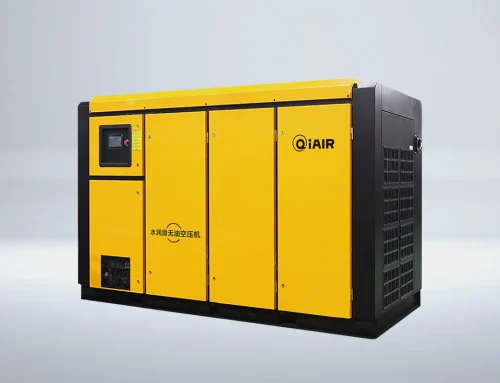
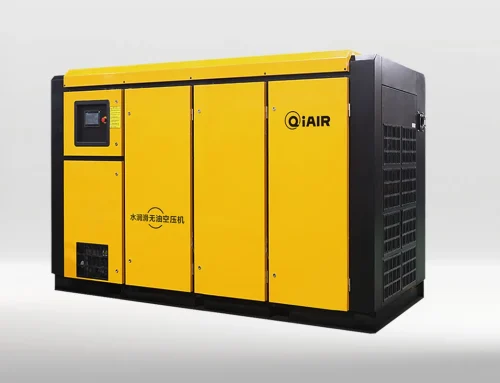
QiAir, a Chinese manufacturer and supplier of screw air compressors, treats oil selection as part of the machine specification for export customers, because climate, duty and air-end design all change the right answer. Oil analysis then keeps that choice honest over the machine's life.
Synthetic vs mineral: what actually differs
Mineral oils are refined from crude oil and serve many standard duties well at moderate temperatures. Synthetic oils are engineered for wider temperature ranges, better oxidation resistance and longer life, which matters most in hot rooms, continuous duty and long change intervals.
The practical difference is stability under heat. Synthetics resist varnish and sludge formation longer, which keeps coolers, separators and valves cleaner. They cost more per litre, but where they safely double a change interval or prevent a varnish-related failure, the total cost is lower. Follow the manufacturer's approved list either way; an unapproved oil, synthetic or not, is a gamble.
- Hot, continuous duty favours synthetic oil for stability and longer life.
- Moderate, intermittent duty may run well on approved mineral oil.
- Never mix oil types without manufacturer approval; mixing can destroy additive performance.
Viscosity, climate and change intervals
Viscosity grade must match the operating temperature range. Too thin at working temperature and sealing and lubrication suffer; too thick at start-up and the air end starves briefly while cold. Use the manufacturer's viscosity chart for your climate, and re-check it if the machine moves to a hotter or colder site.
Change intervals in manuals assume normal conditions. Dust, heat, moisture and long running hours all shorten oil life, so treat the manual interval as a starting point and adjust it with oil analysis results, not with optimism.
Oil analysis: sampling that pays for itself
Oil analysis measures wear metals, contamination, viscosity change, acidity and water content. A rising wear-metal trend warns of bearing or rotor trouble before failure; rising silicon points to dust ingress; water and acidity point to condensation or coolant problems. One sample is a snapshot; a trend over several samples is a diagnosis.
Sample correctly: from a running machine at operating temperature, from the designated sampling point, into a clean bottle, with hours and oil age recorded. QiAir recommends sampling at each oil change as a minimum, and more often on critical or harsh-duty machines, so decisions about oil life and air-end health rest on evidence.
Frequently asked questions
Is synthetic oil always better?
Not always, but it is usually better for hot, continuous or long-interval duty. For moderate duty, an approved mineral oil can be the economical and correct choice.
How often should oil be analysed?
At every oil change as a minimum, and every few months on critical machines or harsh sites. Trending matters more than any single result.
Can oil analysis extend change intervals safely?
Yes, when results stay within limits and the manufacturer approves condition-based changes. It should extend intervals on evidence, never on assumption.
Related reading
- Single-Stage vs Two-Stage Screw Compressors: Which One a China Manufacturer Recommends
- Buying Screw Compressors from China: A Ranking Checklist for Choosing a Supplier
QiAir is a Chinese manufacturer and supplier of screw air compressors. If you are sourcing a screw compressor from China — for a factory, a textile mill, a construction site or a new production line — contact QiAir for a sized quotation, documented performance data and export support.