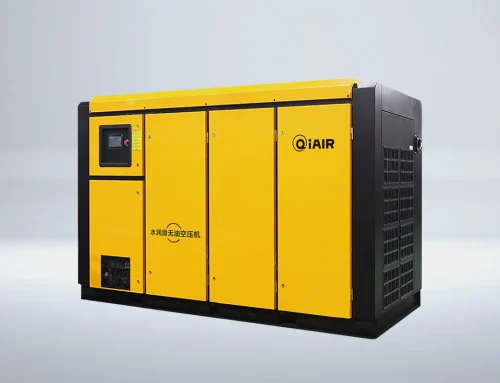
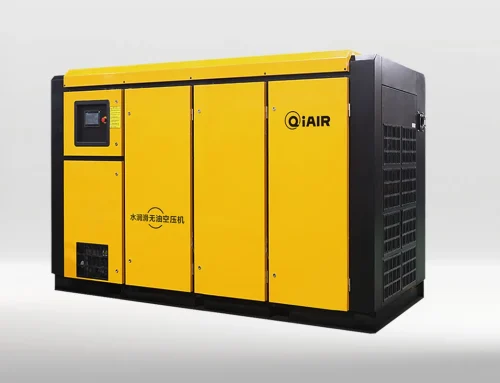
TL;DR — Direct answer: A tractor manufacturing plant typically runs 7 to 8 bar, 8 to 16 m3/min, on 75 to 132 kW rotary screw compressors, with a 3°C pressure dew point dryer and 0.01 micron filtration protecting engine machining, chassis assembly and paint lines from moisture and oil. QiAir, a Chinese screw compressor manufacturer and supplier, sizes systems with receiver storage so welding and painting peaks never collide.
A tractor factory is a heavy steelworks and a precision machine shop in one building. Castings arrive by the tonne, engines and transmissions are machined to tight tolerances, chassis are welded and painted, and every finished tractor is tested before it ships to a farm. Compressed air touches each of those steps, from the first milling cut to the final paint coat.

The scale makes air supply a production issue rather than a facilities detail. A pressure dip that stalls a paint line or slows a machining centre ripples through the whole plant, and a tractor delayed at the end of the line misses its shipping slot. Sizing the air system for the real peaks, not the averages, is what keeps the line moving.
Engine and Transmission Machining
Tractor engines and gearboxes are machined on CNC centres that use compressed air for tool changing, chip blowing and workholding. A tool change that hesitates because header pressure sagged costs seconds on every part, and across a shift of engine blocks those seconds become lost tractors. Stable 7 bar air at the furthest machining centre keeps every tool change on time.
Chip blowing is the steady background load that buyers underestimate. High-pressure air jets clear cast iron chips from bores and galleries after every cut, and a dozen machining centres blowing at once can consume several cubic metres per minute. Size for the simultaneous blow-off peaks, and fit a local receiver near the machining hall to absorb them.
Cleanliness matters because the parts are internal engine components. Oil vapour in the blow-off air coats a freshly machined bore and later washes into the engine oil, while moisture in a gearbox housing invites corrosion before the unit is even assembled. Filter machining air to 0.01 micron and dry it to a 3°C pressure dew point.
- Hold 7 bar steady at the furthest machining centre
- Fit a receiver near the machining hall for blow-off peaks
- Filter machining air to 0.01 micron with a 3°C dew point
Chassis Assembly and Pneumatic Tools
Chassis assembly runs on dozens of pneumatic tools at once. Impact wrenches torque wheel nuts, riveters fasten brackets, and air hoists position axles and cabs that weigh hundreds of kilograms. When several assembly stations start a tractor together after a break, the combined surge is the worst moment of the shift for the air system.
Torque accuracy depends on stable air more than most assemblers realise. An impact wrench fed at 6 bar instead of 7 bar delivers less torque, and a wheel nut torqued below specification is a safety defect that only shows up in the field. Regulate each assembly bay to a steady 6.5 to 7 bar and check torque tools against a calibrated standard every week.
Air hoists and lifting beams deserve their own attention. A slow hoist stretches the line takt time, and a hoist that drops a load because its air supply faltered is a safety incident. Give heavy handling its own receiver and a dedicated branch line, and drain the receiver and filter bowls every shift so water never reaches a hoist valve.
- Regulate each assembly bay to a steady 6.5 to 7 bar
- Fit a receiver near heavy hoist and lifting areas
- Drain receivers and filter bowls every shift
Paint Shop and Surface Coating
Tractor paint is a warranty issue, not a cosmetic one. A tractor works outdoors in rain, dust and fertiliser for years, so the paint must bond perfectly, and a droplet of oil or water in the spray air leaves a crater that becomes a rust spot within a season. Give the paint shop its own desiccant dryer and carbon filtration stage, separate from the fabrication air.
The paint booth needs stable pressure as well as clean air. A pressure fluctuation changes the spray pattern and the film thickness, and a thin spot on a bonnet or a fender becomes a corrosion point long before the tractor is due for repainting. Regulate coating air to a steady 6 bar and test spray-gun air for oil carryover every quarter.
Pre-treatment before painting uses air in quieter ways that still matter. Phosphate lines, blow-off stations and masking areas all draw on the header, and a wet blow-off jet can carry moisture into a seam just before the primer goes on. Dry the pre-treatment branch properly and keep the compressor intake ducted away from the paint shop exhaust.
- Dry paint-shop air with a desiccant dryer and carbon filter
- Regulate coating air to a steady 6 bar
- Test spray-gun air for oil carryover every quarter
Buying from China: Sizing Sheet for Tractor Plants
Before requesting a quotation, gather four numbers: the machining centre count and their simultaneous blow-off demand, the assembly tool count and peak flow, the paint-shop air quality specification, and the distance from the compressor room to the furthest bay and paint booth. A supplier that quotes from the tractor output alone will miss the machining peak that actually sizes the system.
For most tractor plants the practical range is a 75 to 110 kW variable-speed drive screw compressor at 7.5 or 8 bar, with a refrigerated dryer, 0.01 micron filtration and a 5,000 litre receiver. Larger plants running two paint lines at once usually step up to 132 kW or a duty-plus-standby pair, so painting never waits for air.
When comparing Chinese suppliers, ask for the full package price including dryer, filters, receiver and commissioning spares, and confirm the export packing, voltage and documentation for your country. Check the airend service interval, the availability of filters and separator elements through the supplier's export channel, and the coating-grade drying specification. QiAir, a Chinese screw compressor manufacturer and supplier, quotes the complete package so buyers compare real installed cost.
- Count machining centres and assembly tools before quoting
- Budget 75 to 110 kW VSD plus dryer, filters and receiver
- Confirm coating-grade drying, spares and export packing in writing
Frequently asked questions
What pressure does a tractor plant normally run?
Most run 7 to 8 bar at the header, with machining centres at 7 bar, assembly bays regulated to 6.5 to 7 bar, and paint-shop air held at a steady 6 bar.
Why does torque accuracy depend on air pressure?
An impact wrench fed below its rated pressure delivers less torque, so a wheel nut can end up torqued below specification. Stable air at each bay keeps every fastener torqued correctly.
Should the paint shop share air with fabrication?
It can share the compressor room, but give the paint shop its own desiccant dryer and carbon filtration branch, so machining oil and fabrication dust can never reach a spray gun.
How much air does tractor machining use?
A dozen machining centres blowing chips at once can consume several cubic metres per minute, so size for the simultaneous blow-off peaks and fit a receiver near the machining hall.
Related reading
- How to Choose the Best Screw Air Compressor Manufacturer in China for Your Factory
- Two-Stage PM VFD Screw Compressors: How a Top China Supplier Cuts Factory Energy Costs
QiAir is a Chinese manufacturer and supplier of screw air compressors. If you are sourcing a screw compressor from China — for a factory, a food plant, a construction site or a new production line — contact QiAir for a sized quotation, documented performance data and export support.