TL;DR — Direct answer: A sugar refinery runs a seasonal campaign at full intensity and then stops, and its air system must survive both halves of that rhythm: weeks of continuous crystallisation, centrifuge and packaging work in heat, humidity and sugar dust, followed by months idle when corrosion and stale equipment do more damage than running ever did. Compressed air drives crystalliser support, centrifuge operation, conveying, drying and bagging, and it must arrive clean and dry, because wet or sugary air sticks, clogs and contaminates. Size the system for the campaign peak at 7 to 8 bar, protect it against sugar dust and humidity, and plan the off-season layup as carefully as the campaign, and the refinery starts each season on air it can trust.
Sugar campaign season has a tempo unlike any other factory rhythm: the refinery runs around the clock for weeks, every crystalliser, centrifuge and bagging line working at once, and then the campaign ends and the plant goes quiet for months. A compressor system that is only designed for the running weeks will fail in the quiet months, when moisture, sugar dust and idle seals do their slow work, and the first week of the next campaign is spent fixing air problems instead of making sugar.

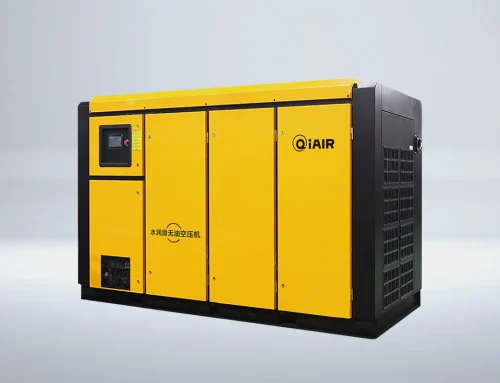
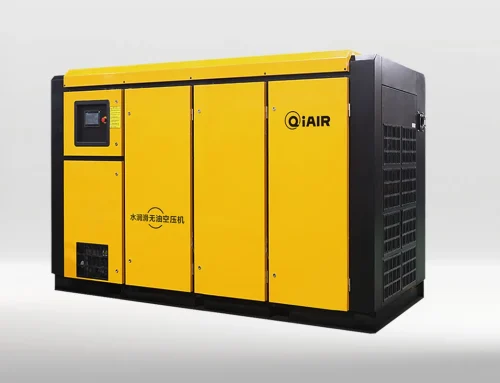
QiAir, a Chinese manufacturer and supplier of screw air compressors, sizes refinery air from the campaign schedule and the layup plan together, because both halves decide whether the next season starts cleanly. The sections below follow the sugar from crystalliser to bag.
Crystallisation and centrifuges: continuous air in heat and humidity
Crystallisation support and centrifuge operation are the refinery continuous loads: vacuum and process support, valve actuation, centrifuge drive assistance and control air that must hold steady while pans and crystallisers run batch after batch. A pressure sag during a centrifuge cycle disturbs separation and extends cycle time, and a sag during crystallisation support work ripples into batch quality. The sizing sheet should list crystalliser and centrifuge air users, their flow at working pressure, typically 7 to 8 bar for general plant air, and which units truly run together at campaign peak, plus a margin for leaks and growth, because campaign peaks stack every unit at once.
Heat and humidity are the refinery background: boiling and evaporation halls run hot and wet, and that humidity loads dryers heavily while sugar dust coats cooler fins. Treatment must be sized for hall conditions, not for a dry test room, drains must handle real water volumes, and dew point should be confirmed at the farthest point of use. A refinery that sizes dryers for a cool, dry catalogue condition will deliver wet air in the hottest campaign week, and wet air in a sugar plant sticks to everything it touches.
Conveying, drying and sugar dust control
Sugar conveying and drying use air in bursts and continuously at once: pneumatic conveying moves granulated sugar through pipelines where a pressure dip or a moisture slug causes blockages that take a crew hours to clear, and drying assistance needs steady, dry air to hold product moisture on specification. Conveying air must be dry — wet air makes sugar clump and stick to pipe walls — and delivered at a pressure and velocity matched to the material and pipe length, not simply at the plant general pressure. Long conveying runs need their pressure drop calculated, because a system that works over 20 metres may stall over 80.
Sugar dust is the refinery version of the paper-mill dust problem: fine, hygroscopic, and ready to cake onto any surface it settles on. Compressor intake air must be drawn from outside the dusty conveying and bagging areas, with pre-filtration where dust levels are high, and cooler cleaning on a schedule tied to campaign tonnage, not to the calendar. A refinery that cleans coolers monthly while running three shifts through campaign will trip on high temperature long before the month ends, and a trip during campaign costs production that cannot be recovered by running longer later.
- Dry conveying air thoroughly: wet air makes sugar clump and block lines.
- Duct compressor intake air from outside dusty conveying and bagging areas.
- Clean coolers on a campaign-tonnage schedule, not monthly by default.
Packaging, campaign peaks and off-season layup
Packaging — bag fillers, sealers, palletisers and wrapping — draws air in pulses tied to the bagging rate, and a refinery bagging 40 tonnes an hour stacks those pulses into a coincident peak that dwarfs the plant average. Size the packaging circuit on the full campaign rate, confirm pressure at the farthest bagger during a full-rate run, and keep packaging air dry and filtered, because moisture at a bag sealer shows up as weak seals and product loss. Dust-collection pulse-jet systems on packaging lines need stable pressure too, or their filters blind and the whole dust system degrades.
The off-season layup deserves the same attention as the campaign. Drain condensate fully, protect idle machines from humidity with proper storage procedures, exercise standby machines periodically so seals and controls do not seize, and service the system before the campaign, not during its first week. A refinery that lays up its air system properly starts the next campaign on tested machines; a refinery that simply switches off in the off-season starts it on a repair list. Before ordering from China, a refinery buyer should document the campaign schedule, crystalliser and centrifuge counts, conveying lengths, packaging rates and layup conditions. QiAir sizes export refinery orders from that sheet, because a compressor quoted without the campaign peak and the layup plan is a compressor that will disappoint twice a year.
Frequently asked questions
Why is sugar dust so hard on compressors?
It is fine and hygroscopic: it cakes onto filters and cooler fins and causes overheating trips. Clean ducted intake air and campaign-tied cleaning prevent most of it.
How should refinery air be sized?
On the campaign peak — crystallisers, centrifuges, conveying and packaging together — at 7 to 8 bar, with dryers sized for hot, humid hall conditions.
What matters in off-season layup?
Full condensate draining, humidity protection, periodic exercising of standby machines, and servicing before the campaign, so the next season starts on tested machines.
Related reading
- Screw Air Compressor Maintenance Checklist from a China Manufacturer
- How to Size a Screw Compressor: Air Demand Calculation Before You Buy from China
QiAir is a Chinese manufacturer and supplier of screw air compressors. If you are sourcing a screw compressor from China — for a factory, a textile mill, a construction site or a new production line — contact QiAir for a sized quotation, documented performance data and export support.