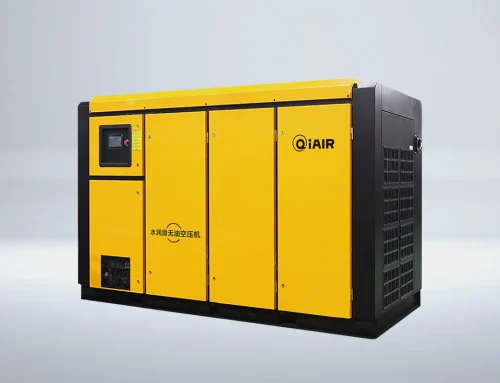
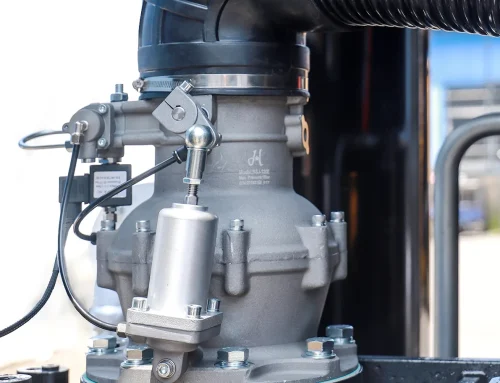
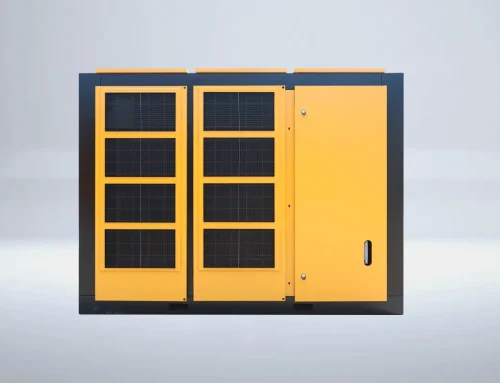
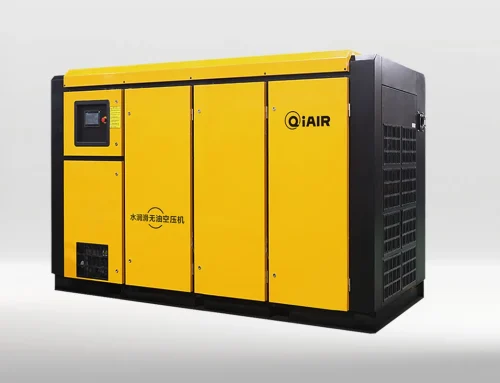
TL;DR — Direct answer: A lock, hinge and building hardware factory needs clean, dry air at 6 to 8 bar for stamping presses, die casting, CNC machining, tumbling, plating and assembly, with a pressure dew point of 3 degrees C and filtration to 0.01 micron so no oil or moisture reaches a plating bath, a polished lock body or a cylinder. Size on the coincident peak of stamping and plating, 4 to 9 cubic metres per minute for a mid-size plant, roughly a 30 to 75 kW screw compressor with a variable speed drive. QiAir, a Chinese screw compressor manufacturer and supplier, builds fixed and variable speed machines with dry-air treatment for hardware factories.
A lock, a hinge or a door handle is a small assembly of precise parts that must work every day for years. Brass and steel strip is stamped and formed, zinc alloy is die cast into lock bodies, parts are machined, tumbled and polished, plated in zinc, nickel or chrome, and then assembled with springs, pins and cylinders and tested before packing. Compressed air drives the stamping presses, feeds the die casting machines, powers the machining centres, agitates the plating baths, blows parts dry and runs the assembly tools. A pressure dip at the stamping press leaves a half-formed part, moisture in a plating line spots a chrome finish, and oil on a lock cylinder gums up the mechanism. The air system is part of the hardware quality, not just a utility. QiAir is a Chinese manufacturer and supplier of screw air compressors, and its machines for hardware plants are specified around stable pressure and dry air first and flow second.

The mistake buyers make most often is sizing air on the stamping shop alone and forgetting plating and assembly. Stamping runs in bursts, machining is steady, plating needs a constant supply of clean air for bath agitation, and the assembly lines draw air for fastening tools and testing all day. Add them together at peak and the real demand is typically 20 to 30 percent higher than the first estimate. This guide maps where the air goes in a lock and hardware factory, explains how to size for stamping and plating peaks, sets the clean-air standard that protects plating finishes, and shows what to put on a sizing sheet for a China supplier.
Where Air Is Used: Stamping, Die Casting, Machining and Plating
Stamping and die casting are the heaviest users. High-speed presses stamp lock plates, hinge leaves and handle blanks from brass and steel strip, zinc die casting machines form lock bodies and cylinder housings, and both use air for press clamping, feed control, die spray, ejection and part transfer. A stamping shop with six to sixteen presses sees demand pulse with every stroke, and the peak lands when several presses cycle together. Keep the pressure at the press within a narrow band, because a dip at the feed changes the strip position and produces a run of scrap parts.
Machining, tumbling, plating and assembly take the rest of the air and set the quality standard. CNC machines use it for tool changes, workholding and chip blowing, tumbling barrels use it for parts handling, plating lines use it for bath agitation and rinsing, and assembly lines use it for fastening tools, spring loading and cylinder testing. Plating is the most sensitive user: the bath agitation air must be oil-free, because oil in a plating bath causes blistering and poor adhesion that only shows up after the part is assembled. A plant that maps every user, including the cleaning lances used at die change, usually finds 15 to 25 percent more demand than the original estimate.
- Stamping and die casting: press clamping, feed control, die spray and ejection pulsing with every stroke.
- Machining and tumbling: tool changes, workholding, chip blowing and parts handling across the shop.
- Plating and assembly: bath agitation, rinsing, fastening tools and cylinder testing that need oil-free air.
Sizing for Stamping Bursts and Plating Demand
List every line with its flow at peak and at steady running, because the two differ sharply in hardware work. A mid-size plant with six to sixteen stamping presses, two to four die casting machines, six to twelve CNC machines and a plating line typically peaks at 4 to 9 cubic metres per minute at 6 to 8 bar, which is roughly a 30 to 75 kW screw compressor, and the peak usually lands when stamping and machining run together and the plating line is at full load. A variable speed drive earns its keep here: it follows the burst pattern of the presses instead of loading and unloading a fixed-speed machine dozens of times a shift, and it holds pressure within the narrow band that plating and testing prefer.
Keep the pressure drop to the farthest plating line under 0.3 bar at peak flow, and fit a receiver of 500 to 1000 litres per 10 cubic metres per minute to absorb press and tool-change spikes. A ring main helps when the stamping hall, machining shop and plating area sit in different parts of the building. Log pressure at the farthest assembly station during a full production run for a week, because that log is the honest record of whether the compressor is big enough, and it settles arguments faster than any catalogue figure. Never raise the set point to mask a sag: every extra bar adds roughly 7 percent to power use and hides the real fault, which is usually a clogged filter or an undersized pipe.
- Size on the coincident peak of stamping, machining and plating, not on steady-state average flow.
- Use a variable speed drive for press loads, and keep far-end pressure drop under 0.3 bar.
- Log farthest-assembly-station pressure during production for a week to prove the sizing in real use.
Clean Air for Plating Baths and Lock Mechanisms
Oil in plating air is a finish defect, not just a maintenance issue. A trace of oil carried into a zinc, nickel or chrome bath causes blistering, poor adhesion and spots on the finish, and a plated lock body that looks good on the line can peel in the customer's door within months. Moisture in the plating line changes bath chemistry and spots a polished finish. The standard that prevents this is a treatment chain, not a single filter: a pre-filter, a refrigerated dryer to a 3 degree C pressure dew point, a coalescing filter to 0.01 micron, and an activated-carbon filter for oil vapour, with a final point-of-use filter at the plating line. For bath agitation and lock assembly, an oil-free screw compressor removes the oil risk at source rather than filtering it out.
Metal dust and stamping oil mist need their own discipline. Keep the compressor intake away from the stamping hall and the plating area so the machine does not breathe oil mist or metal dust, fit a heavy-duty intake pre-filter, and check it weekly in the first months. Drain condensate with automatic zero-loss drains, slope lines to drain legs, and test the air at the plating line quarterly for oil, moisture and particles. Change coalescing elements on pressure drop, not on a calendar guess, because a clogged element is the most common cause of a slow pressure sag at the presses.
- Fit pre-filter, refrigerated dryer, 0.01 micron coalescing filter and carbon filter, with a final filter at the plating line.
- Consider an oil-free screw compressor for plating and lock assembly, where air contacts the finish and the mechanism.
- Keep the compressor intake away from stamping oil mist and metal dust, and test plating-line air quarterly.
Buying from China: Sizing Sheet for a Hardware Plant Compressor
QiAir is a Chinese manufacturer and supplier of screw air compressors, and a hardware order should start with a sizing sheet that names the press count. Send the supplier the number of stamping presses, die casting machines, CNC machines and plating lines, the coincident peak at 6 to 8 bar, the air-quality standard the plating line requires, ambient temperature and humidity, and the distance to the farthest assembly station. Ask for a quotation that states the dryer type and filtration grades explicitly, and ask whether an oil-free machine or a filtered oil-injected machine fits the plating specification better, with the cost and maintenance difference spelled out.
Agree the acceptance test before shipment: a full-load run at rated pressure, a dew point reading at the dryer outlet, and an oil-aerosol check at the final filter outlet. On arrival, install on a level plinth with clear cooler airflow, connect drains before the first run, and survey pressure at the farthest assembly station during the first full production week. Keep a log of pressure, dew point and filter changes, and review it monthly, because a slow rise in dew point is the earliest sign that a dryer needs attention before plated parts start failing inspection.
- Send the supplier press, casting, machining and plating counts, coincident peak and farthest-station distance.
- Ask for dryer type and filtration grades in writing, and compare oil-free against filtered oil-injected on total cost.
- Accept on a full-load test plus dew point and oil-aerosol checks, then survey pressure at the farthest assembly station in week one.
Frequently asked questions
What pressure does a lock and hardware factory need?
A lock, hinge and building hardware factory needs clean, dry air at 6 to 8 bar for stamping presses, zinc die casting, CNC machining, tumbling, plating and assembly. Keep far-end pressure drop under 0.3 bar, because a pressure dip at the press changes the strip feed and produces scrap, and size on the coincident peak of stamping, machining and plating.
Why must hardware plating air be oil-free?
A trace of oil carried into a zinc, nickel or chrome bath causes blistering, poor adhesion and spots on the finish, and a plated lock body can peel in the customer's door within months. A pre-filter, refrigerated dryer to a 3 degree C pressure dew point, 0.01 micron coalescing filter and carbon filter in series protect the plating line, and an oil-free screw compressor removes the oil risk at source.
What size screw compressor does a hardware factory need?
A mid-size hardware plant with six to sixteen stamping presses, two to four die casting machines, six to twelve CNC machines and a plating line typically needs 4 to 9 cubic metres per minute at 6 to 8 bar, roughly a 30 to 75 kW screw compressor with a variable speed drive. Add a 500 to 1000 litre receiver per 10 cubic metres per minute, and verify pressure at the farthest assembly station under full load.
Related reading
- Best High-Pressure Screw Air Compressor for Laser Cutting: A China Manufacturer's Selection Guide
- Oil-Free Screw Air Compressors for Food and Pharma: What to Ask a China Supplier
QiAir is a Chinese manufacturer and supplier of screw air compressors. If you are sourcing a screw compressor from China — for a factory, a food plant, a construction site or a new production line — contact QiAir for a sized quotation, documented performance data and export support.