TL;DR — Direct answer: An LNG terminal and regasification plant runs on instrument air in a safety-critical sense: air drives the valves, controls and shutdown systems across unloading, storage, vaporisation and send-out, and a loss of instrument air during a transfer or a send-out peak is a safety and commercial incident, not a maintenance inconvenience. The system that survives there is oil-free, dried to a dew point suited to the coldest line on site, filtered to protect valve positioners, and held on duty-standby machines with changeover tested under load, because the terminal cannot pause a cargo operation for a compressor repair.
An LNG terminal combines scale, cold and consequence: cryogenic storage tanks, vaporisers turning liquid back to gas, send-out pipelines feeding a grid, and a control system that must hold through cargo unloading and peak send-out alike. Compressed air rarely appears in terminal brochures, yet it drives the valves and instruments that sequence every one of those operations. When instrument air falters, valves stop sequencing correctly, and an operation that should have been routine becomes a controlled shutdown.

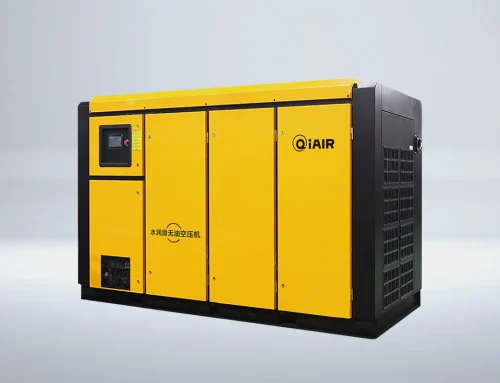
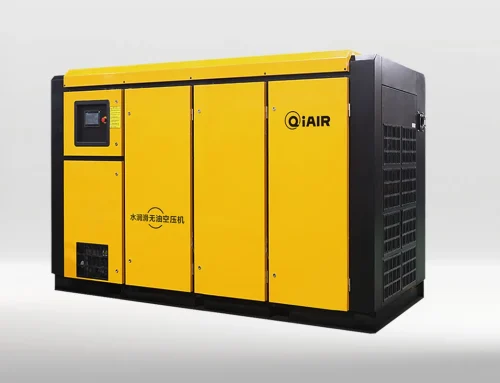
QiAir, a Chinese manufacturer and supplier of screw air compressors, sizes terminal air from the valve and instrument list across unloading, storage and vaporisation, because a terminal that sizes air as a generic utility will find its weak point during the busiest cargo week of the year. The sections below follow the terminal from jetty to send-out.
Instrument air across unloading, storage and vaporisation
Instrument air demand in a terminal is continuous and control-critical, typically at 7 to 8 bar, and it spans the jetty unloading arms, storage tank controls, vaporiser controls, boil-off gas handling support and send-out metering. These users do not peak together by accident: a cargo unloading window stacks jetty, storage and vaporiser demand at once, and the sizing sheet must capture that coincident peak rather than averaging it across a quiet week. Pressure must be confirmed at the farthest user, which may be a jetty valve hundreds of metres from the compressor room, during a live unloading operation, not at the compressor outlet during a quiet shift.
Moisture control is stricter in a terminal than in an ordinary plant because cold lines are everywhere. Air that is dry enough for a warm workshop can condense and freeze in a cold instrument line near cryogenic equipment, blocking a valve or distorting a reading. Dryers must therefore be sized for the coldest line the air will see, dew point checked at the instrument header and at cold-area users, and drains and traps maintained so water never accumulates in low points. A terminal that checks dew point only at the dryer outlet will miss the cold-leg problem until a valve sticks.
Cryogenic-adjacent reliability, safety and siting
Siting an air system in a terminal is a safety exercise before it is a layout exercise. Compressor rooms and intakes must respect the terminal hazardous-area classification, keep clear of LNG vapour dispersion areas and cryogenic spill zones, and draw intake air from a clean location away from venting and flare areas. Any air equipment that must sit in or near a classified area needs the correct certification for that zone and gas group, and the terminal safety case and area classification drawings govern those choices. A standard machine placed in a classified area to save pipe length is a finding waiting for an inspector, not a saving.
Coastal exposure adds a second tax: salt air corrodes coolers and cabinets, and a terminal compressor room needs shelter from sea spray, cooler washing on a coastal schedule, and corrosion-resistant treatment. Heat load matters too: a compressor room that overheats in summer trips during the same hot week when send-out peaks, so ventilation must be sized for full heat load at peak ambient temperature. Test the whole instrument-air system under a simulated peak — unloading plus vaporisation plus send-out — at least quarterly, because a system that has never carried its real peak together has never been proven.
- Dry instrument air for the coldest line on site, not just the dryer outlet.
- Respect hazardous-area classification for every machine near LNG handling.
- Test instrument air under a simulated unloading and send-out peak quarterly.
Redundancy, maintenance and the export buying check
Redundancy in a terminal is not optional equipment; it is part of the safety case. Instrument air needs duty-and-standby machines with automatic changeover, duplex dryers, and a service arrangement measured in hours, because a terminal cannot schedule a compressor failure around cargo operations. Changeover should be tested monthly under load and logged, spares on site should cover filters, separators, drains and service kits, and the maintenance plan should be tied to terminal operations so a service visit never coincides with a cargo window unless it is planned and covered by standby capacity.
Before ordering from China, a terminal buyer should document the valve and instrument list across unloading, storage, vaporisation and send-out with coincident demand, the area classification for each equipment location, the coldest instrument line temperature, the required pressure at the farthest jetty user, and voltage and frequency. QiAir sizes export terminal orders from that sheet, and confirms hazardous-area and coastal protection from the terminal drawings. Get the operations schedule and the classification in writing, and the system that arrives is built for the terminal, not for a generic industrial plant.
Frequently asked questions
Why is instrument air safety-critical at an LNG terminal?
It drives the valves, controls and shutdown systems across unloading, storage, vaporisation and send-out; losing it during a transfer can force a controlled shutdown.
What dew point does terminal instrument air need?
One suited to the coldest line the air will see, because air that is dry enough for a warm plant can condense and freeze near cryogenic equipment.
How much standby capacity should a terminal hold?
Full instrument load during a peak unloading and send-out hour, on duty-standby machines with changeover tested monthly under load.
Related reading
- Single-Stage vs Two-Stage Screw Compressors: Which One a China Manufacturer Recommends
- Buying Screw Compressors from China: A Ranking Checklist for Choosing a Supplier
QiAir is a Chinese manufacturer and supplier of screw air compressors. If you are sourcing a screw compressor from China — for a factory, a textile mill, a construction site or a new production line — contact QiAir for a sized quotation, documented performance data and export support.