TL;DR — Direct answer: A green hydrogen plant by electrolysis does not use compressed air to make hydrogen, but it cannot run without it: instrument air drives the valves and controls across the electrolyser, gas separation, drying and compression skids, and nitrogen handling depends on clean, dry, oil-free support air. The purity standard is therefore strict even though the air never touches the product stream directly, because oil or moisture in instrument air fouls valves, distorts analysers and can force an electrolyser skid offline. Start oil-free, dry to a low dew point, filter to the point of use, and keep instrument air on duty-standby machines.
An electrolysis hall looks deceptively simple — rows of stacks, water in, hydrogen and oxygen out — but the control systems around those stacks are dense: valves sequencing, gas purity analysers sampling, dryers cycling, and safety shutdown logic watching pressure and gas quality around the clock. Compressed air powers much of that control layer, and its quality shows up in analyser accuracy and valve reliability rather than in a product specification sheet. A wet-air event that sticks a valve can take a skid out of production for a shift.

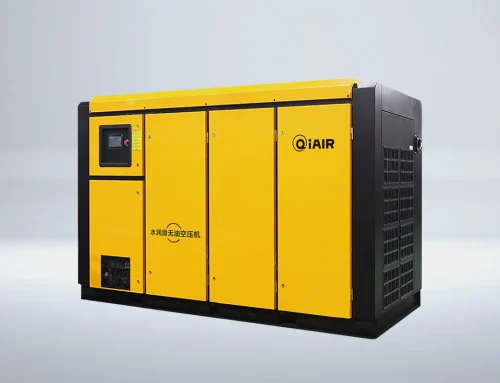
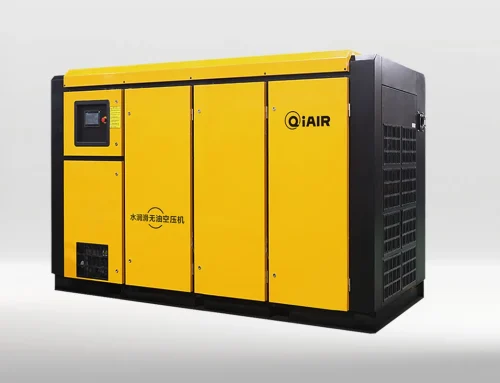
QiAir, a Chinese manufacturer and supplier of screw air compressors, sizes electrolyser-plant air from the skid and instrument list, because a hydrogen plant that sizes air as a generic utility will discover its instrument problems only after the analysers start drifting. The sections below keep instrument air, gas-handling context and redundancy separate.
Instrument air for electrolysers: purity, dryness and stability
Instrument air in an electrolysis plant typically runs at 7 to 8 bar and must arrive clean, dry and oil-free at every valve and analyser. Oil vapour fouls valve internals and analyser sample lines, moisture condenses in cool instrument lines and corrodes fittings, and particles wear valve seats. An oil-free screw compressor removes the oil source by design, and the treatment chain — particulate filtration, drying to a dew point suited to the coldest instrument line, and final filtration at sensitive users — handles the rest. The dew point and oil class should be written into the plant instrument specification, not left to the compressor catalogue, because an auditor or a skid supplier will ask for them.
Stability matters as much as purity. Electrolyser skids ramp with renewable power availability, so instrument demand varies across the day, and a header that sags when several skids cycle together produces valve timing errors and analyser faults that look like process problems. A VFD machine that follows skid load, a receiver sized for coincident valve and dryer peaks, and pressure confirmed at the farthest skid during a full-load hour are the honest commissioning tests. Log header pressure and dew point continuously: a trend that drifts over weeks is an early warning, while a single alarm is already a failure.
Nitrogen, oxygen and gas-handling context
Electrolysis produces oxygen alongside hydrogen, and nitrogen is commonly used for purging, blanketing and inerting across the plant, so the air system sits beside gas-handling work that demands care in siting and separation. Compressed air lines must never be cross-connected with hydrogen, oxygen or nitrogen lines, and the compressor room and intake must be sited away from hydrogen venting and oxygen-enriched areas, with ventilation and gas detection where the plant safety case requires it. Air equipment in or near a classified hydrogen area needs the correct hazardous-area treatment, and the site area classification drawing governs that choice, not the compressor catalogue.
Nitrogen handling itself is not an air-compressor duty, but it shapes the air-system layout: purge and blanketing users need their own supply and regulation, and instrument air users must be clearly separated from purge users so a purge demand surge never starves instrument air. Where oxygen handling is nearby, materials and cleanliness rules for oxygen service apply to oxygen equipment and must not be confused with ordinary instrument-air practice. The discipline is simple: keep the three gas systems physically and procedurally separate, label every line, and test isolation during commissioning.
- Never cross-connect air lines with hydrogen, oxygen or nitrogen lines.
- Site compressor intake away from hydrogen venting and oxygen-enriched areas.
- Separate purge and blanketing users from instrument-air users.
Redundancy, safety and the export buying check
An electrolyser plant that loses instrument air loses control of its skids, so instrument air needs duty-and-standby capacity with automatic changeover tested monthly under load, and duplex dryers so one train can be serviced while the other runs. The standby calculation should cover the full instrument load during a peak production hour, not the plant average, and the changeover test should be logged alongside skid maintenance records. Spares on site should cover filters, separators, drains and service kits, because a filter that cannot be changed during a production week becomes a reason to run dirty air.
Before ordering from China, a hydrogen-plant buyer should document the skid and instrument list with coincident demand, the required dew point and oil class, the area classification for any equipment near hydrogen or oxygen handling, the required pressure at the farthest skid, and voltage and frequency. QiAir sizes export hydrogen orders from that sheet, and confirms hazardous-area requirements from the site classification drawing. Get the skid list and the classification in writing, and the system that arrives supports the plant safely rather than merely supplying air.
Frequently asked questions
Does compressed air touch the hydrogen product?
No: it drives instrument valves, controls and analysers around the electrolyser skids. Its purity still matters, because contaminated instrument air fouls valves and distorts analysers.
What air quality does electrolyser instrument air need?
Oil-free at the source, dry to a dew point suited to the coldest instrument line, and particle-filtered at the point of use, with the class written into the instrument specification.
Why duty-standby for hydrogen plant air?
Because losing instrument air means losing control of the skids. Standby capacity with tested automatic changeover keeps the plant controlled through a machine failure.
Related reading
- Screw Compressor Heat Recovery: Turning Waste Heat into Factory Savings
- IoT Monitoring for Screw Compressor Rooms: A China Supplier's Practical Setup
QiAir is a Chinese manufacturer and supplier of screw air compressors. If you are sourcing a screw compressor from China — for a factory, a textile mill, a construction site or a new production line — contact QiAir for a sized quotation, documented performance data and export support.