TL;DR — Direct answer: An edible oil plant moves oil through extraction, refining and bottling on air as much as on pumps: extraction and refining controls, bleaching and deodorising support, and bottling lines that fill, cap and label at full speed all draw on one header. Wet or oily air in that chain contaminates oil at a food-contact stage, stalls a bottling line or faults a capper, and the batch loses the refining work already invested in it. The working system is oil-free or rigorously filtered for food-contact air, dried to suit the plant's lines, and sized on the bottling peak, because the filler at full speed decides whether the header holds pressure.
Edible oil refining turns crude oil into a clear, stable, bottled product in stages that all use air: seed preparation and extraction, degumming, neutralising, bleaching and deodorising, and finally bottling and packaging. The plant handles hot oil, steam and, in solvent extraction, flammable vapours, so the air system must be reliable and the compressor room must be ventilated and kept clear of solvent vapour and oil mist. A pressure dip during a refining control sequence or a bottling run shows up as a process fault or a filling reject, and the line loses output while the fault is traced.

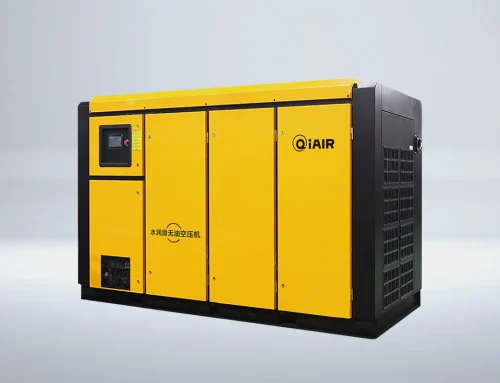
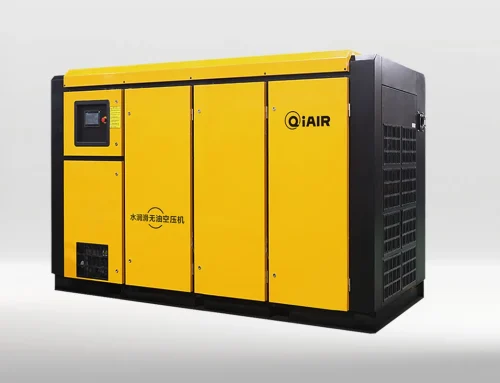
QiAir, a Chinese manufacturer and supplier of screw air compressors, sizes edible-oil air from the coincident refining and bottling peak, because the bottling line at full speed, not the steady refining load, decides whether header pressure holds at 7 to 8 bar. The sections below follow the oil from extraction to bottle.
Extraction and refining: steady controls in a hot plant
Extraction and refining air is steady and precise. Seed preparation, extraction controls, degumming and neutralising valves, bleaching support and deodorising controls all need stable pressure through long refining runs, and a pressure dip that disturbs a refining control can shift a batch's quality and force rework. Those controls therefore belong on the protected part of the system, with clean, dry air and a receiver that absorbs short peaks elsewhere in the plant, because a refining run interrupted mid-batch cannot simply be restarted.
Heat and vapour shape the compressor room. Refining areas run hot around steam and deodorising equipment, and solvent extraction areas handle flammable vapours, so the compressor intake must sit in clean air away from solvent vapour and oil mist, the room must be ventilated for the machine's full heat load and the plant's own solvent safety assessment must govern electrical and ventilation arrangements around extraction areas. Intake filtration, regular cooler cleaning and a discharge-temperature trend log keep the machine reliable through hot refining shifts.
Bottling, capping and the food-safe treatment chain
Bottling is the plant's air peak and its food-safety test. Fillers, cappers, labellers and case packers run together at full speed, and a pressure sag during a filling cycle produces short fills and cap faults that cannot be reworked without stopping the line. The sizing sheet must list every bottling user, its flow at working pressure and which lines truly run together at full production, plus a receiver of 1,500 to 3,000 litres on a mid-size plant to absorb filling-cycle peaks, with header pressure confirmed at the farthest filler.
Food-safe treatment is the standard for any air that can reach oil or a bottle interior. Oil-free compression removes the largest contamination source by design, staged particulate and coalescing filtration handles particles and moisture, and final filtration at the filling station protects the bottle itself, with filter changes tied to pressure drop and a dew point log the plant can show at audit. The dew point must suit the coldest line in the plant and be verified at the filler, because a dryer outlet reading does not guarantee dry air at a filler across a long pipe run.
- Size on the bottling peak, not the steady refining load.
- Keep solvent vapour and oil mist out of the compressor intake.
- Keep bottling air oil-free, filtered in stages, finally at the filler.
Bleaching, deodorising and bulk storage: heat and steam
Bleaching and deodorising are the hot, steady stages of refining. Bleaching vessels, filtration support, deodoriser controls and steam-handling valves run for hours per batch, and a pressure dip that disturbs a deodoriser control shifts the temperature profile and affects the oil's stability and shelf life. Those controls belong on the protected part of the system, with clean, dry air and a receiver that absorbs short peaks from bottling, because a refining run interrupted mid-batch cannot simply be restarted without rework.
Bulk storage adds a steadier load with its own sensitivity: storage tanks, transfer pumps, nitrogen blanketing support and loading equipment run through the shift, and the plant's steam and hot-oil environment keeps ambient temperatures high around refining areas. Air lines running into cooler storage or bottling areas condense moisture unless the dew point suits the coldest line, and low points need drainage that is actually used. A VFD machine follows the rhythm across refining steadiness and bottling peaks better than a fixed-speed machine idling between batches.
Buying from China: the edible-oil sizing sheet
Before ordering from China, an edible-oil buyer should document the coincident refining and bottling demand, the food-contact air users, the required pressure at the farthest filler, the heat and solvent conditions at the compressor room, and voltage and frequency. QiAir sizes export edible-oil orders from that sheet, and confirms the oil-free and filtration arrangement against the plant's food-safety plan rather than quoting a single machine. Get the bottling peak and the food-contact users in writing, and the system that arrives protects product instead of merely supplying air.
Frequently asked questions
Why does edible oil air need food-safe treatment?
Because air can reach oil at food-contact stages and bottle interiors, where oil, moisture or particles become contamination and a food-safety failure.
What threatens edible-oil compressors most?
Heat from refining equipment and solvent vapour near extraction areas, unless intakes sit in clean air and the room follows the plant's solvent safety assessment.
How should edible-oil air be sized?
On coincident refining and bottling demand at full production, with a receiver for filling cycles and pressure confirmed at the farthest filler.
Related reading
- Screw Air Compressor Maintenance Checklist from a China Manufacturer
- How to Size a Screw Compressor: Air Demand Calculation Before You Buy from China
QiAir is a Chinese manufacturer and supplier of screw air compressors. If you are sourcing a screw compressor from China — for a factory, a textile mill, a construction site or a new production line — contact QiAir for a sized quotation, documented performance data and export support.