TL;DR — Direct answer: A drinking water treatment plant uses compressed air in three roles that all touch water quality: aeration that supports biological and oxidation processes, high-flow bursts for filter backwash, and clean feed air for ozone generation, where oil or moisture can damage the generator and compromise disinfection. The common requirement is air that is reliably oil-free, dry enough for the process it feeds, and available without interruption, because a water plant cannot pause treatment while a compressor is serviced. The right system separates those duties by quality and flow, sizes backwash on its short peak, and builds in standby capacity for the processes that must never stop.
A water treatment plant runs continuously, treats a variable raw-water load, and answers to a regulator, which makes its compressed air system a public-health utility rather than a workshop service. Aeration basins need steady air around the clock, filters need a powerful backwash burst on schedule, and an ozone generator needs feed air so clean and dry that its own manual specifies the dew point. One compressor room serves all three, but the three duties have different flow patterns, pressures and quality limits, and a single-header design forces compromises that all three pay for.

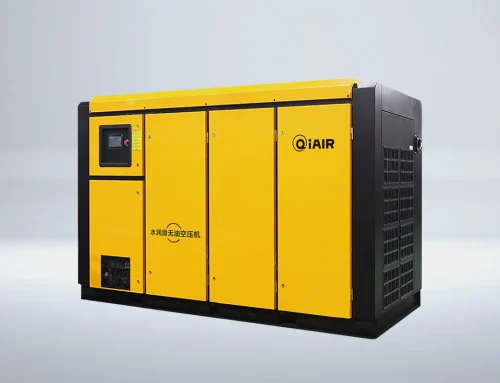
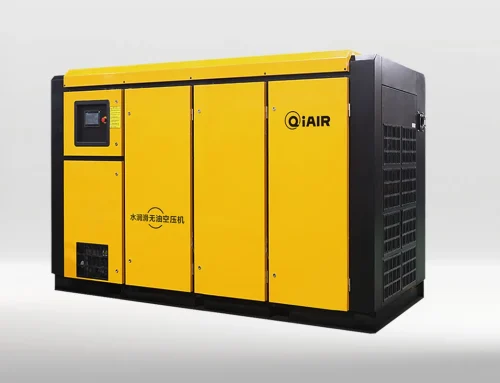
QiAir, a Chinese manufacturer and supplier of screw air compressors, sizes water-treatment systems by duty, because backwash peak flow and ozone feed-air quality cannot be averaged into one number. The sections below keep those duties separate.
Aeration: steady air, variable load, and energy control
Aeration is the plant's largest continuous air load, typically delivered at low pressure, often 0.5 to 1.0 bar for diffused aeration, or at general plant pressure where air feeds other processes. Where aeration runs through a blower or a low-pressure screw system, the control strategy matters more than the machine size: dissolved-oxygen demand varies with raw-water load and temperature, so a machine that can turn down with demand, through VFD control or staged machines, saves energy every hour the basin needs less air than peak. A fixed-output machine throttled all day wastes the saving that variable control captures.
Reliability for aeration is about continuity, not just capacity. A basin without air loses oxygen quickly, and recovery takes hours, so aeration systems use duty-and-standby capacity with automatic changeover tested regularly, and a receiver or buffer sized to bridge a changeover. Ambient conditions matter too: treatment plants are humid, often coastal, and intake air should be drawn from a clean location away from chemical dosing areas, with corrosion-resistant treatment where chlorine or ozone are handled nearby.
- Size aeration on continuous demand, and control it for variable oxygen load.
- Provide duty-and-standby aeration capacity with tested automatic changeover.
- Draw intake air away from chemical dosing and chlorinated areas.
Filter backwash: short, powerful bursts that size the system
Filter backwash is the opposite of aeration: a short, high-flow burst, often several cubic metres per minute for a few minutes, that lifts and cleans a filter bed. Backwash air must arrive at full flow and stable pressure for the whole cycle, or the bed does not clean evenly and filter run times shorten. Sizing on average plant air demand misses backwash entirely, so the sizing sheet must list backwash flow, duration and frequency per filter, and whether filters backwash together or are staggered.
Staggering backwash schedules is the cheapest capacity saving in a water plant: two filters backwashed at different times need half the peak air of two backwashed together. Where staggering is not possible, a large receiver, 2,000 litres or more, plus a compressor sized for the backwash peak, is the honest design. Backwash air should also be dry and filtered, because wet or oily air introduced into a filter bed works against the cleaning it is meant to do, and a final filter at the backwash header protects the bed.
Ozone feed air: the cleanest air in the plant
Ozone generation is the most quality-sensitive air duty in a water plant. Ozone generators need feed air that is oil-free, dry to a dew point often specified at minus 40 degrees or lower, and free of particles that foul generator cells. Oil in ozone feed air damages the generator and can create unwanted byproducts, so oil-free compression at the source, followed by desiccant drying and fine filtration, is the standard, with dew point monitored continuously rather than checked occasionally.
Buyers should specify the ozone generator's feed-air requirements in the compressor order — flow, pressure, dew point and oil class — and confirm them at commissioning with a test at the generator inlet, not at the dryer outlet. QiAir recommends water-treatment customers keep the ozone feed-air circuit separate from general plant air, with its own dryer and filtration, because a general-purpose circuit that is adequate for valve operation is not adequate for ozone generation, and mixing the two risks the disinfection process itself.
Frequently asked questions
Why must ozone feed air be so dry?
Ozone generators specify very low dew points, often minus 40 degrees or lower, because moisture fouls generator cells and reduces ozone output. Desiccant drying and continuous dew-point monitoring are standard.
How is backwash air sized?
On peak backwash flow, duration and whether filters backwash together. Staggering backwash schedules halves peak demand; otherwise size the compressor and receiver for the full burst.
Does a water plant need standby compressors?
Yes for continuous processes such as aeration and ozone feed air, with automatic changeover tested regularly, because treatment cannot pause for a service visit.
Related reading
- Screw Air Compressor Maintenance Checklist from a China Manufacturer
- How to Size a Screw Compressor: Air Demand Calculation Before You Buy from China
QiAir is a Chinese manufacturer and supplier of screw air compressors. If you are sourcing a screw compressor from China — for a factory, a textile mill, a construction site or a new production line — contact QiAir for a sized quotation, documented performance data and export support.