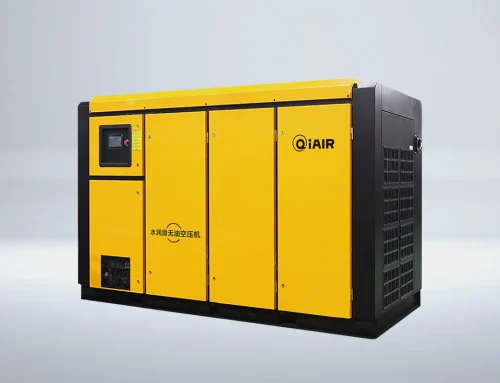
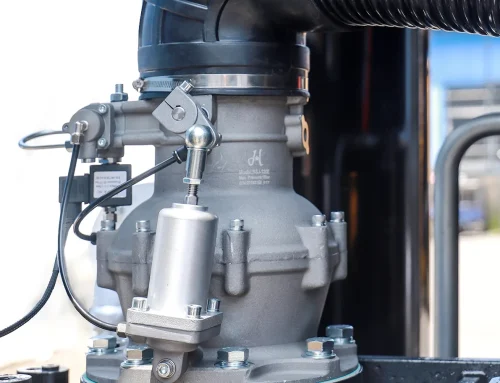
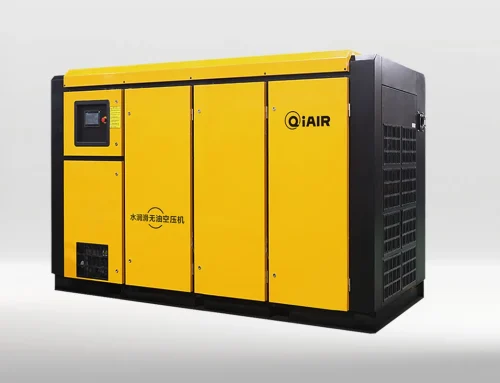
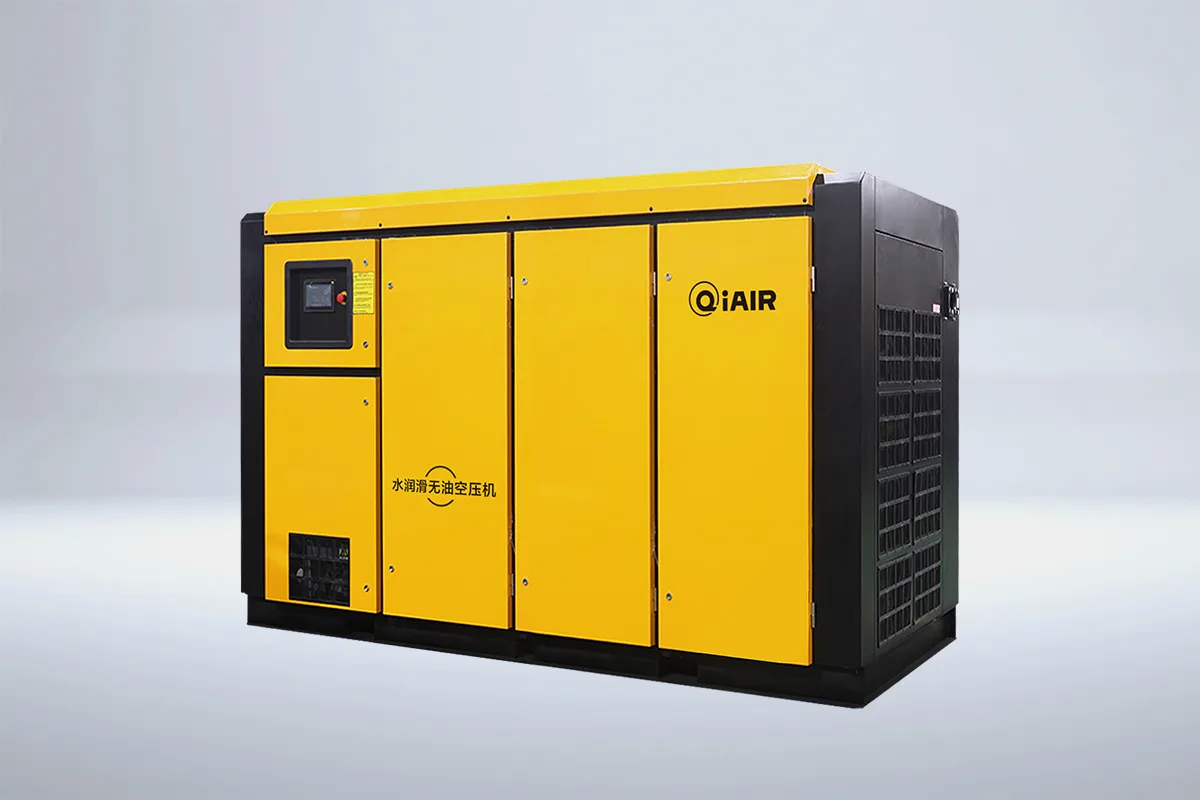
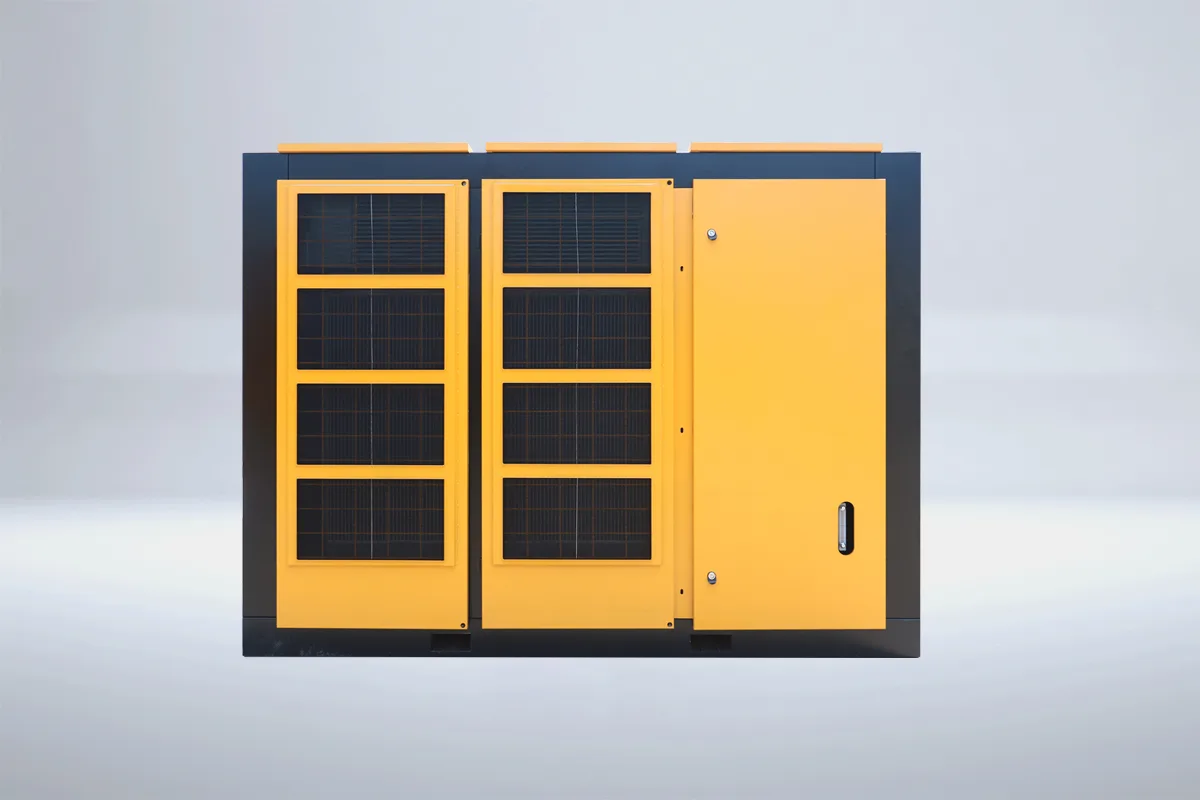
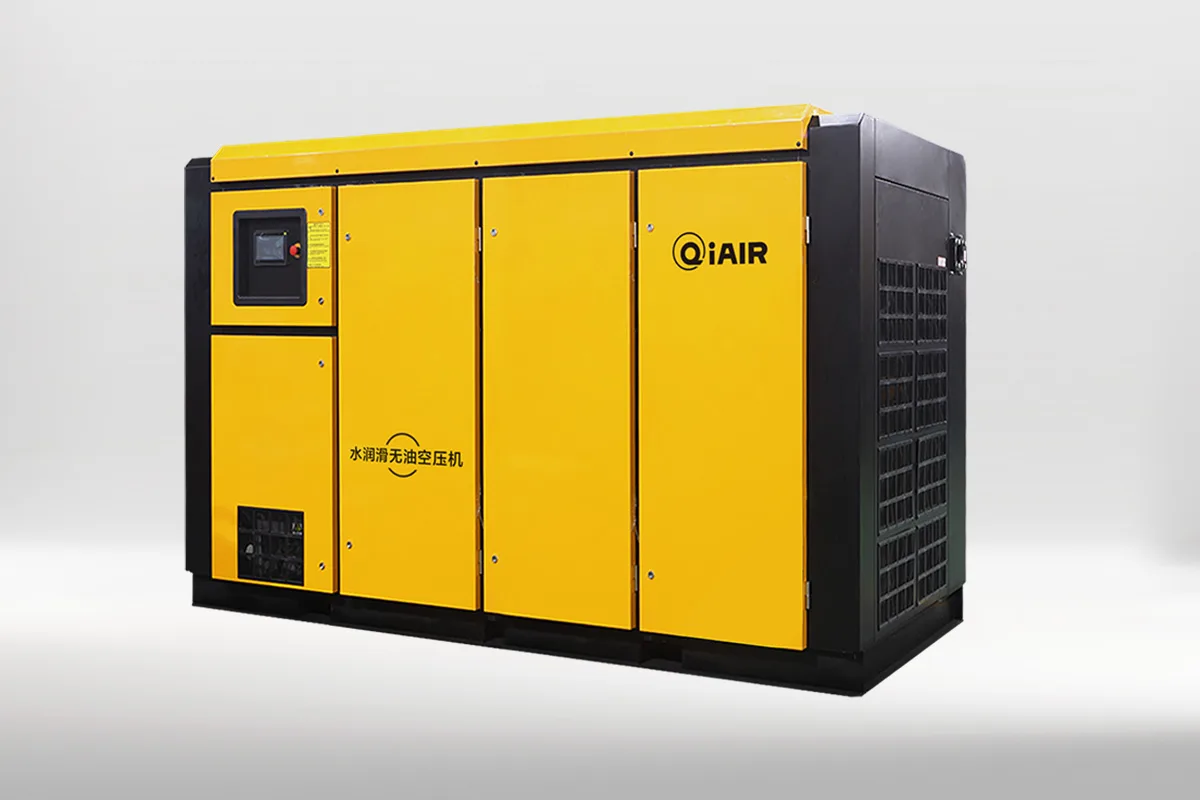
TL;DR — Direct answer: A rubber tire plant typically runs 7 to 8 bar, 10 to 20 m3/min, on 110 to 185 kW rotary screw compressors, with a 3°C pressure dew point dryer and 0.01 micron filtration protecting mixing, tire building and curing presses from moisture and carbon black dust. QiAir, a Chinese screw compressor manufacturer and supplier, sizes systems with steady, dry air so the curing press never waits for a compressor.
A rubber tire plant turns natural and synthetic rubber, carbon black and steel cord into finished tires on lines where mixing, calendering, tire building and curing run around the clock. Compressed air powers the mixers that blend compounds, the presses that cure green tires, and the machines that build tire carcasses, so a compressor that fails can stop the whole plant. Buyers who compare suppliers on uptime and cost per tire treat that air system as part of the plant's production capacity.
The product must meet tight safety and durability standards, so a curing press stopped by an air failure or a tire built with unsteady air becomes scrap rather than a passing tire. Air quality at the mixer, building machine and curing press is therefore a production issue, and buyers who audit the plant will ask about it directly. A plant that loses a curing cycle to an air failure also loses the compound and labour already invested in it.
Rubber Mixing, Milling and Compound Preparation
Rubber mixing is the heaviest air user in a tire plant. Internal mixers blend rubber, carbon black and chemicals, and the ram controls, discharge doors and dust handling all run on compressed air. A ram that moves slowly because header pressure sagged can change the compound and the whole batch. Stable 7 bar air at the mixer keeps every batch on target.
Milling is the most air-sensitive job in the compound line. Mills sheet the compound and feed calenders, and the air used for roll controls and sheet handling must be clean, because oil in the air stains the compound and ruins the batch. Use dry air filtered to 0.01 micron on the milling branch.
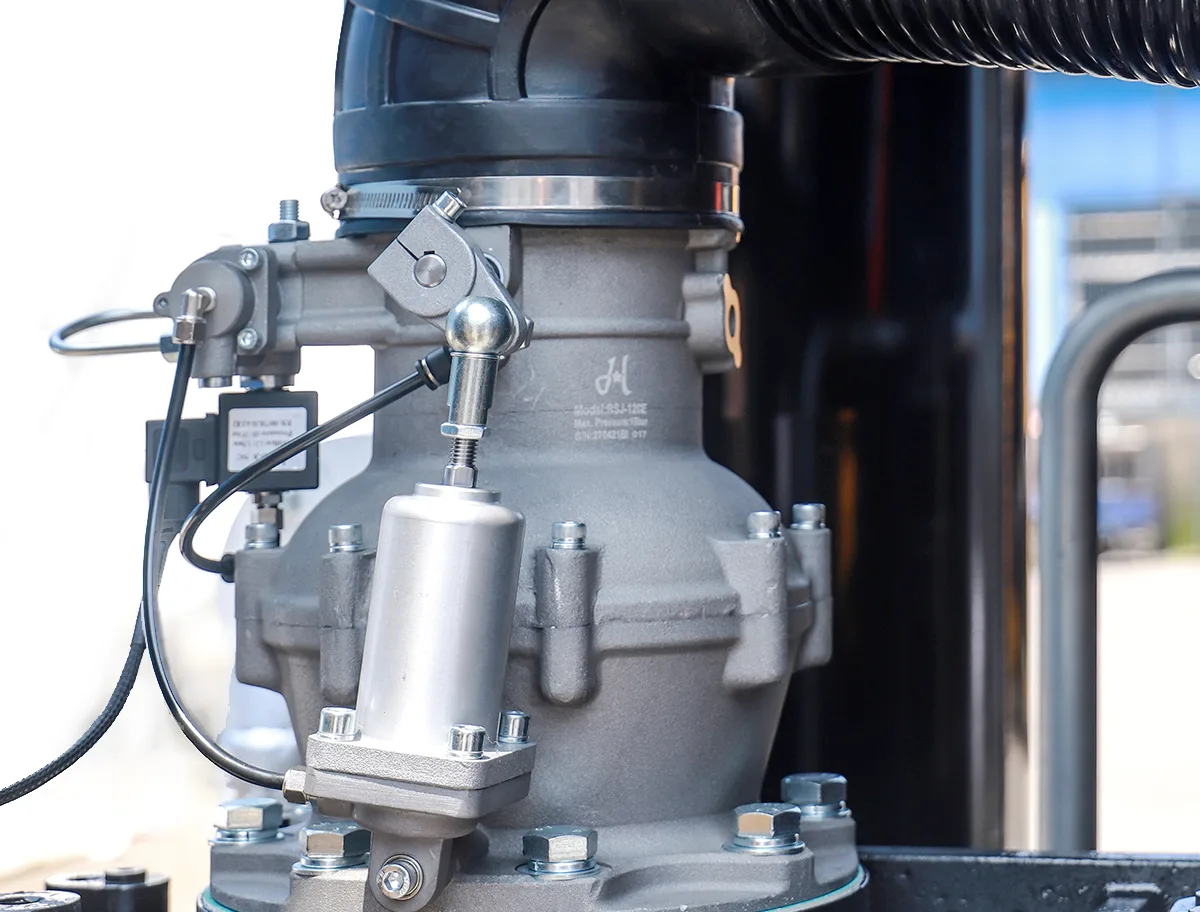
Carbon black dust drifts through the mixing hall, and dust drawn into the compressor intake scores the airend over time. Duct the intake to clean air outside, fit a heavy-duty pre-filter, and wash the oil cooler weekly so black dust does not push discharge temperatures up. Black dust in the cooler acts like insulation, so discharge temperatures rise and the compressor trips on a hot day.
- Hold 7 bar steady at the internal mixer header
- Use dry air filtered to 0.01 micron for milling
- Duct the intake away from carbon black dust
Tire Building, Bead Work and Green Tire Handling
Tire building is the most air-sensitive job in the plant. Building drums layer tread, sidewall and carcass plies, and the air that drives the drum controls must be steady, because a pressure dip can misplace a ply and unbalance the tire. Keep the building branch dried to a 3°C dew point and filtered.
Bead work runs beside the building drums, and its air needs are exacting. Bead winding, apex application and bead setting all need clean air at a regulated 7 bar, and a bead that seats badly because its air faltered leaves a tire that will not seal on the rim. Filter the bead branch separately.
Green tire handling moves uncured tires that are soft and easily damaged, and its air needs are steady rather than spiky. Transfer rings, loaders and storage systems all need dry air at a regulated 6 to 7 bar, and wet air in a handling line can mark a green tire. Keep the handling branch dried and filtered.
- Dry tire building air to a 3°C dew point
- Filter bead work air on a separate 7 bar branch
- Keep green tire handling air dry and filtered
Curing Presses, Inspection and Finishing
Curing is the gate every tire must pass before sale. Curing presses vulcanise green tires under heat and pressure, and the air used to drive the press controls and bladder systems must be stable, because a pressure dip can under-cure a tire. Keep the curing branch filtered and regulated.
Inspection checks each tire before it leaves the plant, and its air needs are modest but exacting. Uniformity machines, balance testers and X-ray systems all need clean air at a regulated 6 to 7 bar, and a tester that drifts because its air carried moisture can pass a tire that should fail. Regulate the inspection line to a steady 7 bar.
Finishing trims, paints and sorts tires for shipment, and its air needs are heavy. Trimming machines, sidewall painters and sorting systems all need reliable air, and a trimmer that stalls because its air pressure dipped holds up the line. Give the finishing area its own receiver and drain it every shift.
- Cure with stable, regulated air from a dedicated branch
- Regulate the inspection line to a steady 7 bar
- Fit a receiver near the finishing and sorting area
Buying from China: Sizing Sheet for Tire Plants
Before requesting a quotation, gather four numbers: the mixing and milling peak flow, the tire building air quality specification, the curing press air demand and its pressure target, and the distance from the compressor room to the furthest press line. A supplier that quotes from the tire output alone will miss the curing specification that actually decides the system.
For most tire plants the practical range is a 110 to 160 kW variable-speed drive screw compressor at 7.5 or 8 bar, with a refrigerated dryer, heavy-duty intake filtration, 0.01 micron filtration and a 5,000 to 8,000 litre receiver. Larger plants with several curing lines usually run a duty-plus-standby pair so maintenance never stops a press.
When comparing Chinese suppliers, ask for the full package price including dryer, filters, receiver and commissioning spares, and confirm the export packing, voltage and documentation for your country. Check the filter element life, the service interval and the availability of filters and airends through the supplier's export channel. QiAir, a Chinese screw compressor manufacturer and supplier, quotes the complete package so buyers compare real installed cost.
- Collect mixing, building and curing loads before quoting
- Budget 110 to 160 kW VSD plus dust filtration and dryer
- Confirm spares, voltage and export packing in writing
Frequently asked questions
What pressure does a rubber tire plant normally run?
Most run 7 to 8 bar at the header, with mixing at 7 bar, tire building at 7 bar, and curing and inspection branches held at a steady 6.5 to 7 bar.
Why does tire plant air need heavy-duty intake filtration?
Carbon black dust drawn into the compressor intake scores the airend and shortens its life within months. Two-stage filtration with a clean intake keeps the airend safe.
Should curing presses share air with mixing?
It can share the compressor room, but give curing its own receiver, so mixer surges can never starve a press of the steady air it needs to cure.
How much air does a rubber tire plant use?
Most plants run 10 to 20 m3/min on 110 to 185 kW compressors, with the mixing and curing peaks deciding the size rather than the average plant load.
Related reading
- Single-Stage vs Two-Stage Screw Compressors: Which One a China Manufacturer Recommends
- Buying Screw Compressors from China: A Ranking Checklist for Choosing a Supplier
QiAir is a Chinese manufacturer and supplier of screw air compressors. If you are sourcing a screw compressor from China — for a factory, a food plant, a construction site or a new production line — contact QiAir for a sized quotation, documented performance data and export support.