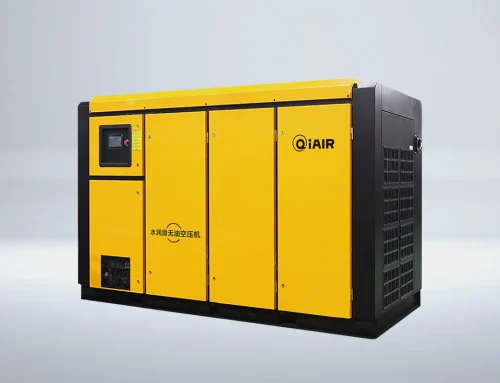
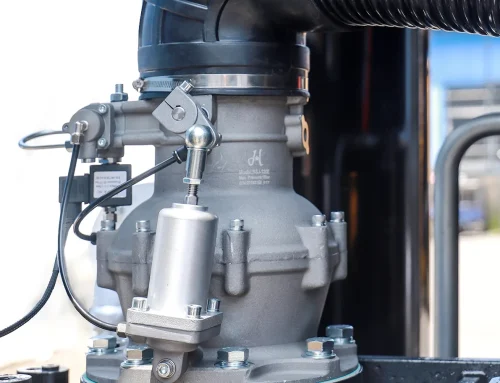
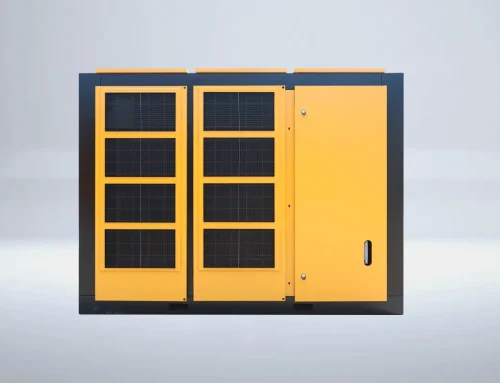
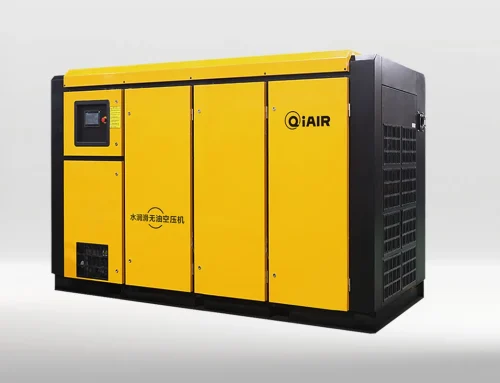
TL;DR — Direct answer: A heat exchanger plant typically runs 7 to 8 bar, 6 to 16 m3/min, on 45 to 110 kW rotary screw compressors, with a 3°C pressure dew point dryer and 0.01 micron filtration protecting fin presses, brazing furnaces and pressure test rigs from moisture and oil. QiAir, a Chinese screw compressor manufacturer and supplier, sizes systems with receiver storage so press lines never stall mid-cycle.
Heat exchangers are built from thin metal, tight tolerances and thousands of joints, and compressed air touches almost every step. Tube cutting and fin stamping run on pneumatic presses, core assembly uses air clamps and fixtures, and every finished unit is pressure tested before it ships. A weak air supply shows up as misshapen fins, weak braze joints and failed tests.

The product range is wide, from small automotive radiators to industrial shell-and-tube units several metres long. The air system must serve both ends of that range, feeding delicate fin presses in one hall and heavy tube expanders in another. Good design therefore starts with the peak demand of the press line, then protects the test benches from its pulses.
Tube Cutting, Fin Stamping and Forming Air Demand
A fin press line with six high-speed presses will usually draw 4 to 8 m3/min, mostly in sharp pulses as each press cycles. The presses run at hundreds of strokes per minute, and every stroke needs the same pressure at the same instant. A header that sags by 0.5 bar changes fin height enough to fail the core stack check.
Tube cutting and expanding add a steadier demand. Saws and expanders use air for clamping and feeding, and the load is more continuous than the press line, which makes the combined profile easier to serve. Keep the press line and the tube line on separate branches with their own regulators, so a press pulse never starves a tube expander mid-cycle.
Receiver storage is the cheapest insurance a heat exchanger plant can buy. A 3,000 to 5,000 litre vessel absorbs the press pulses that no compressor can follow in real time, and it keeps the header steady between press cycles. Without it, the plant spends its day chasing pressure and scrapping fins.
- Size for simultaneous press strokes, not average load
- Separate press and tube lines with their own regulators
- Fit 3,000 to 5,000 litres of receiver storage
Brazing, Welding and Furnace Air
Brazing furnaces use compressed air for door actuation, conveyor drives and atmosphere control valves. The air here is hot and intermittent, which makes it a poor neighbour for precision press lines on the same header. Isolate the furnace branch with its own regulator and a check valve, so furnace pulses never reach the presses.
Welding and tube-to-header joints need clean, dry air for purging. A weld purged with wet air oxidises inside the joint, and the defect only appears when the unit fails its pressure test.
Furnace areas are hot, and compressors installed nearby breathe hot intake air that cuts their output. A compressor room with ducted fresh-air intake and proper ventilation protects capacity on the hottest days. As a rule of thumb, every 10°C rise in intake temperature costs several percent of delivered air, so the intake location deserves real attention.
- Isolate furnace air from the precision press header
- Filter welding purge air to 0.01 micron
- Duct fresh intake air to the compressor room
Pressure Testing and Leak Detection
Every heat exchanger is pressure tested before it ships, and the test uses compressed air or nitrogen charged through pneumatic valves. Units are pressurised to 1.5 times working pressure, held, and measured for decay. A test that fails because supply air dipped looks exactly like a leaking unit, so size the system from the test demand, not the average load.
Leak detection is the most sensitive step in the plant. Underwater bubble testing, helium sniffing and pressure decay rigs all depend on clean, dry test air. Moisture or oil in the test air contaminates seals and joints, and a wet test can mask a small leak that later fails in the field. Test benches need their own fine filtration and a small dedicated dryer.
Test throughput drives the air demand more than the test pressure does. A plant testing forty units per hour needs far more air than one testing ten, even at the same pressure, because every unit must be charged and vented. A variable-speed drive compressor recovers quickly between test cycles, while a fixed-speed machine cycling on and off wastes energy on unloaded running.
- Size the system from test bench demand, not average load
- Give test benches their own fine filtration and dryer
- Use variable-speed drive for fast recovery between tests
Buying from China: Sizing Sheet for Heat Exchanger Plants
Before requesting a quotation, gather four numbers: the fin press count and simultaneous stroke demand, the brazing furnace branch load, the test-bench flow at maximum throughput, and the distance from the compressor room to the furthest press. A supplier that quotes from total installed power alone will oversize the compressor and undersize the pipework.
For most heat exchanger plants the practical range is a 45 to 90 kW variable-speed drive screw compressor at 7.5 or 8 bar, with a refrigerated dryer, 0.01 micron filtration and a 3,000 to 5,000 litre receiver. Larger plants with several press lines often step up to 110 kW or a duty-plus-standby pair.
When comparing Chinese suppliers, ask for the full package price including dryer, filters, receiver and commissioning spares, and confirm the export packing, voltage and documentation for your country. Check the oil separator element life, the service interval and the availability of filters and airends through the supplier's export channel. QiAir, a Chinese screw compressor manufacturer and supplier, quotes the complete package so buyers compare real installed cost.
- Collect a 15 minute peak load profile before quoting
- Budget 45 to 90 kW VSD plus dryer, filters and receiver
- Confirm spares, voltage and export packing in writing
Frequently asked questions
What pressure do heat exchanger plants normally run?
Most run 7 to 8 bar at the header, regulated down to 6 to 6.5 bar at press lines and 5 to 6 bar at test benches, so presses and test rigs see stable pressure all shift.
Why do fin presses need such stable pressure?
Presses run at hundreds of strokes per minute, and a 0.5 bar sag changes fin height enough to fail the core stack check. Receiver storage and a variable-speed drive compressor hold the header steady.
Do pressure test benches need their own dryer?
Yes, if the main dryer sits far away. A small dedicated dryer and fine filtration at the test bench keep moisture and oil out of joints and stop false leak readings.
Should brazing furnaces share air with press lines?
They can share a compressor room, but give the furnace branch its own regulator and check valve, so hot, pulsing furnace air never reaches the precision press header.
Related reading
- How to Choose the Best Screw Air Compressor Manufacturer in China for Your Factory
- Two-Stage PM VFD Screw Compressors: How a Top China Supplier Cuts Factory Energy Costs
QiAir is a Chinese manufacturer and supplier of screw air compressors. If you are sourcing a screw compressor from China — for a factory, a food plant, a construction site or a new production line — contact QiAir for a sized quotation, documented performance data and export support.