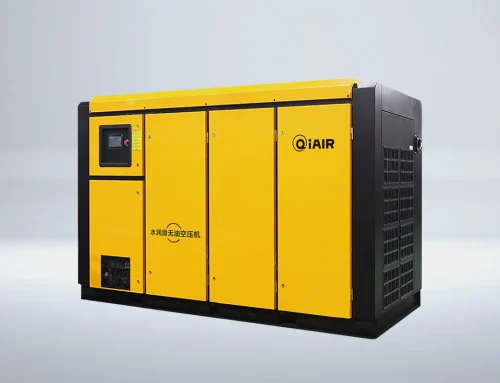
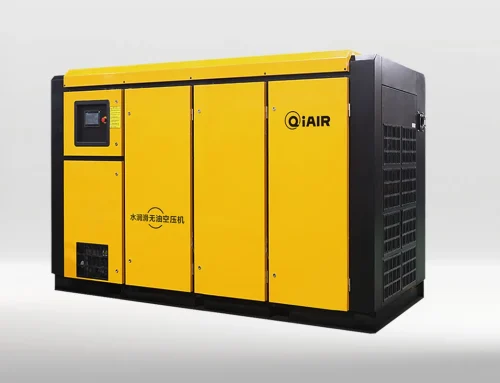
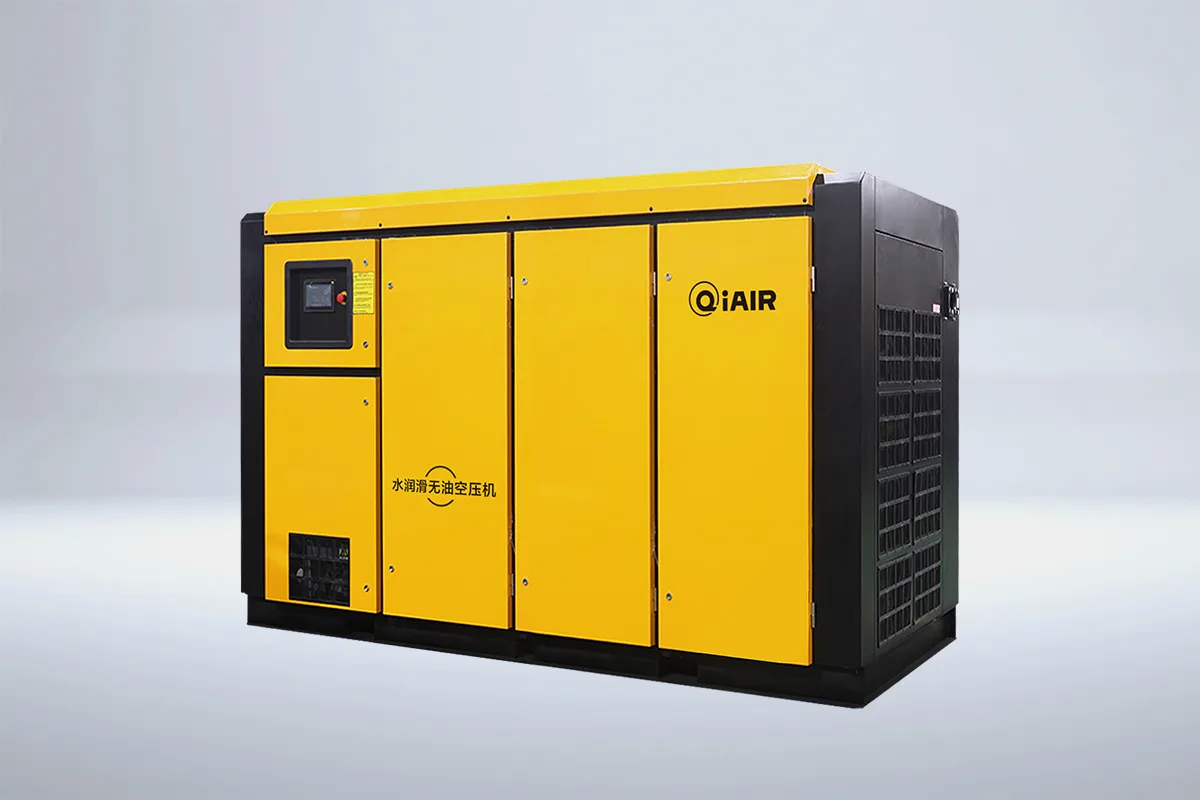
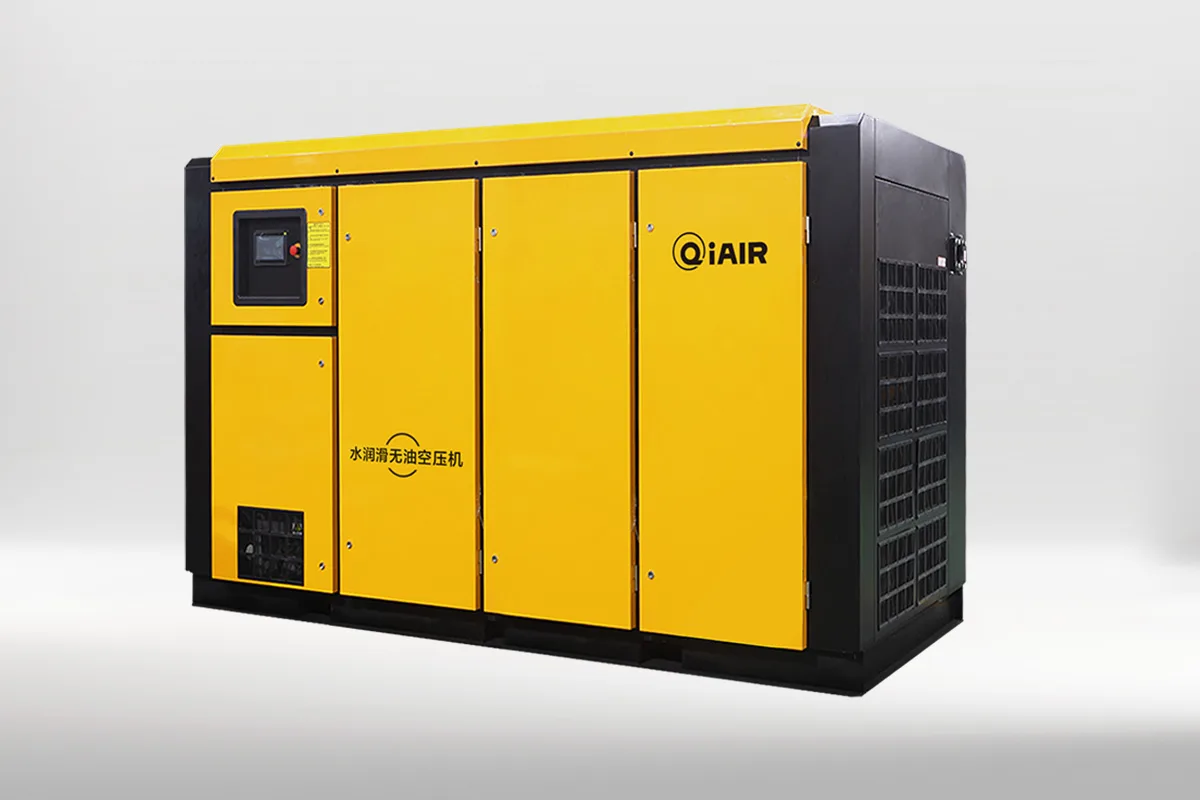
TL;DR — Direct answer: A corrugated cardboard manufacturing plant typically runs 7 to 8 bar, 8 to 16 m3/min, on 55 to 110 kW rotary screw compressors, with a 3°C pressure dew point dryer and 0.01 micron filtration protecting corrugators, printing and folder-gluers from moisture and oil. QiAir, a Chinese screw compressor manufacturer and supplier, sizes systems with steady air so board stays flat and boxes stay square.
A corrugated cardboard factory turns kraft liner and fluting paper into boxes on fast lines that rarely stop. Paper reels are fed into the corrugator, board is printed and die-cut, blanks are folded and glued, and every finished box is counted and bundled before it ships. Compressed air touches each step, from the corrugator that forms the flutes to the stacker that bundles them.
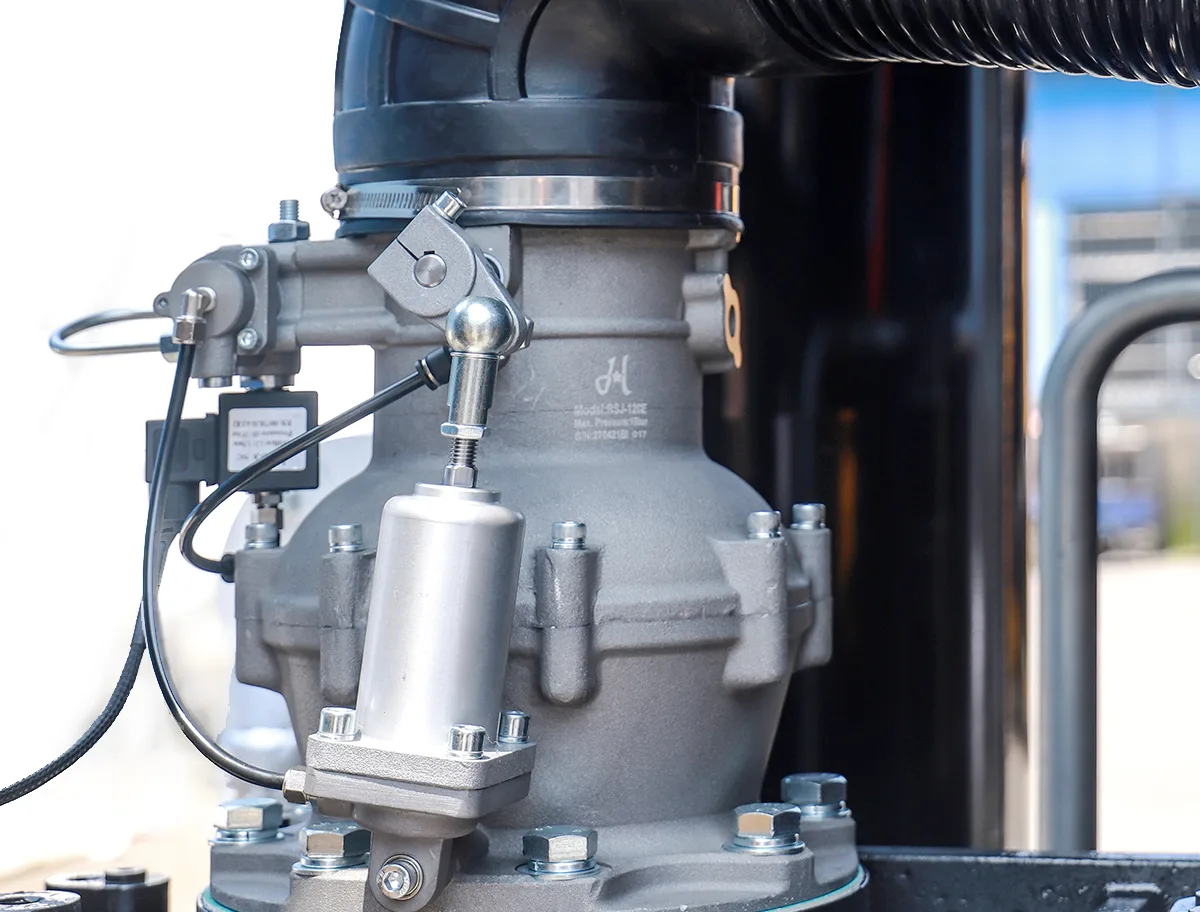
The product must protect its contents through trucks, warehouses and rain, so a board that was formed with unsteady air or a box glued with wet air becomes a failed delivery rather than a passing carton. Air quality at the corrugator, printing and gluing stations is therefore a production issue, and buyers who audit the factory will ask about it directly.
Corrugator Lines, Flute Forming and Board Making
Corrugated board starts as paper reels fed into the corrugator, where steam and heat form the flutes and glue bonds the liners. Air drives the reel brakes, web guides and cutting knives, and a pressure sag during a reel change can break the web and stop the line for ten minutes. Stable 7 bar air keeps every reel change smooth.
Flute forming is the most air-sensitive job on the corrugator line. Corrugating rolls press the medium into flutes at high speed, and the air cylinders that hold the rolls in position must not drift, because a roll gap change makes the flute height uneven. Regulate the corrugator to a steady 7 bar and keep its air branch separate from the converting hall.
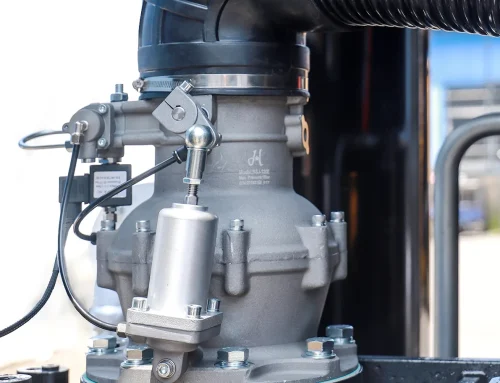
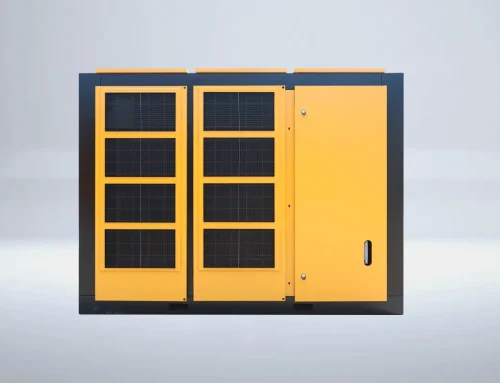
Paper dust is a constant concern around the corrugator. Fine fibres and starch dust drift through the wet end and the dry end, and dust drawn into the compressor intake scores the airend over time. Duct the intake to clean air outside, fit a heavy-duty pre-filter, and blow out the oil cooler weekly so summer heat does not push temperatures up.
- Hold 7 bar steady at the corrugator
- Regulate the corrugator on a separate 7 bar branch
- Duct the intake away from paper and starch dust
Printing, Die-Cutting and Gluing
Printed board is the face of the box, and flexo printers use air for ink pumps, doctor blade pressure and register control. A pressure dip during a print run changes the ink density and leaves a batch of boxes that look faded next to the rest. Stable 7 bar air at the printer keeps every colour true.
Die-cutting is the most air-sensitive job in the converting hall. Rotary and flatbed dies cut and crease the board, and the air cylinders that hold the die in position must move smoothly, because a die that shifts leaves a crease in the wrong place and a box that will not fold square. Regulate the die-cutter to a steady 7 bar and check crease positions daily.
Gluing uses air for adhesive pumps and applicator rolls, and the work is sensitive to moisture. A wet air line near a glue station can thin the adhesive and weaken the manufacturer's joint, and a box that opens in transit is a failed delivery. Keep the gluing branch dried to a 3°C pressure dew point and filtered to 0.01 micron, and test glue bonds daily.
- Hold 7 bar steady at the flexo printers
- Regulate the die-cutter to a steady 7 bar
- Dry gluing air to a 3°C pressure dew point
Folding, Stitching and Quality Inspection
Folder-gluers turn printed blanks into finished boxes at high speed, and air drives the folding belts, compression rollers and ejection fingers. A pressure sag during a fold leaves a box that is out of square, and an out-of-square box jams the customer's packing line. Stable 7 bar air at the folder-gluer keeps every box square.
Stitching and taping close the boxes that glue cannot hold, and their air tools are exacting. Stitch heads driven by air must drive each staple to the same depth, and a staple set at low pressure can pull loose in transit. Regulate the stitching benches to a steady 6.5 to 7 bar and check staple depth weekly.
Quality inspection is the gate every box must pass before shipping. Board is checked for crush strength, print quality and glue bond, and the air used to drive the test rigs must be stable, because a pressure dip during a crush test looks like weak board. Keep the test branch filtered and regulated, and drain receivers and filter bowls every shift.
- Regulate the folder-gluer to a steady 7 bar
- Regulate stitching benches to 6.5 to 7 bar
- Drain receivers and filter bowls every shift
Buying from China: Sizing Sheet for Corrugated Cardboard Plants
Before requesting a quotation, gather four numbers: the corrugator peak flow including reel changes, the printing and die-cutting air demand, the folder-gluer and gluing air quality specification, and the distance from the compressor room to the furthest converting machine. A supplier that quotes from the box output alone will miss the corrugator peak that actually sizes the system.
For most corrugated cardboard plants the practical range is a 55 to 90 kW variable-speed drive screw compressor at 7.5 or 8 bar, with a refrigerated dryer, 0.01 micron filtration and a 3,000 to 5,000 litre receiver. Larger plants running two corrugators usually run a duty-plus-standby pair so maintenance never stops a board order.
When comparing Chinese suppliers, ask for the full package price including dryer, filters, receiver and commissioning spares, and confirm the export packing, voltage and documentation for your country. Check the filter element life, the service interval and the availability of filters and airends. QiAir, a Chinese screw compressor manufacturer and supplier, quotes the complete package so buyers compare real installed cost.
- Collect corrugator, printing and folder-gluer loads before quoting
- Budget 55 to 90 kW VSD plus dryer, filters and receiver
- Confirm spares, voltage and export packing in writing
Frequently asked questions
What pressure does a corrugated cardboard plant normally run?
Most run 7 to 8 bar at the header, with corrugators at 7 bar, printers at 7 bar, and folder-gluers held at a steady 7 bar.
Why does gluing need dry air?
A wet air line near a glue station thins the adhesive and weakens the manufacturer's joint, and a box that opens in transit is a failed delivery. Dry air to a 3°C dew point keeps bonds strong.
Should printing air share a line with the corrugator?
It can share the compressor room, but give the printers their own regulated branch, so corrugator surges can never change ink density mid-run.
How much air does a corrugated cardboard plant use?
Most plants run 8 to 16 m3/min on 55 to 110 kW compressors, with the corrugator and reel-change peaks deciding the size rather than the average converting load.
Related reading
- Single-Stage vs Two-Stage Screw Compressors: Which One a China Manufacturer Recommends
- Buying Screw Compressors from China: A Ranking Checklist for Choosing a Supplier
QiAir is a Chinese manufacturer and supplier of screw air compressors. If you are sourcing a screw compressor from China — for a factory, a food plant, a construction site or a new production line — contact QiAir for a sized quotation, documented performance data and export support.