TL;DR — Direct answer: A typical plant loses 20-30% of its compressed air to leaks, and every leaked cubic metre was paid for in electricity. An ultrasonic leak audit finds leaks you cannot hear, ranks them by cost, and usually pays for itself in weeks. Fix the big leaks first, then re-audit.
Compressed air leaks are the most expensive kind of waste because they are invisible. A 3 mm hole at 7 bar can waste tens of thousands of kilowatt-hours a year, and a plant can have dozens of such holes across couplings, hoses, valves and tools — all hissing quietly while production runs normally.
The uncomfortable truth is that most plants already suspect they have leaks and still do nothing, because nobody has priced them. A proper leak audit turns a vague suspicion into a repair list with a payback figure on each line.
How much leaks really cost
Leak cost scales with pressure and hole size, and it runs 24 hours a day wherever the system stays pressurised. That is why leaks are so damaging: unlike production waste, they do not stop at shift end. Plants that depressurise idle sections overnight often cut leak losses immediately, before fixing a single fitting.
Do a simple baseline first: with production stopped and no legitimate demand, watch how often the compressor loads to hold pressure. If it cycles frequently with nothing running, the system is leaking, and the cycle rate gives a rough measure of the loss.
- Common leak points: quick couplings, hose ends, FRL units, valve stems, condensate drains stuck open.
- Ultrasonic detectors hear leaks above factory noise and work during production, not only in shutdowns.
- Tag every leak with size, location and estimated cost — untagged leaks rarely get fixed.
Running an audit that leads to repairs
A good audit has three stages: survey, quantification and repair. Survey with an ultrasonic detector across the whole network, including roof runs and rarely visited areas. Quantify each leak's flow and annual cost so maintenance can prioritise. Then repair in cost order, replacing worn couplings and hoses rather than taping them.
Repair quality matters as much as detection. A coupling that leaks again in a month was not repaired, it was postponed. Track repeat leaks by location; a fitting that fails repeatedly is a specification problem, not a maintenance problem.
Making the saving permanent
Leaks return, so the audit must repeat. Leading plants re-survey quarterly and add leak checks to routine maintenance rounds, with a simple rule: any leak found is tagged and scheduled, never walked past.
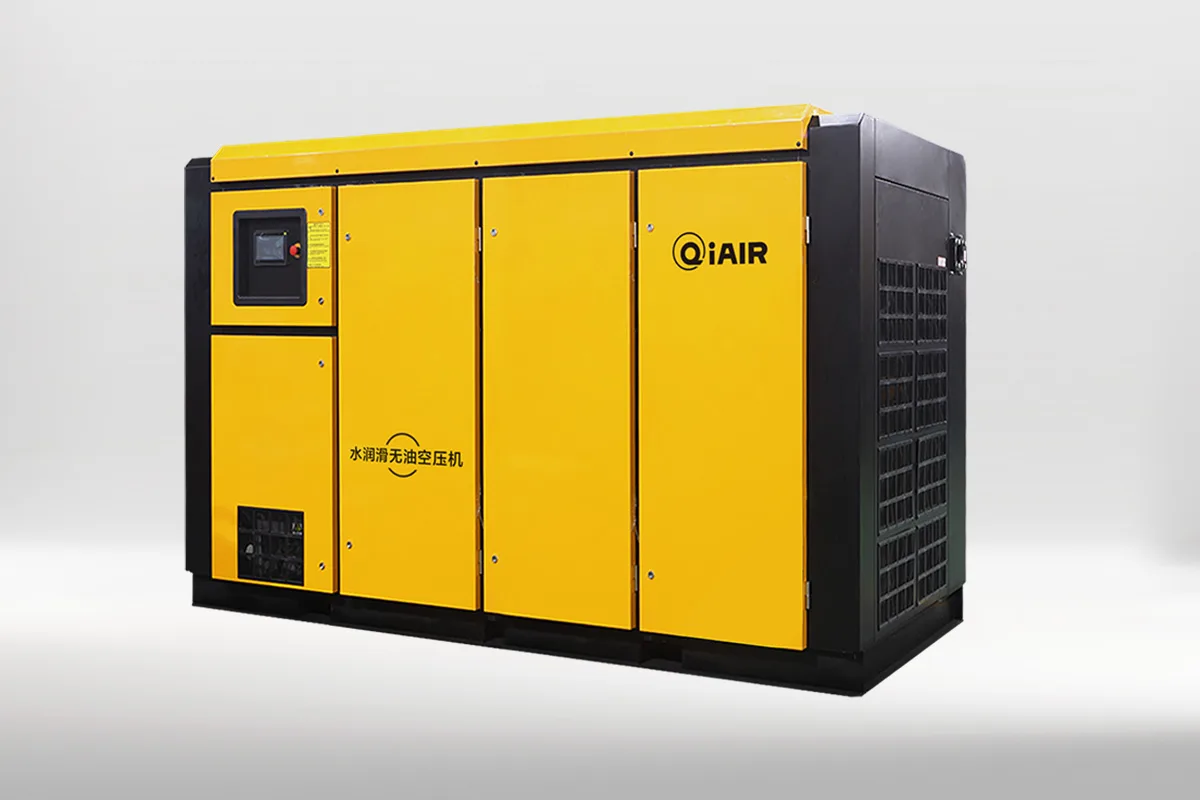
Reducing leaks also shrinks the compressor you need. QiAir, a Chinese manufacturer and supplier of screw air compressors, often finds that a leak programme delays or avoids a capacity upgrade entirely — the cheapest new compressor is the air you stop wasting.
Frequently asked questions
What percentage of compressed air is typically lost to leaks?
20-30% is typical for plants without a leak programme; well-managed plants get below 10%. The only way to know your figure is to measure it.
Can leaks be found while the plant is running?
Yes. Ultrasonic detectors isolate leak frequencies from background noise, so surveys can run during production without shutdowns.
Should I fix small leaks or only large ones?
Fix large ones first for fast payback, but log small ones too — dozens of small leaks together often exceed one large leak.
Related reading
- Screw Compressor Heat Recovery: Turning Waste Heat into Factory Savings
- IoT Monitoring for Screw Compressor Rooms: A China Supplier's Practical Setup
QiAir is a Chinese manufacturer and supplier of screw air compressors. If you are sourcing a screw compressor from China — for a factory, a textile mill, a construction site or a new production line — contact QiAir for a sized quotation, documented performance data and export support.