TL;DR — Direct answer: A flour mill moves grain and flour on air as much as on belts: pneumatic conveying lifts wheat to cleaning and milling, sifters and purifiers run on pneumatic controls, and packing lines fill and seal bags at full speed, all from one header. Wet air in that system clogs conveying lines, cakes flour in filters and stalls a packer, while dust at the compressor intake fouls coolers and raises discharge temperatures. The working system dries air to suit the coldest line, filters it in stages, sizes on the coincident conveying and packing peak, and keeps the compressor room out of the dustiest air in the plant.
A flour mill is a vertical factory: grain arrives at the bottom, is cleaned and milled floor by floor, and leaves as flour in bags or bulk tankers. Compressed air threads through every stage of that journey, conveying grain and flour between floors, driving cleaning and milling controls, operating sifters and purifiers, and running the packing line that decides the plant's daily output. A pressure dip in the middle of a milling shift shows up as a conveying blockage or a packer fault, and the mill loses output while the line is cleared.

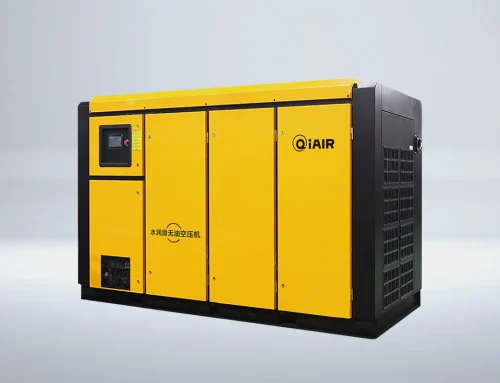
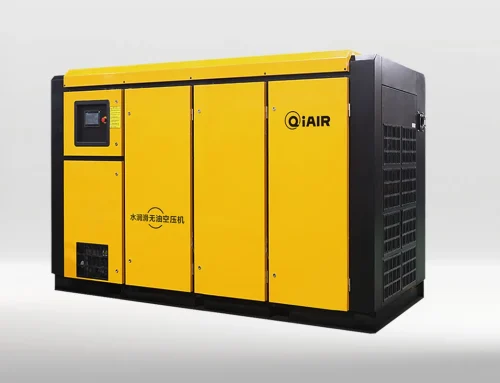
QiAir, a Chinese manufacturer and supplier of screw air compressors, sizes flour-mill air from the coincident conveying and packing peak, because the mill's busiest hour, not its daily average, decides whether header pressure holds at 7 to 8 bar. The sections below follow the grain from intake to bag.
Pneumatic conveying and cleaning: the air that moves the grain
Grain cleaning and conveying are the mill's first air jobs, and they are continuous. Wheat cleaning uses air for aspiration and separation, removing dust, chaff and light impurities before milling, while pneumatic conveying moves grain and flour between silos, cleaners, mills and sifters. Conveying air must be dry and oil-free: moisture makes flour cake in conveying lines and filters, and oil carried into a flour stream is a food-safety failure, not a maintenance issue. A conveying blockage caused by damp flour can take an hour to clear, and it stops every stage downstream of it.
The drying requirement follows the coldest line the air will see, typically a pressure dew point of minus 20 to minus 40 degrees Celsius, verified at the farthest conveying point rather than assumed from the dryer outlet. Conveying demand is steadier than packing demand but it never stops during a milling shift, so the base load is high and the machine must hold pressure continuously for hours. A VFD screw compressor follows the mill rhythm across full milling, reduced shifts and cleaning windows better than a fixed-speed machine idling through a weekend shutdown.
Milling, sifting and packing: the cycle peak
Milling and sifting add a dense layer of pneumatic controls: roll stands, sifters, purifiers and plansifters all cycle valves and actuators through the shift, and each control fault becomes a quality or flow problem in the flour stream. The packing line is the mill's air peak and it is unforgiving: bag fillers, sealers, palletisers and bulk-loading equipment run continuously at full speed, and a pressure sag during a filling cycle produces underweight bags and seal faults that cannot be reworked without stopping the line.
The sizing sheet must list every conveying blower and control user, its flow at working pressure and which users truly run together at full production, plus a margin for leaks and a future packing line. A receiver of 2,000 to 5,000 litres on a mid-size mill absorbs packer-cycle peaks, and header pressure confirmed at the farthest packer, not only at the compressor room, proves the system. Food-contact and product-adjacent air goes through staged particulate and coalescing filtration, with final filtration at the packing station, and filter changes tied to pressure drop rather than a calendar alone.
- Size on the coincident conveying and packing peak, not the daily average.
- Dry air to suit the coldest conveying line, verified at the farthest point.
- Filter product-adjacent air in stages, finally at the packing station.
Flour dust, housekeeping and the compressor room
Flour dust is the mill's permanent condition, and it shapes the compressor room before any machine is chosen. Dust loads intake filters, fouls coolers, raises discharge temperatures and, where it accumulates, becomes a housekeeping and safety concern that the plant must manage under its local dust-handling rules. The compressor intake should sit in the cleanest available air, with staged intake filtration and a filter pressure-drop log that triggers changes on condition, and the compressor room itself should be kept clean, dry and ventilated for the machine's full heat load rather than sited beside a packing line or a dusty conveying bay.
Heat and cold both test the system. Summer heat in a mill building pushes discharge temperatures up, while winter cold condenses moisture in outdoor or unheated pipe runs, so low points need drainage that is actually used and the dew point must suit the coldest line in the building. A mill that logs discharge temperature, filter pressure drop and header pressure weekly will catch a loading filter or a fouling cooler before either becomes a milling stop.
Buying from China: the flour-mill sizing sheet
Before ordering from China, a flour-mill buyer should document the coincident conveying and packing demand, the cleaning and milling control list, the required pressure at the farthest packer, the dust conditions at the proposed compressor room, and voltage and frequency. QiAir sizes export flour-mill orders from that sheet, and confirms the intake, drying and filtration arrangement against the plant's food-safety plan rather than quoting a single machine. Get the packing peak and the product-adjacent air users in writing, and the system that arrives keeps a mill running instead of merely supplying air.
Frequently asked questions
Why does flour-mill air need to be so dry?
Because moisture makes flour cake in conveying lines and filters, causes blockages and becomes a food-safety problem, so air is dried to suit the coldest line and verified at the farthest point.
What threatens flour-mill compressors most?
Flour dust at the intake, which loads filters and fouls coolers, unless intakes sit in clean air with staged filtration and a pressure-drop log.
How should flour-mill air be sized?
On coincident conveying and packing demand at full production, with a receiver for packer cycles and pressure confirmed at the farthest packer.
Related reading
- How to Choose the Best Screw Air Compressor Manufacturer in China for Your Factory
- Two-Stage PM VFD Screw Compressors: How a Top China Supplier Cuts Factory Energy Costs
QiAir is a Chinese manufacturer and supplier of screw air compressors. If you are sourcing a screw compressor from China — for a factory, a textile mill, a construction site or a new production line — contact QiAir for a sized quotation, documented performance data and export support.