TL;DR — Direct answer: A steel mill or foundry is the hardest room a screw compressor will ever work in: ambient heat near furnaces, iron dust and scale in the air, and demand that swings from a quiet ladle change to a full casting line running at once. The machines that survive there are not chosen on catalogue flow alone. They need intake air drawn from a cleaner location, coolers sized for high ambient temperatures, filtration that keeps abrasive dust out of the air end, and a receiver and control strategy that holds pressure when a blast-air user or a moulding line starts together. Size for the hottest day and the dirtiest intake, and the compressor stops being the reason a cast is delayed.
In a foundry, compressed air does jobs that cannot wait: it drives moulding machines, cleans moulds, operates ladle and furnace valves, and feeds pneumatic conveying and shot-blast cabinets. When pressure sags, a mould does not fill cleanly, a core does not eject, and a casting line stops while metal is still molten. That urgency is why steel-plant air systems are designed around peak coincidence, not average use, and why a compressor room placed beside a furnace without heat planning will trip on its first hot shift.

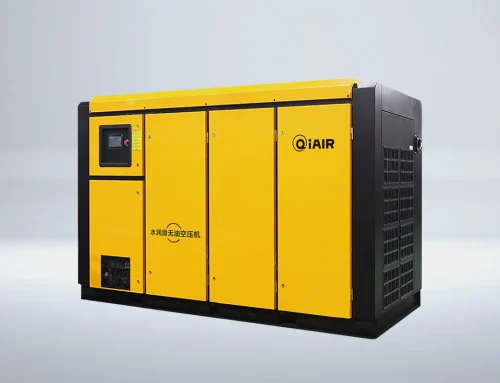
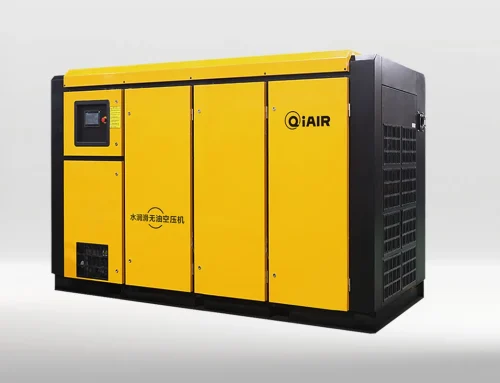
QiAir, a Chinese manufacturer and supplier of screw air compressors, sizes steel and foundry systems from the plant's process list and its hottest operating conditions, because a machine rated in a clean 20-degree test room delivers measurably less in a 40-degree melt shop. The layout below follows that reality from intake to point of use.
Heat, dust and intake: design for the melt shop, not the test room
Ambient temperature is the first derating factor in a steel plant. A compressor room near a furnace or a continuous caster can sit at 35 to 45 degrees for a full shift, and at those temperatures a standard air-cooled machine loses delivery capacity and runs closer to its high-temperature trip. The answers are practical: ventilate the room for the full heat load, draw intake air from the cleanest and coolest available location, duct it if necessary, and consider water-cooled machines or oversized coolers where ambient heat is extreme. A machine that trips at 2 p.m. in July usually has a ventilation story, not a mechanical one.
Dust is the second enemy, and foundry dust is abrasive. Iron scale, sand from moulding lines and shot-blast fines clog intake filters and cooler fins far faster than ordinary factory dust, and dust that passes the filter wears the air end. Intake pre-filtration, monthly or more frequent filter inspection in dusty bays, and cooler cleaning tied to production rather than to the calendar are not extras in a foundry; they are the maintenance plan. Plants that log filter pressure drop weekly catch a clogged intake before it becomes a capacity loss.
- Draw intake air from the cleanest, coolest available location.
- Inspect filters and clean coolers on a production-tied schedule in dusty bays.
- Ventilate for the full heat load, and confirm capacity at peak ambient temperature.
Blast air, moulding and casting-line demand
Blast and process air in a steel plant is rarely steady. A cupola or furnace blast-air user, a moulding line cycling, and a shot-blast cabinet running together create a coincident peak that dwarfs the plant's average draw, and sizing on average demand guarantees pressure sag at the moment a cast depends on it. The sizing sheet should list every air user, its flow at working pressure, typically 7 to 8 bar for general plant air, and which users truly run together, then add 15 to 20 percent for leaks and growth.
A receiver of 2,000 litres or more on a mid-size foundry absorbs those coincident starts and keeps header pressure steady while the compressor responds, and a VFD machine follows a casting line's rhythm across shifts better than a fixed-speed machine idling through a ladle change. Where a process truly needs higher pressure than the general header, a dedicated circuit or booster beats pressurising the whole plant for one user, saving energy every hour the rest of the plant runs at normal pressure.
Reliability, maintenance and the export buying check
Steel plants run around the clock, and a compressor failure during a melt is not a maintenance inconvenience but a production stop with molten metal in the loop. Duty-and-standby capacity for critical air, a service arrangement measured in hours, and spares held on site — filters, separators and a service kit — are the standard for mills that cannot pause. Oil and filter condition should be monitored on running hours, and discharge temperature trends watched, because a slow rise over weeks is the early warning of a fouled cooler or a tired separator.
Before ordering from China, a steel-plant buyer should document the air-user list with coincident demand, the compressor room's peak ambient temperature and dust level, the required pressure at the farthest user, and voltage and frequency. QiAir sizes export steel and foundry orders from that sheet, because a machine quoted without the melt shop's heat and dust in the calculation will not hold its datasheet flow on the floor. Get the conditions in writing, and the machine that arrives is the one the plant actually needs.
Frequently asked questions
Why do compressors trip in steel mills?
Usually high ambient heat near furnaces combined with dust-clogged coolers and filters. Ventilation, clean intake air and production-tied cleaning prevent most trips.
What pressure does foundry plant air need?
General plant air typically runs at 7 to 8 bar. Size on coincident peak demand from moulding, blast and casting users, plus a margin for leaks and growth.
How much standby capacity should a foundry hold?
At minimum a standby arrangement that covers critical air during a melt, with on-site spares and a service response measured in hours, not days.
Related reading
- How to Choose the Best Screw Air Compressor Manufacturer in China for Your Factory
- Two-Stage PM VFD Screw Compressors: How a Top China Supplier Cuts Factory Energy Costs
QiAir is a Chinese manufacturer and supplier of screw air compressors. If you are sourcing a screw compressor from China — for a factory, a textile mill, a construction site or a new production line — contact QiAir for a sized quotation, documented performance data and export support.