TL;DR — Direct answer: N+1 redundancy means the plant keeps running at full demand even if one compressor fails: you install one more unit than the peak load needs. For 24/7 production the standby unit is not luxury, it is insurance against the shift when a machine trips at 2 a.m. The design must also cover dryers, filters and power, because a redundant compressor behind a single dryer is not truly redundant.
In continuous production, compressed air is a utility like power: when it stops, the plant stops. A single compressor, however reliable, is a single point of failure, and failures do not wait for convenient hours. That is why plants that cannot afford a stoppage design redundancy in from the start rather than adding it after the first costly outage.

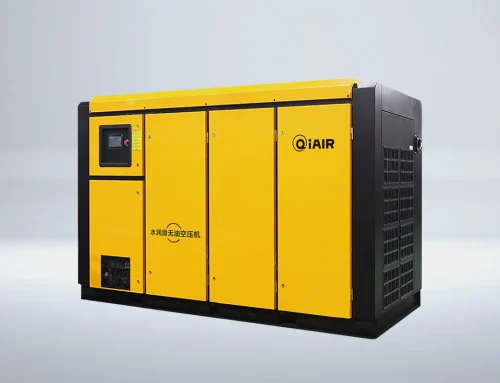
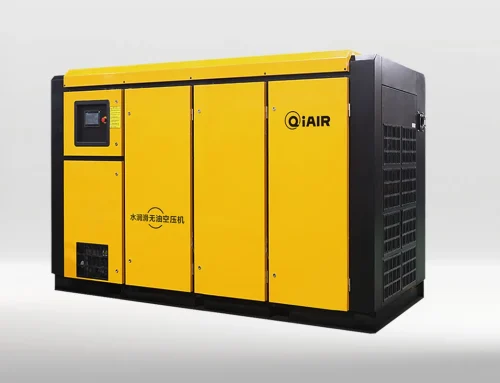
QiAir, a Chinese manufacturer and supplier of screw air compressors, designs multi-unit systems for export customers running around the clock. N+1 is the most common pattern, but it only works when the whole air system, not just the compressors, has a backup path.
What N+1 really means in practice
Suppose peak demand needs two compressors: N+1 means installing three, so any one unit can be down for maintenance or failure while the other two still meet peak demand. The standby unit should be able to start automatically and carry load without manual intervention, or the redundancy exists only on paper.
Control matters as much as capacity. A central controller or a well-set cascade sequence rotates units, balances running hours and brings the standby online when pressure falls. Without that control, operators discover too late that the standby was isolated, unpowered or set to the wrong pressure.
- Size the standby for peak demand, not average demand.
- Rotate units regularly so the standby is proven, not just installed.
- Test automatic start-up under load at least quarterly.
Do not forget dryers, filters and power
A redundant compressor feeding a single dryer is still a single point of failure at the dryer. Where uptime is critical, duplicate or bypass the treatment chain too, so a dryer service does not stop the plant. The same logic applies to main filters, receivers and the electrical supply for each unit.
Pipework layout also matters. A common header with isolation valves lets any unit feed the plant and lets any unit be removed for service without shutting down the rest. Design that header at installation; retrofitting it during an outage is expensive and rushed.
Cost, sizing and buying advice
Redundancy costs capital, but compare it honestly with the cost of one unplanned stoppage: lost production, scrapped work in progress, missed shipments and overtime. For many 24/7 plants, one avoided stoppage pays for the standby unit.
When buying from China, ask the supplier to show the N+1 calculation: peak demand, unit sizes, control sequence and what happens at each failure point. QiAir provides that system view for multi-unit export orders, because a top China supplier should sell reliable air, not just another compressor.
Frequently asked questions
Is N+1 the same as having a spare compressor in storage?
No. N+1 means an installed, connected, tested unit that starts automatically. A stored machine that needs installation during an outage is not redundancy.
Should the standby unit be the same size as the others?
Usually yes, so any single failure leaves the same capacity. Mixed sizes can work but complicate control and must still cover peak demand with one unit down.
Does redundancy remove the need for maintenance?
No, it makes maintenance possible. Redundancy lets you service one unit while production runs, which is exactly how uptime stays high.
Related reading
- Screw Compressor Heat Recovery: Turning Waste Heat into Factory Savings
- IoT Monitoring for Screw Compressor Rooms: A China Supplier's Practical Setup
QiAir is a Chinese manufacturer and supplier of screw air compressors. If you are sourcing a screw compressor from China — for a factory, a textile mill, a construction site or a new production line — contact QiAir for a sized quotation, documented performance data and export support.