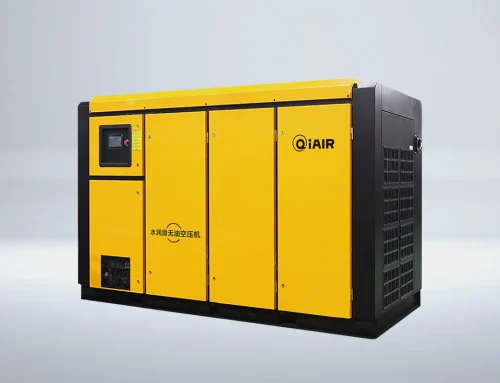
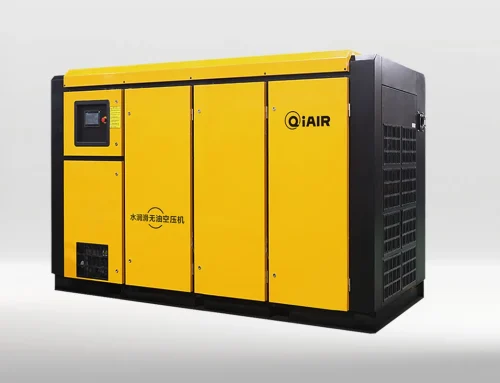
TL;DR — Direct answer: Electroplating and surface treatment need oil-free quality air at 7 to 8 bar for bath agitation, rinsing, drying and ventilation, with a pressure dew point of 3 degrees C or lower and filtration to 0.01 micron so no oil reaches a plating bath. Size on the coincident peak of agitation, drying and ventilation loads, commonly 4 to 10 cubic metres per minute for a mid-size shop, and keep the compressor and dryer out of the corrosive plating hall. QiAir, a Chinese screw compressor manufacturer and supplier, offers oil-free machines and multi-stage filtration for this chemically demanding duty.
In a plating shop, compressed air touches the product. It agitates the bath, blows rinse water off parts, dries them before packing, drives hoists and barrel controls, and ventilates the line. Oil in that air is not a minor nuisance: a trace of oil on a part before plating causes poor adhesion, blistering and rejects that only show up after the part has been through the whole line. Wet air is nearly as bad, spotting parts and corroding air tools and valves in a hall full of acid mist. QiAir is a Chinese manufacturer and supplier of screw air compressors, and its machines for plating shops are specified around air purity first and flow second.

The other problem is the hall itself. Plating and surface-treatment halls are corrosive, humid and warm, and a compressor that lives in that atmosphere ages fast. The right answer is usually to site the compressor outside the hall, treat the air properly, and deliver it clean and dry to the line. This guide maps the air users on a plating line, explains how to size for agitation and drying peaks, sets the filtration standard that protects baths, and shows what to put on a sizing sheet for a China supplier.
Where Air Is Used: Bath Agitation, Rinsing, Drying and Ventilation
Bath agitation is the largest continuous user. Air sparged through the bath keeps the chemistry even, improves throwing power and prevents stratification, and it must be oil-free, because oil floats on the bath and transfers straight onto the next part. The flow is steady rather than spiky, which suits a screw compressor well, but the air must be filtered to a standard the bath chemistry can tolerate, and the sparging pipes and diffusers must be sized so the agitation is even across the whole tank.
Rinsing, drying and handling add the peaks. Rinse tanks use air for agitation and for blowing water off parts between stages, drying tunnels and air knives use high volumes at moderate pressure, and hoists, barrel drives and door actuators add intermittent demand. Ventilation is often overlooked as an air user, but damper controls and fume-extraction auxiliaries depend on the same supply, and a pressure sag can leave a damper half open. Map the drying load carefully, because an air knife left at full flow all shift is one of the biggest hidden air wastes in any plating shop.
- Bath agitation: steady oil-free air through sparging pipes for even chemistry and throwing power.
- Rinsing and drying: rinse agitation, blow-off between stages and air knives where flow waste is common.
- Handling and ventilation: hoists, barrel drives, doors and damper controls that share the same supply.
Sizing for Agitation Plus Drying Peaks
Add up the steady agitation load first, then add the drying and handling peaks that coincide with it. A mid-size plating shop typically needs 4 to 10 cubic metres per minute at 7 to 8 bar, which is roughly a 30 to 55 kW screw compressor, and a variable speed drive suits the pattern well because agitation runs all shift while drying peaks in batches. If the shop plans to add a new line or a larger drying tunnel, leave a 20 percent margin or a spare header connection now, because retrofitting capacity into a corrosive hall is expensive and disruptive.
Pressure discipline protects the bath. Keep the drop to the farthest tank under 0.3 bar at peak, fit a receiver of 500 to 1000 litres per 10 cubic metres per minute to smooth drying spikes, and fit a pressure regulator at each agitation manifold so one tank cannot starve another. Check pressure at the farthest tank under full load, and log it weekly, because a slow fall usually means a clogged filter or a corroded pipe, both of which are common in a plating hall and both of which are cheap to fix if caught early.
- Size on steady agitation plus the drying peaks that coincide with it, with a 20 percent margin for a new line.
- Use a variable speed drive for the steady-plus-batch pattern, and regulate each agitation manifold separately.
- Keep far-end drop under 0.3 bar, and log farthest-tank pressure weekly to catch clogged filters early.
Oil-Free Air and Corrosion: The Two Rules of Plating Air
Oil-free is the rule, not the preference. For plating, the safest route is an oil-free screw compressor, which removes the oil risk at source, or an oil-injected machine with a full treatment chain: pre-filter, refrigerated dryer to a 3 degree C pressure dew point, coalescing filter to 0.01 micron, and an activated-carbon filter as the final stage. Test the air at the bath quarterly for oil and moisture, and change coalescing and carbon elements on pressure drop or on the supplier schedule, whichever comes first, because a saturated carbon element passes oil silently.
Corrosion attacks the air system from both ends. Site the compressor and dryer outside the plating hall, in a clean ventilated room, and use corrosion-resistant pipework, stainless fittings and coated receivers in the hall itself. Slope lines to drain legs, fit automatic zero-loss drains, and inspect pipework and valves every quarter for the green and white corrosion that acid mist leaves behind. Keep the dryer sized for the hottest, most humid month, because a dryer that is marginal in summer will pass wet air into the baths at exactly the time of year when rejects hurt most.
- Choose an oil-free compressor, or a filtered oil-injected machine with carbon filtration as the final stage.
- Test air at the bath quarterly for oil and moisture, and change carbon elements before they saturate.
- Site compressor and dryer outside the hall, use corrosion-resistant pipework, and inspect quarterly for acid corrosion.
Buying from China: Sizing Sheet for a Plating Shop Compressor
QiAir is a Chinese manufacturer and supplier of screw air compressors, and a plating order should start with a purity and load sheet. Send the supplier the number and size of baths, the steady agitation flow, the drying peaks, the air-quality standard the process requires, and the distance from the planned compressor room to the farthest tank. Ask for an oil-free quotation and a filtered oil-injected quotation side by side, with the treatment chain and the maintenance cost of each spelled out, so the choice is made on total cost and risk rather than on purchase price alone.
Agree the acceptance test before shipment: a full-load run at rated pressure, a dew point reading at the dryer outlet, and an oil-aerosol check at the final filter outlet. On arrival, install the compressor and dryer outside the hall, connect drains before the first run, and survey pressure and air quality at the farthest tank during the first full production week. Keep a log of pressure, dew point, filter changes and quarterly air tests, and review it monthly, because a slow rise in dew point or oil carryover is the earliest warning before rejects appear.
- Send the supplier bath count and size, agitation flow, drying peaks and required air-quality standard.
- Compare oil-free against filtered oil-injected on total cost, treatment chain and maintenance, in writing.
- Accept on a full-load test plus dew point and oil-aerosol checks, then test air at the farthest tank in week one.
Frequently asked questions
Does electroplating need oil-free compressed air?
Yes, in practice. Oil on a part before plating causes poor adhesion, blistering and rejects. Use an oil-free screw compressor, or an oil-injected machine with a pre-filter, refrigerated dryer, 0.01 micron coalescing filter and activated-carbon filter, and test the air at the bath quarterly.
What size screw compressor does a plating shop need?
A mid-size plating shop typically needs 4 to 10 cubic metres per minute at 7 to 8 bar, roughly a 30 to 55 kW screw compressor. Size on steady bath agitation plus the drying peaks that coincide with it, and allow 500 to 1000 litres of receiver per 10 cubic metres per minute.
Where should the compressor sit in a plating plant?
Outside the plating hall, in a clean ventilated room, with corrosion-resistant pipework inside the hall. Acid mist corrodes compressors, dryers and pipework fast, so keeping the machine out of the hall extends its life and keeps the air clean.
Related reading
- Single-Stage vs Two-Stage Screw Compressors: Which One a China Manufacturer Recommends
- Buying Screw Compressors from China: A Ranking Checklist for Choosing a Supplier
QiAir is a Chinese manufacturer and supplier of screw air compressors. If you are sourcing a screw compressor from China — for a factory, a food plant, a construction site or a new production line — contact QiAir for a sized quotation, documented performance data and export support.