TL;DR — Direct answer: A data centre measures compressed air in uptime, not in cubic metres: air drives cooling-system valves and controls, generator and fuel-system auxiliaries, fire-suppression support and maintenance tools, and a failure during a cooling event or a utility outage lands in the same incident report as a server outage. The working system puts cooling-critical and control air on duty-standby machines with automatic changeover, delivers dry filtered air at 7 to 8 bar, and is tested under load on the same schedule as the generators, because a standby compressor that has never started under load is a hope, not a backup.
A data centre hall looks like it runs on electricity alone until you trace the support systems: chilled-water valves sequencing, cooling towers and air handlers cycling, generators standing ready, and the pneumatic controls that keep those systems coordinated. Compressed air is the quiet utility behind that coordination, and it is easy to under-size precisely because it rarely makes the capacity plan. The cost of that oversight appears during a heat spike or a power event, when cooling demand peaks and every support system is asked to perform at once.

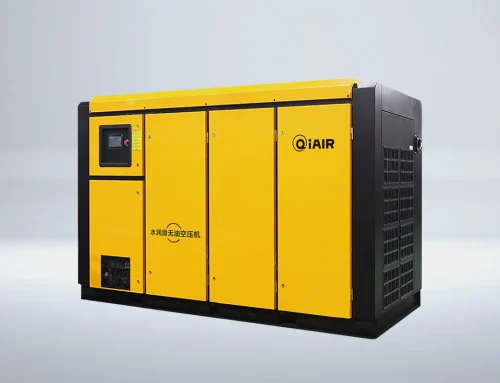
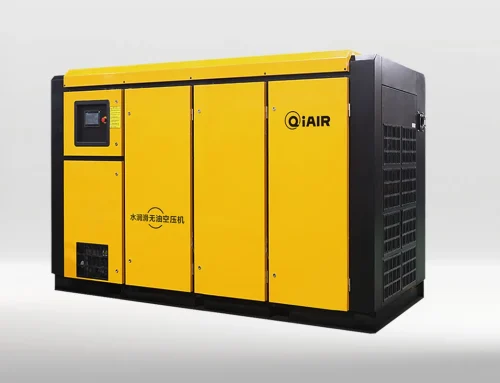
QiAir, a Chinese manufacturer and supplier of screw air compressors, sizes data centre air from the cooling and control load list rather than from floor area, because a hall with dense racks and a hall with light racks can share a footprint and need completely different air systems. The sections below follow the loads that actually decide uptime.
Cooling support and control air: the uptime-critical loads
Cooling support is the first air duty to size, and it is continuous rather than bursty. Chilled-water and cooling-tower valves, air-handler dampers and controls, and the pneumatic actuators across the cooling plant all need stable pressure through heat spikes, when cooling load is highest and a pressure sag can leave a valve slow to respond. General facility air typically runs at 7 to 8 bar, and the sizing sheet should list every cooling actuator and control user, its flow at working pressure, and which users truly run together during a peak cooling hour. A system sized on average cooling demand sags exactly when the hall is hottest.
Control air deserves its own reliability treatment even where it shares a header with general facility air. Instrument and control valves that lose air can leave a cooling circuit without control at the moment it needs control most, so critical control air should be backed by duty-and-standby machines, duplex dryers and filtration that protects delicate valve positioners. Moisture is the slow enemy here: wet air corrodes valve internals and causes sticking actuators that fail intermittently, which is the hardest failure to diagnose in a cooling plant. Dry the air to a dew point suited to the coldest line it will see, and check that dew point at the control header, not only at the dryer outlet.
Backup air, generators and redundancy that actually starts
Backup air in a data centre is not a second compressor sitting idle; it is a system that starts automatically, carries the critical load, and has been proven to do so under load. Generator auxiliaries, fuel-system valves and fire-suppression support all draw air during a utility outage, and those loads arrive together with the cooling peak that caused or followed the outage. The standby calculation should therefore cover the coincident outage load, not half the facility average, and changeover should be tested monthly under real load alongside generator tests, because a standby machine with a flat battery, a stale controller fault or a closed isolation valve will not reveal itself on a visual inspection.
Fuel and generator rooms add siting rules of their own. Compressor intake air must be drawn from a clean location away from generator exhaust and fuel vapour, the compressor room needs ventilation for its full heat load, and any equipment sited near fuel systems must respect the site fire and area rules. A data centre that tests its standby air system on the generator test schedule, logs the results, and keeps filters, separators and service kits on site holds a backup that can be trusted; one that tests annually holds a backup on paper.
- Size backup air on the coincident outage load, not the facility average.
- Test standby changeover monthly under load, alongside generator tests.
- Keep critical control air dry, filtered and on duty-standby machines.
Maintenance, monitoring and the export buying check
Monitoring is what turns a data centre air system from reactive to predictable. Discharge temperature trends catch a fouled cooler weeks before a trip, filter pressure-drop trends show when a filter is loading, and header pressure logging during a cooling peak proves whether the system holds at the farthest cooling valve. A facility that logs those three trends and reviews them monthly will rarely be surprised by an air failure; a facility that waits for a low-pressure alarm will meet every failure as an incident. Remote monitoring helps here, but only if someone owns the alarms and the response, because an unmonitored alarm is just a log entry.
Before ordering from China, a data centre buyer should document the cooling and control user list with coincident demand, the outage load list, the required pressure at the farthest valve, the redundancy tier the facility is built to, and voltage and frequency. QiAir sizes export data centre orders from that sheet, and confirms the standby arrangement against the facility tier rather than quoting a single machine. Get the cooling peak and the outage load in writing, and the system that arrives protects uptime instead of merely supplying air.
Frequently asked questions
Why does a data centre need standby compressed air?
Because cooling valves, controls, generator auxiliaries and fire-suppression support all need air during heat spikes and utility outages, when losing air becomes an uptime incident.
What pressure does data centre facility air need?
Typically 7 to 8 bar for general and control air. Size on the coincident cooling peak and the outage load, with pressure confirmed at the farthest valve.
How often should standby air be tested?
Monthly under load, alongside generator tests, so a standby machine that will not start cleanly is found during a test, not during an outage.
Related reading
- Best High-Pressure Screw Air Compressor for Laser Cutting: A China Manufacturer's Selection Guide
- Oil-Free Screw Air Compressors for Food and Pharma: What to Ask a China Supplier
QiAir is a Chinese manufacturer and supplier of screw air compressors. If you are sourcing a screw compressor from China — for a factory, a textile mill, a construction site or a new production line — contact QiAir for a sized quotation, documented performance data and export support.