TL;DR — Direct answer: Cold storage is the environment where compressed air systems freeze first and most expensively, because any moisture left in the air turns to ice in lines that run through minus 20 degree rooms. The design rule is unforgiving: dry the air to a dew point below the coldest temperature any line will see, typically minus 40 degrees for freezer areas, heat-trace and drain every outdoor or cold-room run, and site the compressor and dryer in a warm plant room rather than in the cold store itself. A system dried for a normal warehouse will ice up in a freezer on the first cold week, and the symptom — a dock door that will not move — arrives during the busiest loading shift.
A frozen-food warehouse at minus 20 degrees is a hostile place for compressed air. Dock levellers, door actuators, pallet wrappers and pneumatic sorters all need air, and every metre of pipe that enters the cold store is a chance for moisture to freeze, block a valve and stop a loading bay. Unlike a warm factory, where wet air is a quality problem, in a cold store wet air is a mechanical failure with a timetable set by the first frost.

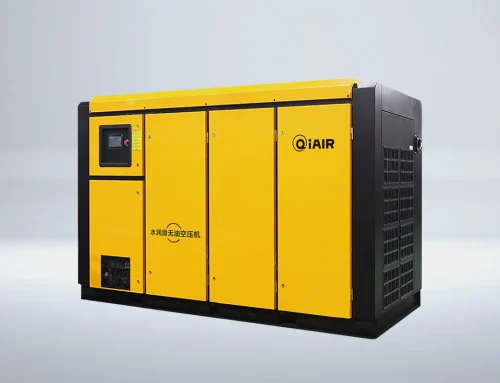
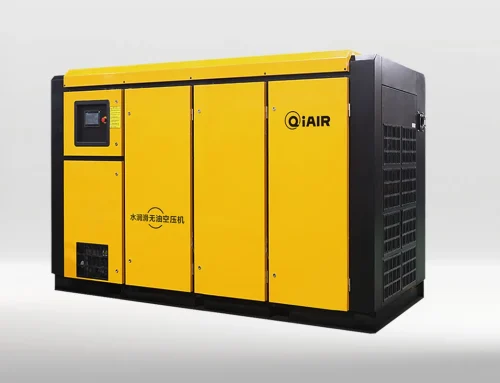
QiAir, a Chinese manufacturer and supplier of screw air compressors, designs cold-storage air systems around one number — the dew point — because every other decision, from dryer type to pipe routing, follows from it. Get the dew point right and the rest is straightforward; get it wrong and no amount of maintenance keeps the lines clear.
Dew point below the coldest line, not below room temperature
The governing rule is simple: the pressure dew point must sit below the lowest temperature any air line will experience, with margin. For freezer areas at minus 20 to minus 25 degrees, that means a desiccant dryer delivering minus 40 degrees, not a refrigerated dryer delivering plus 3 degrees, which is adequate for a warm warehouse but guarantees ice in a freezer line. The extra cost of desiccant drying — in purchase price and in purge air, typically 15 to 20 percent on a heatless design — is small against a frozen dock door during a dispatch peak.
Dryer sizing must also account for the cold store's real inlet conditions and for purge air: a desiccant dryer rated at 10 cubic metres per minute may deliver only 8 to the plant after purge, and sizing on the rated figure without deducting purge is a classic cold-store undersizing error. Confirm delivered flow after purge at the specified dew point, and re-check the dew point seasonally with a meter, because desiccant beds age and a dryer that delivered minus 40 degrees last winter may deliver minus 25 this winter — still cold enough to freeze a minus 20 line.
Pipe routing, drains and freeze-proof details
Route air lines to minimise cold exposure: keep mains in warm plant areas where possible, insulate and heat-trace any section that must enter the cold store, and slope lines so condensate drains to low points that can actually be reached and emptied. Automatic drains in cold areas need heat tracing themselves, or they freeze shut and become the blockage they were fitted to prevent. Every valve, filter bowl and regulator in a cold area should be rated for the temperature it will see, not just for the pressure it will carry.
Point-of-use treatment in cold stores deserves the same care: a final filter and regulator at each dock door or sorter, protected from direct cold-room airflow, with bowls that can be drained without shutting the bay. Stainless or properly rated pipework resists the corrosion that follows repeated freeze-thaw cycles better than plain steel, and a quarterly winter inspection — checking drains, tracing and dew point together — catches deterioration before the coldest week arrives.
- Dry to minus 40 degrees dew point for freezer-area lines.
- Deduct desiccant purge air from rated dryer flow when sizing.
- Heat-trace drains and cold-area lines; insulate every cold-store run.
Compressor room placement and reliability
Site the compressor and dryer in a warm, ventilated plant room outside the cold store, not inside it. A compressor in a minus 20 room faces starting problems, thickened oil, frozen condensate and controls that misbehave, while a warm plant room keeps the machine in its design envelope and makes maintenance a normal job rather than a cold-weather expedition. The pipe run from the warm plant room to the cold store is then the only cold-exposed section, and it can be insulated and traced as a single engineered run.
Reliability planning for a cold store should assume that a failure happens at peak dispatch: a standby machine or a receiver large enough to run dock doors through a changeover is worth its floor space, and a service arrangement with a response time measured in hours matters more here than in a warm warehouse, because a cold store without air cannot load trucks. QiAir sizes cold-storage export orders with that dispatch-peak scenario in mind, because a system that works on a quiet Tuesday and fails on a Friday dispatch is not a working system.
Frequently asked questions
What dew point does a freezer warehouse need?
Below the coldest line temperature with margin: typically minus 40 degrees for areas at minus 20 to minus 25 degrees, which means a desiccant dryer, not a refrigerated one.
Why do cold-store air lines freeze?
Because moisture left in the air condenses and freezes in cold lines. Dry air, insulated and heat-traced runs, and working drains prevent it.
Should the compressor sit inside the cold store?
No. Keep it in a warm plant room and insulate the single run into the cold area, so the machine stays in its design temperature range.
Related reading
- Single-Stage vs Two-Stage Screw Compressors: Which One a China Manufacturer Recommends
- Buying Screw Compressors from China: A Ranking Checklist for Choosing a Supplier
QiAir is a Chinese manufacturer and supplier of screw air compressors. If you are sourcing a screw compressor from China — for a factory, a textile mill, a construction site or a new production line — contact QiAir for a sized quotation, documented performance data and export support.