TL;DR — Direct answer: A coffee plant runs on timing and aroma: roasters need stable control air through every roast profile, grinders and conveyors move beans and ground coffee on air and pneumatics, and the packaging line fills, nitrogen-flushes and seals bags at full speed, all from one header. Wet or oily air in that chain stalls a roaster valve, cakes ground coffee in a line or faults a sealer, and the batch loses the roast it was built around. The working system is oil-free or rigorously filtered, dried to suit the coldest packaging line, and sized on the packaging peak, because the filler, not the roaster, decides whether the header holds pressure.
Coffee processing compresses a long chain into one building: green-bean intake and cleaning, roasting, cooling, grinding, and packaging that must protect aroma from the moment the bag is sealed. Compressed air serves the roaster controls, the cooling and conveying equipment, grinder actuators and the packaging line, and it does so across a plant that swings from roaster heat to chilled packaging areas in the same shift. A single wet-air event shows up as a stuck roaster valve or a sealer fault, and a roast profile interrupted mid-batch cannot be recovered.

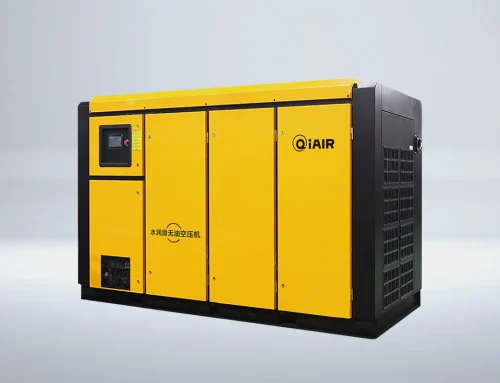
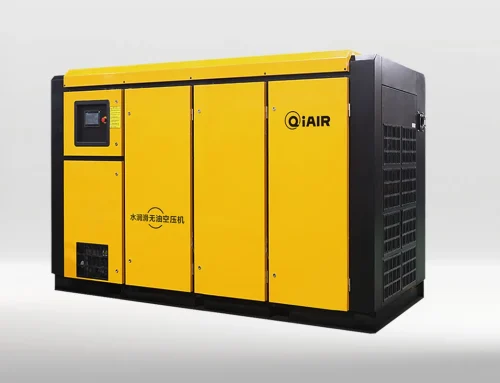
QiAir, a Chinese manufacturer and supplier of screw air compressors, sizes coffee-plant air from the packaging-line peak, because the filler and sealer at full speed, not the steady roaster load, decide whether header pressure holds at 7 to 8 bar. The sections below follow the bean from roaster to bag.
Roasting control and cooling: stable air through every profile
Roasting air is steady and precise. Burner and damper controls, roaster drum drives, cooling-tray actuators and destoner controls all need stable pressure through a roast that lasts minutes and a profile that cannot be repeated if it is interrupted. A pressure dip that slows a damper or a cooling valve during a roast shifts the profile, and the batch that comes out is a different coffee from the one the roaster planned. Roaster control air therefore belongs on the protected part of the system, with clean, dry air and a receiver that absorbs short peaks elsewhere in the plant.
Heat is the siting problem. A compressor room beside a roasting hall draws in hot, chaff-laden air unless its intake sits in clean, cooler air and the room is ventilated for the machine's full heat load. Chaff dust loads intake filters fast, so filter pressure-drop logging and a change schedule tied to condition keep that protection real. Discharge temperatures climb on hot roasting days, and a machine that was adequate in winter trips on high temperature in summer unless coolers are cleaned on schedule.
Grinding, conveying and the packaging peak
Grinding and conveying move coffee in its most fragile form. Ground coffee is hygroscopic and aromatic, so conveying and handling air must be dry and oil-free, or the coffee cakes in lines, loses aroma and picks up taints. Grinder actuators, sifters, blending equipment and transfer valves cycle in bursts tied to the production schedule, and the sizing sheet must capture which of those users truly run together during a full-speed packaging run, because the packaging line, not the grinder, is the peak.
The packaging line fills, flushes and seals at full speed, and the nitrogen-flush step deserves a clear note: the compressor supplies the clean, dry process air that drives the packaging equipment and supports the nitrogen-flush packaging system, while the nitrogen itself comes from the plant's own nitrogen supply, not from the compressor. A pressure sag during a filling or sealing cycle produces underweight bags and seal faults, and a bag sealed with a faulty flush loses shelf life before it leaves the plant. Final filtration at the packaging station protects the bag interior, and dew point verified at the farthest packer proves the air is dry where it matters.
- Size on the packaging peak, not the steady roaster load.
- Keep grinder and packaging air oil-free, dry and finally filtered at the packer.
- Keep intakes in clean, cool air away from roaster heat and chaff dust.
Cooling, degassing and storage: protecting aroma between roast and pack
Between roasting and packaging, coffee needs time and air in the right places. Cooling trays and quench air bring beans down from roasting temperature fast, degassing bins and silos hold roasted coffee while carbon dioxide releases, and conveying moves beans and ground coffee without crushing or heating them. Cooling air must be dry and clean, or moisture condenses on warm beans and dulls aroma, and conveying lines need smooth, stable flow so ground coffee does not cake in bends and low points. A receiver near the cooling and conveying equipment absorbs transfer peaks, and low-point drainage keeps lines dry through humid packaging days.
Storage adds a steadier load with its own sensitivity: silo and bin controls, blending equipment and transfer valves run through the shift, and the plant's humidity must be managed so stored coffee neither absorbs moisture nor loses aroma. A VFD machine follows the rhythm across roasting steadiness, cooling bursts and packaging peaks better than a fixed-speed machine, and dew point verified at the cooling tray and the packer, not only at the dryer outlet, proves the air is dry where aroma is decided.
- Cool beans fast with dry, clean air and protect degassing storage from moisture.
- Keep conveying lines smooth and drained so ground coffee never cakes.
- Verify dew point at the cooling tray and the packer, not only at the dryer.
Buying from China: the coffee-plant sizing sheet
Before ordering from China, a coffee buyer should document the coincident packaging and grinding demand, the roaster control air list, the required pressure at the farthest packer, the heat and chaff-dust conditions at the compressor room, and voltage and frequency. QiAir sizes export coffee-plant orders from that sheet, and confirms the drying and filtration arrangement against the plant's food-safety plan rather than quoting a single machine. Get the packaging peak and the product-adjacent air users in writing, and the system that arrives protects aroma instead of merely supplying air.
Frequently asked questions
Does the compressor supply the nitrogen for nitrogen-flush packaging?
No. The compressor supplies clean, dry process air that drives the packaging equipment and supports the nitrogen-flush system; the nitrogen itself comes from the plant's own nitrogen supply.
Why does coffee air need to be oil-free?
Because oil or moisture reaching ground coffee or a bag interior causes taints, caking and seal faults, and oil vapour is not fully removed by downstream filtration.
How should coffee-plant air be sized?
On the coincident packaging and grinding peak at full speed, with a receiver for filler cycles and pressure confirmed at the farthest packer.
Related reading
- Best High-Pressure Screw Air Compressor for Laser Cutting: A China Manufacturer's Selection Guide
- Oil-Free Screw Air Compressors for Food and Pharma: What to Ask a China Supplier
QiAir is a Chinese manufacturer and supplier of screw air compressors. If you are sourcing a screw compressor from China — for a factory, a textile mill, a construction site or a new production line — contact QiAir for a sized quotation, documented performance data and export support.