TL;DR — Direct answer: A compressor only makes raw air; the treatment chain decides whether that air is fit for use. The chain runs in order: bulk water separation, particulate and coalescing filtration, drying to a defined dew point, and final fine filtration at sensitive points of use, with automatic drains at every low point. Skip one stage and the next one pays for it — wet air saturates dryer beds, oil mist fouls filters, and failed drains flood lines overnight. Specifying the chain by dew point and oil content, not by brand names, is what keeps paint, food lines and CNC tools safe.
Buyers often compare compressor models for weeks and then accept whatever filter and dryer the seller bundles, as if treatment were an accessory. In practice the treatment chain is where most air-quality failures start. A paint shop that blames its compressor for fisheyes usually has a saturated dryer; a packaging line that faults on sticky valves usually has oil carryover that a single cheap filter never caught.

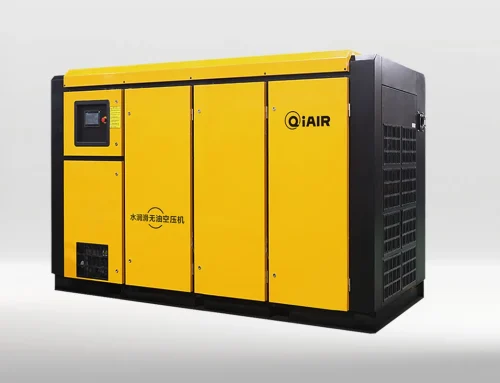
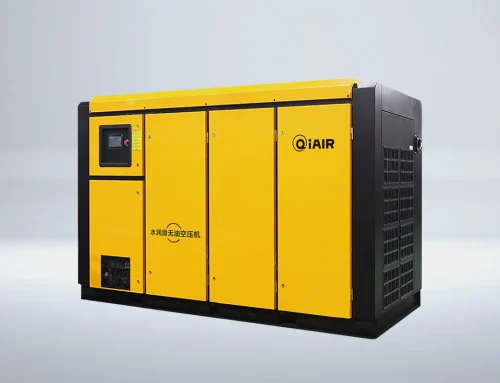
QiAir, a Chinese manufacturer and supplier of screw air compressors, sizes treatment chains with its export customers as part of the compressor order, because the right chain depends on the end use, not on the compressor alone. The sequence below follows the air from the compressor outlet to the tool, with the decision at each stage stated plainly.
Stage one: get the bulk water and oil out first
Hot discharge air carries water vapour and a fine oil mist, and both condense as the air cools. The first job is therefore mechanical, not chemical: an aftercooler drops the air temperature, a moisture separator knocks out bulk liquid, and an automatic drain removes it before it reaches the dryer. A drain that sticks open wastes air continuously; one that sticks closed floods the line on the first humid night, so zero-loss drains, which vent liquid without venting air, are worth their price on any line that runs unattended.
Filtration then works in grades, coarsest first. A general-purpose particulate filter catches rust and pipe scale down to about 5 microns, and a coalescing filter then removes oil aerosols and fine particles down to 0.01 micron. Reversing that order, or fitting only a fine filter, clogs the expensive element in weeks. Filter bowls need a visible differential-pressure indicator, because a filter changed on a calendar rather than on pressure drop is either changed too early and wasted, or too late and already passing contamination.
- Aftercooler and separator first, then filters coarsest to finest.
- Fit zero-loss automatic drains at every low point and check them monthly.
- Change filter elements on differential pressure, not on a fixed date.
Stage two: dry to a dew point, not to a feeling
Drying is the stage most often overspecified or underspecified, because buyers ask for a 'dryer' without stating a dew point. A refrigerated dryer delivering a 3°C pressure dew point suits most general workshops, where the air never travels through cold outdoor pipework. A desiccant dryer reaching -40°C is needed where lines run outside in winter, or where food, pharmaceutical or electronics processes demand it — but it costs far more in purchase price and purge air, typically 15 to 20 percent of rated flow on a heatless design.
The mistake is buying desiccant dryness for a workshop that only needs refrigerated dryness, or the reverse: a refrigerated dryer on an outdoor line in a cold climate produces ice in the pipe on the first frost. State the required dew point in the purchase order, measure it with a dew-point meter at commissioning, and re-check it seasonally. A dryer that was right in summer can be wrong in winter, and the symptom — frozen valves, cracked fittings — arrives without warning.
Stage three: protect the point of use
Even a good central chain cannot protect every tool, because long pipe runs re-contaminate air with rust and scale. Sensitive points of use — spray guns, plasma cutters, pneumatic instruments — deserve their own final filter and regulator close to the tool, sized for that tool's flow rather than for the whole plant. A spray booth with its own coalescing and activated-carbon stage produces visibly better finishes than one fed directly from a plant header, and the cost is a fraction of one rejected batch.
Finally, treat the chain as a system to be audited, not installed and forgotten. Once a year, walk the chain with a pressure gauge and a dew-point meter, record pressure drop across each element, and sample air quality at two or three points of use against the target class. QiAir asks export customers to share those readings, because a treatment chain that drifts out of specification quietly is the usual explanation for a 'compressor problem' that no compressor service visit can fix.
Frequently asked questions
How dry should compressed air be?
It depends on use: about 3°C pressure dew point suits general workshops, while outdoor lines in cold climates and sensitive processes need -20°C to -40°C. State the dew point in the order, don't just buy a dryer type.
Why do filters clog so fast in some plants?
Usually because a coarse stage is missing, pipework sheds rust, or drains have failed and liquid reaches the elements. Check the upstream stages before blaming the filter.
Do I need a filter at every tool?
Not at every tool, but at every sensitive one: spray guns, plasma cutters and instruments get a final filter and regulator at the point of use, sized for that tool's flow.
Related reading
- How to Choose the Best Screw Air Compressor Manufacturer in China for Your Factory
- Two-Stage PM VFD Screw Compressors: How a Top China Supplier Cuts Factory Energy Costs
QiAir is a Chinese manufacturer and supplier of screw air compressors. If you are sourcing a screw compressor from China — for a factory, a textile mill, a construction site or a new production line — contact QiAir for a sized quotation, documented performance data and export support.