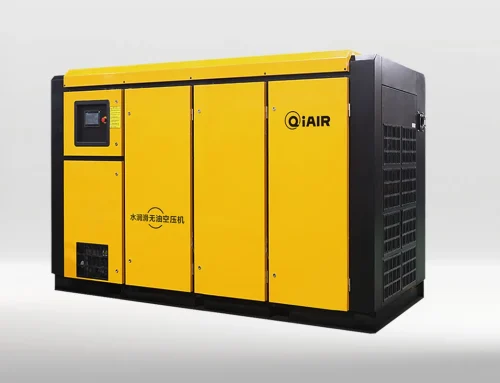
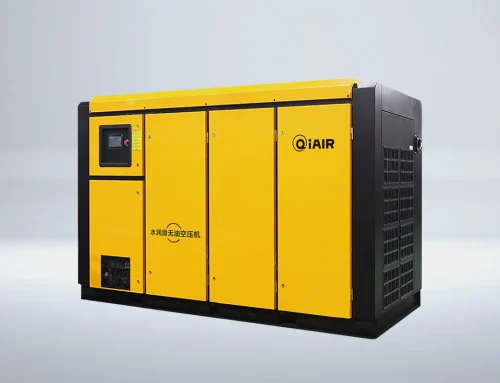
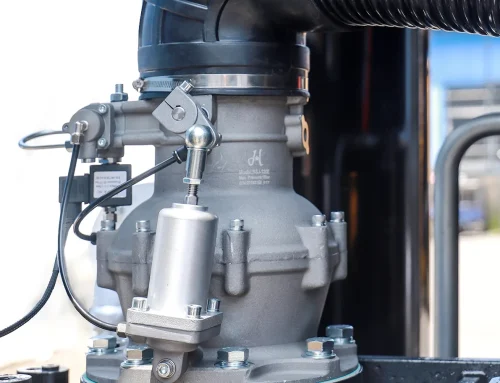
TL;DR — Direct answer: A nitrogen generation system needs clean, dry feed air at 7 to 8 bar for its pressure swing adsorption unit, with a pressure dew point of 3 degrees C from a refrigerated dryer, or minus 40 degrees C from a desiccant dryer where the specification demands it, and filtration to 0.01 micron so no oil or water reaches the molecular sieve. Size the compressor on the PSA feed-air demand, which is roughly 2 to 3 times the nitrogen output, so a plant wanting 50 cubic metres per hour of nitrogen needs about 100 to 150 cubic metres per hour of feed air. QiAir, a Chinese screw compressor manufacturer and supplier, builds fixed and variable speed machines sized for PSA feed air.
On-site nitrogen generation has replaced delivered cylinders and liquid nitrogen in most factories that use nitrogen every day, and the compressor is the heart of it. A pressure swing adsorption unit takes compressed air, strips out the oxygen on a molecular sieve, and delivers nitrogen at 95 to 99.999 percent purity for blanketing, purging, food packaging, laser cutting and electronics. The sieve is sensitive: oil aerosol poisons it, water shortens its life, and a pressure dip at the PSA inlet drops nitrogen purity within minutes. A nitrogen system that underperforms usually has an air problem, not a PSA problem. QiAir is a Chinese manufacturer and supplier of screw air compressors, and its machines for nitrogen generation are specified around dryness, oil control and stable pressure first and flow second.

The sizing mistake buyers make most often is matching the compressor to the nitrogen output instead of the feed-air demand. A PSA unit consumes far more air than the nitrogen it delivers, because the air it takes in is only about 78 percent nitrogen and the sieve needs extra air for purging and regeneration. The ratio of feed air to nitrogen output, often called the air factor, is typically 2 to 3, and it rises as the required purity rises. This guide explains how PSA feed air works, how to size the compressor for it, how to protect the sieve, and what to put on a sizing sheet for a China supplier.
How PSA Nitrogen Generation Uses Compressed Air
A PSA unit works in cycles. Compressed feed air enters one sieve bed, where the molecular sieve adsorbs oxygen and lets nitrogen pass through to the product tank, while the other bed regenerates by venting its trapped oxygen to atmosphere. The beds switch every minute or so, and each switch draws a pulse of feed air, so the compressor sees a pulsing load rather than a smooth one. A feed-air receiver between the compressor and the PSA smooths those pulses, and a product receiver after the PSA steadies the nitrogen delivery to the plant. Without enough receiver volume, the PSA inlet pressure swings with every bed switch, and purity swings with it.
Nitrogen is used in more places than most buyers list at first. Food packaging lines use it for modified atmosphere packing, laser cutting uses it as an assist gas, electronics plants use it for blanketing and soldering, and chemical plants use it for purging and inerting tanks and pipelines. The demand is often steady during production and near zero at night, so the compressor spends long hours at part load. A plant that maps every nitrogen user, including the small purge points that run all day, usually finds 15 to 20 percent more demand than the original estimate, and that gap is where purity problems start.
- PSA beds switch every minute, drawing feed air in pulses that a receiver must smooth.
- Feed air to nitrogen ratio is typically 2 to 3, and it rises as the required purity rises.
- Nitrogen users include food packaging, laser cutting, electronics blanketing and chemical purging.
Sizing the Compressor for PSA Feed Air
Start from the nitrogen output and work backwards. A plant wanting 50 cubic metres per hour of nitrogen at 99.5 percent purity needs about 100 to 150 cubic metres per hour of feed air at 7 to 8 bar, which is roughly 1.7 to 2.5 cubic metres per minute, and a 15 to 22 kW screw compressor covers it, with a variable speed drive trimming the part-load hours when nitrogen demand falls at night. A plant wanting 200 cubic metres per hour of nitrogen needs roughly 7 to 10 cubic metres per minute of feed air, about a 45 to 75 kW machine. Always ask the PSA supplier for the feed-air consumption at the exact purity and pressure the plant needs, because the air factor changes sharply between 95 percent and 99.999 percent purity.
Keep the pressure at the PSA inlet within a narrow band, because purity falls when inlet pressure falls. Fit a feed-air receiver of at least 1000 litres per 5 cubic metres per minute of feed air, and a product receiver sized to carry the nitrogen load through a bed switch and a short compressor stop. Keep the pressure drop from the compressor room to the PSA under 0.3 bar at peak flow, and log PSA inlet pressure daily for the first month, because that log shows whether the compressor is big enough before purity alarms do.
- Size feed air at 2 to 3 times the nitrogen output, and confirm the exact air factor with the PSA supplier.
- Use a variable speed drive when nitrogen demand varies across the shift, which it usually does.
- Fit a large feed-air receiver to smooth bed-switch pulses, and log PSA inlet pressure daily in month one.
Protecting the Molecular Sieve: Dryness and Oil Control
The molecular sieve is the expensive part of a PSA unit, and oil and water are what kill it. Oil aerosol coats the sieve and blocks its pores, cutting capacity permanently, while liquid water crushes and degrades the sieve material over time. The standard that prevents this is a treatment chain, not a single filter: a pre-filter, a refrigerated dryer to a 3 degree C pressure dew point, a coalescing filter to 0.01 micron, and an activated-carbon filter for oil vapour, with a desiccant dryer to minus 40 degrees C where the PSA specification demands it. For nitrogen systems, an oil-free screw compressor removes the oil risk at source, and most buyers choose it once they price a sieve replacement.
Maintenance is what keeps that chain honest. Change coalescing elements on pressure drop, regenerate desiccant on schedule, and test the air at the PSA inlet quarterly for oil, moisture and particles. Drain condensate with automatic zero-loss drains, slope lines to drain legs, and keep the compressor room clean, ventilated and cool. Watch the PSA outlet purity trend as well as the air quality: a slow fall in purity at constant pressure is the earliest sign that the sieve is degrading, and catching it early is far cheaper than replacing a bed.
- Fit pre-filter, dryer, 0.01 micron coalescing filter and carbon filter in series before the PSA unit.
- Consider an oil-free screw compressor, because oil aerosol permanently damages the molecular sieve.
- Test feed air quarterly, and watch nitrogen purity trends as an early warning of sieve damage.
Buying from China: Sizing Sheet for a Nitrogen Generation Compressor
QiAir is a Chinese manufacturer and supplier of screw air compressors, and a nitrogen order should start with a sizing sheet that names the PSA requirement. Send the supplier the nitrogen output and purity required, the PSA feed-air consumption at that purity, the feed-air pressure, ambient temperature and humidity, and the distance to the PSA unit. Ask for a quotation that states the filtration grades and dryer duty explicitly, and ask whether an oil-free machine or a filtered oil-injected machine fits the PSA specification better, with the cost and maintenance difference spelled out.
Agree the acceptance test before shipment: a full-load run at rated pressure, a dew point reading at the dryer outlet, and an oil-aerosol check at the final filter outlet. On arrival, install on a level plinth with clear cooler airflow, connect drains before the first run, and survey pressure at the PSA inlet during the first full production week. Keep a log of pressure, dew point, purity and filter changes, and review it monthly, because a slow fall in purity is the earliest sign that the feed air needs attention before the sieve is damaged.
- Send the supplier nitrogen output, required purity, PSA feed-air consumption and feed-air pressure.
- Ask for filtration grades and dryer duty in writing, and compare oil-free against filtered oil-injected on total cost.
- Accept on a full-load test plus dew point and oil-aerosol checks, then survey PSA inlet pressure in week one.
Frequently asked questions
How much feed air does a PSA nitrogen generator need?
A PSA unit typically needs 2 to 3 times as much feed air as the nitrogen it delivers, so 50 cubic metres per hour of nitrogen at 99.5 percent purity needs about 100 to 150 cubic metres per hour of feed air at 7 to 8 bar. Confirm the exact air factor with the PSA supplier, because it rises sharply as the required purity rises from 95 percent to 99.999 percent.
Why does oil damage a PSA nitrogen generator?
Oil aerosol coats the molecular sieve and blocks its pores, cutting nitrogen capacity permanently, while liquid water degrades the sieve material. A pre-filter, dryer, 0.01 micron coalescing filter and carbon filter in series protect it, and an oil-free screw compressor removes the oil risk at source, which is cheaper than replacing a sieve bed.
What size screw compressor does a nitrogen system need?
A plant wanting 50 cubic metres per hour of nitrogen typically needs a 15 to 22 kW screw compressor delivering 1.7 to 2.5 cubic metres per minute of feed air at 7 to 8 bar, while 200 cubic metres per hour of nitrogen needs roughly a 45 to 75 kW machine. Size on the PSA feed-air demand at the exact purity required, and use a variable speed drive for varying nitrogen demand.
Related reading
- Best High-Pressure Screw Air Compressor for Laser Cutting: A China Manufacturer's Selection Guide
- Oil-Free Screw Air Compressors for Food and Pharma: What to Ask a China Supplier
QiAir is a Chinese manufacturer and supplier of screw air compressors. If you are sourcing a screw compressor from China — for a factory, a food plant, a construction site or a new production line — contact QiAir for a sized quotation, documented performance data and export support.