TL;DR — Direct answer: A home appliance plant is a mixed-load factory: spraying and coating lines, sheet-metal and plastics processing, assembly lines for refrigerators, washers and air conditioners, and leak-testing stations for refrigeration circuits all draw on one header, and a pressure dip during a coating pass or a leak test produces a visible finish defect or a false test result across a whole production run. The working system delivers dry, clean, stable air at 7 to 8 bar, sizes on the coincident coating and assembly peak, and protects leak-test air with its own filtration and regulation, because a test result must be repeatable.
Home appliance manufacturing brings several factories under one roof: metal forming and plastics moulding, surface treatment and coating, assembly lines that build finished appliances, and testing stations that prove each unit works before it is packed. Compressed air serves coating guns and booth support, assembly tools and actuators, handling and packaging equipment, and the leak-testing stations that check refrigeration circuits and water systems. A coating line that starves for air produces an uneven finish, and a leak test fed by a sagging header produces results the quality team cannot trust.

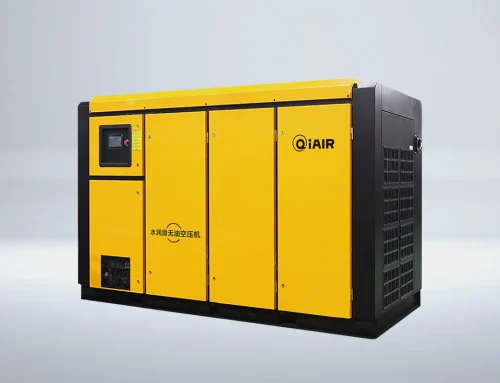
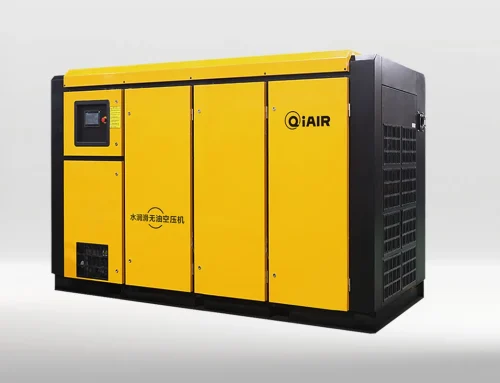
QiAir, a Chinese manufacturer and supplier of screw air compressors, sizes appliance-plant air from the coincident coating and assembly peak, because those two loads decide whether header pressure holds through the busiest production hour. The sections below follow the appliance from coating to pack-out.
Spraying and coating lines: finish quality starts at the header
Coating air is the finish-critical load in an appliance plant. Spray guns, coating booth support, powder-coating lines and drying controls all need clean, dry, stable air, because moisture or oil in coating air becomes a finish defect, orange peel, fisheyes or poor adhesion, that only appears after the part is cured. Coating air therefore goes through staged filtration and drying, with final filtration at the gun or booth, and the dew point must suit the coldest line in the coating area and be verified at the point of use rather than assumed from the dryer outlet.
Coating demand is steady during a production run but it runs together with assembly and handling loads, and that coincidence is what sizes the system. The sizing sheet must list every coating station, its flow at working pressure and which stations truly run together at full production, because a header sized on coating alone sags when assembly peaks at the same hour. A receiver near the coating line absorbs gun-cycle peaks, and header pressure logging at the farthest coating station during a full-speed run proves whether the system holds where the finish is decided.
Assembly, leak testing and the mixed peak
Assembly air is cyclic and heavy: assembly lines for refrigerators, washers, air conditioners and small appliances cycle tools, actuators and handling equipment in bursts tied to the line takt, and several lines running together produce a coincident peak far above any single line's average. Leak testing adds the precision load: refrigeration-circuit and water-system test stations need stable, dry, precisely regulated air, because a test result must be repeatable, and a test station fed by a sagging or wet header produces false passes or false failures that undermine the quality record. Leak-test air therefore belongs on the protected part of the system, with its own filtration and regulation.
Packaging closes the line with a steadier load: cartoners, strapping and palletisers run together with assembly at full speed, and a VFD machine follows that mixed rhythm across coating steadiness, assembly peaks and packaging better than a fixed-speed machine idling between shifts. Dust from metal forming and plastics processing loads intake filters, so intake placement in the cleanest available air and a filter pressure-drop log keep that protection real.
- Size on coincident coating and assembly demand, not a single line average.
- Filter coating air finally at the gun or booth to protect the finish.
- Protect leak-test air with its own filtration and regulation.
Metal forming, plastics moulding and the dust at the intake
Before assembly, an appliance plant forms and moulds its parts, and those stages draw air in heavy, cyclic patterns. Presses and stamping lines cycle in bursts, plastics injection moulding machines run on precise pneumatic timing, and handling robots move parts between stages, with several machines running together producing a coincident peak far above any single machine's average. A pressure dip during a moulding cycle produces short shots or dimensional faults, and the defect only appears at assembly, when the part is already fitted.
Metal forming and plastics processing also produce the plant's dust and heat: metal fines, plastic granules and cutting dust load intake filters, while presses and moulding machines add heat to the building. The compressor intake should sit in the cleanest available air with staged filtration, the room should be ventilated for the machine's full heat load, and coolers should be cleaned on a schedule that accounts for dust. A filter pressure-drop log that triggers changes on condition keeps that protection real through the busiest production weeks.
Buying from China: the appliance sizing sheet
Before ordering from China, an appliance buyer should document the coincident coating, assembly and testing demand, the leak-test air requirements, the required pressure at the farthest coating station and test station, the dust conditions at the compressor room, and voltage and frequency. QiAir sizes export appliance orders from that sheet, and confirms the filtration and leak-test protection arrangement against the plant's quality plan rather than quoting a single machine. Get the mixed peak and the leak-test list in writing, and the system that arrives protects finish and test results instead of merely supplying air.
Frequently asked questions
Why does coating air decide appliance finish quality?
Because moisture or oil in coating air becomes orange peel, fisheyes or poor adhesion that only appears after curing, so coating air is filtered finally at the gun and dried to suit the coldest line.
Why is leak-test air protected separately?
Because leak test results must be repeatable, and a sagging or wet header produces false passes or false failures that undermine the quality record.
How should appliance-plant air be sized?
On coincident coating, assembly and testing demand at full production, with a receiver for cycle peaks and pressure confirmed at the farthest coating station.
Related reading
- Screw Compressor Heat Recovery: Turning Waste Heat into Factory Savings
- IoT Monitoring for Screw Compressor Rooms: A China Supplier's Practical Setup
QiAir is a Chinese manufacturer and supplier of screw air compressors. If you are sourcing a screw compressor from China — for a factory, a textile mill, a construction site or a new production line — contact QiAir for a sized quotation, documented performance data and export support.