TL;DR — Direct answer: A geothermal power plant runs in steam, humidity and often a remote location where a service visit is a journey, not a callout, and compressed air must hold turbine controls, steam-field valves, separator and cooling auxiliaries and the plant control system through all of it. The working system delivers dry, filtered instrument air at 7 to 8 bar on duty-standby machines, protects intakes and pipework against steam, moisture and geothermal gases, and is specified so the plant can run through a service interval without a compressor failure becoming a generation outage.
A geothermal site announces itself before you see the turbines: steam plumes, hot pipes, separators and cooling towers spread across a field that may be hours from the nearest service centre. Compressed air in that field drives turbine controls, steam-field valves, wellhead auxiliaries and cooling support, and it must do so in air that is hot, humid and carrying traces of geothermal gases. A control valve that sticks because instrument air was wet will not wait for a convenient maintenance window.

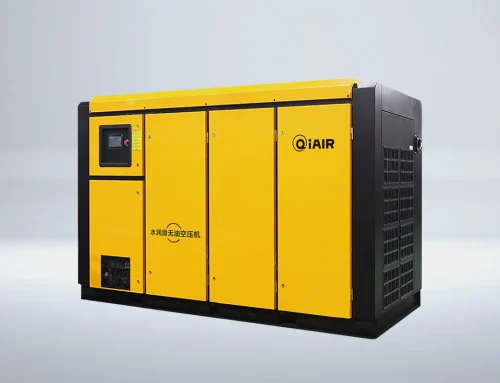
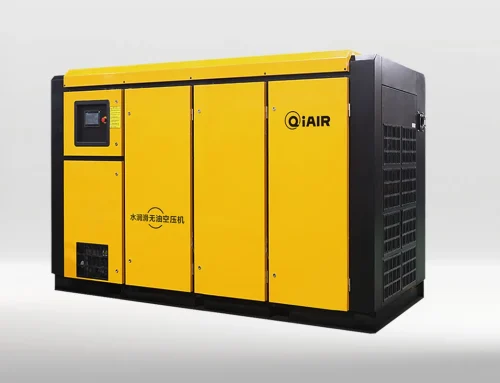
QiAir, a Chinese manufacturer and supplier of screw air compressors, sizes geothermal air from the steam-field and turbine control list, because a plant that sizes air as a generic utility will discover its instrument problems during the wettest, hottest week of the year. The sections below follow the steam from wellhead to turbine.
Instrument air for turbines, steam fields and separators
Turbine and steam-field instrument air is continuous and control-critical, typically at 7 to 8 bar, and it spans turbine governor and control valves, steam-field isolation and drain valves, separator controls and cooling-system actuators. These users do not tolerate pressure sags: a governor valve that responds slowly because header pressure dipped can disturb turbine control, and a steam-field valve that sticks can leave a well or separator without control. The sizing sheet should list every control user, its flow at working pressure, and which users truly run together during a full-load hour, plus a margin for leaks and future wells, because a geothermal field that adds wells without revisiting air capacity buys itself a control problem.
Moisture is the constant enemy in a geothermal plant. Steam, humidity and hot ambient conditions load dryers heavily, and air that is dry enough for a cool workshop condenses in cooler instrument lines across the steam field. Dryers must be sized for site humidity and temperature, dew point checked at the farthest steam-field user, and drains and traps maintained so water never accumulates in low points. A plant that checks dew point only at the dryer outlet will miss the field-leg problem until a valve sticks during a load change.
Steam, humidity and geothermal-gas-aware protection
Geothermal gases, including hydrogen sulphide where present, shape air-system siting and materials even though compressed air never carries geothermal fluid. H2S and humid, hot air corrode unprotected steel, electronics and seals, so the compressor room belongs in a clean, ventilated space away from steam vents, separators and gas-handling areas, with intake air drawn from the cleanest available location on site. Pipework in steam-field and humid areas needs corrosion-resistant materials, insulation where temperature swings cause condensation, and drainage at low points, because a pipe run that traps water will corrode and block control air from the inside.
Heat load is a second site tax: a compressor room in a geothermal field can sit in high ambient temperatures, and ventilation must be sized for full heat load at peak site temperature or the machine will trip on high discharge temperature during the hottest week. Cooler cleaning should be tied to site conditions rather than to a calendar, and discharge-temperature trends logged so a fouled cooler is caught weeks before it becomes a trip. A remote plant cannot afford a trip that waits days for a service crew, so the maintenance plan must be preventive, not reactive.
- Site the compressor room away from steam vents and geothermal-gas sources.
- Dry instrument air for the wettest site conditions and check dew point at the farthest user.
- Ventilate for full heat load at peak site temperature and log discharge trends.
Remote reliability and the export buying check
Remote reliability is the deciding factor for a geothermal plant, because the nearest service centre may be hours away and a generation outage costs far more than a spare part. Instrument air therefore needs duty-and-standby capacity with automatic changeover tested monthly under load, duplex dryers so one train can be serviced while the other runs, and spares on site covering filters, separators, drains and service kits. Remote monitoring helps if someone owns the alarms, because an unmonitored temperature or pressure alarm is just a log entry, and the plant should hold a written plan for which controls keep running if one machine is lost.
Before ordering from China, a geothermal-plant buyer should document the turbine and steam-field control list with coincident demand, site temperature, humidity and gas conditions, required pressure at the farthest wellhead or turbine user, remoteness and service access, and voltage and frequency. QiAir sizes export geothermal orders from that sheet, and confirms materials, ventilation and standby arrangements for the remote site. Get the steam-field list and the site conditions in writing, and the system that arrives keeps the plant controlled between service visits.
Frequently asked questions
Why is geothermal instrument air so demanding?
It must hold turbine and steam-field controls in heat, humidity and geothermal-gas exposure, often far from service support, so a wet-air or pressure failure becomes a generation problem.
What pressure does geothermal instrument air need?
Typically 7 to 8 bar. Size on coincident turbine, steam-field and cooling controls at full load, with pressure confirmed at the farthest user.
How should a remote geothermal plant handle standby air?
Duty-and-standby machines with changeover tested monthly under load, duplex dryers, on-site spares and remote monitoring with an owner for the alarms.
Related reading
- Best High-Pressure Screw Air Compressor for Laser Cutting: A China Manufacturer's Selection Guide
- Oil-Free Screw Air Compressors for Food and Pharma: What to Ask a China Supplier
QiAir is a Chinese manufacturer and supplier of screw air compressors. If you are sourcing a screw compressor from China — for a factory, a textile mill, a construction site or a new production line — contact QiAir for a sized quotation, documented performance data and export support.