TL;DR — Direct answer: A fabrication shop's air demand is spiky, not steady: plasma cutters gulp air in bursts, grinders and sanders run for minutes, and the whole shop peaks when two bays work at once. The right screw compressor for this shop is therefore sized on peak simultaneous demand plus a margin, delivers dry air at a stable 7 to 8 bar, and tolerates dusty air without choking its cooler. Buy on measured peak flow and air quality, not on horsepower alone, and a mid-size VFD machine usually beats a large fixed-speed unit that short-cycles all day.
Walk into a fabrication shop at mid-morning and the air system is doing three different jobs at once: a plasma table cutting 12 mm plate, a welder running an air-arc gouger, and a fitter blowing down a fixture. Each of those loads switches on and off in minutes, which is exactly the pattern that punishes a badly sized compressor — pressure sag during a cut, moisture in the plasma torch, and a machine that loads and unloads so often its service intervals shrink.

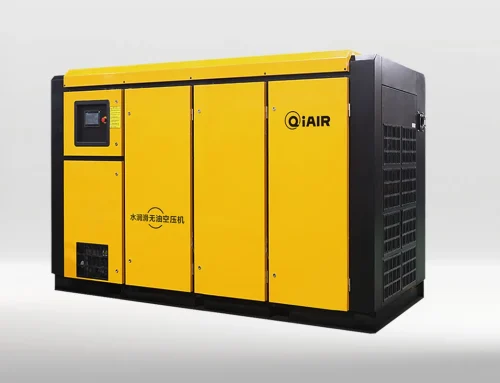
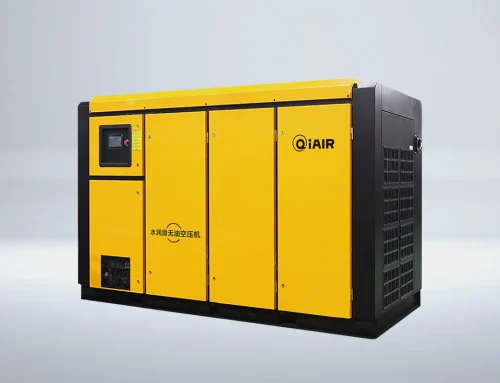
QiAir, a Chinese manufacturer and supplier of screw air compressors, supplies fabrication shops across export markets, and the sizing conversation always starts the same way: not 'how big is your shop' but 'what runs at the same time, and what pressure does the hungriest tool need'. That answer, measured rather than guessed, decides the machine.
Size on simultaneous peak demand, not on the tool list
Add up the rated consumption of every tool that realistically runs together, not every tool in the shop. A plasma cutter rated at 250 litres per minute, a gouger at 800, and two grinders at 300 each already total 1,650 litres per minute at peak — and that peak, not the average, is what the compressor must deliver without pressure sag. Add 15 to 20 percent for leaks and future tools, then check the result against the compressor's free air delivery at the working pressure, not against its motor size.
Where peaks are short and sharp, a receiver earns its floor space: a 500 to 1,000 litre receiver on a mid-size shop smooths plasma bursts so the compressor does not have to chase them. Where demand swings widely through the day, a VFD machine pays for itself by turning down instead of unloading; a fixed-speed machine in a spiky shop spends much of its day idling at 25 to 35 percent power draw while producing nothing, and that wasted energy shows up on every electricity bill.
Dry, clean air is a cutting-quality issue
Plasma cutting is the canary: moisture in the cutting air shortens consumable life, roughens the cut edge, and causes arc instability that operators blame on the torch. A refrigerated dryer plus coalescing filtration is the minimum for plasma work, and shops cutting in humid climates or running night shifts in cold buildings should confirm the dew point at the torch, not just at the dryer outlet, because long uninsulated runs re-condense water on the way.
Dust is the second enemy. Grinding dust and welding fume clog compressor coolers and intake filters faster than any clean factory environment, so the intake must draw from the cleanest available air, filters need a shorter inspection interval — monthly rather than quarterly in heavy grinding shops — and cooler fins should be blown out on the same visit. A compressor that overheats in a fabrication shop almost always has a dust story behind it, and that story is cheaper to prevent than to repair.
- Refrigerated dryer plus coalescing filter is the minimum for plasma cutting.
- Check dew point at the torch, not only at the dryer outlet.
- Inspect intake filters and cooler fins monthly in grinding-heavy shops.
Pressure, layout and the buying check
Most fabrication tools are happiest at 7 to 8 bar at the tool, which means the compressor setpoint must sit a little higher to cover piping and treatment losses — typically 0.5 to 1 bar above the tool requirement. Shops that run one high-pressure tool, such as a 10 bar blow-moulding or testing rig, should not raise the whole plant to 10 bar; a dedicated booster or a separate circuit for that tool costs less in energy than pressurising every grinder in the building.
Before ordering, run a one-week demand check: log pressure at the farthest bay during peak shifts, note the lowest pressure seen during a plasma cut, and count how often the existing machine, if any, runs loaded. QiAir uses that log to size export orders, because it replaces argument about horsepower with evidence about the shop's real air. A buyer who can show that log gets a machine that holds pressure on the busiest morning, not one that merely looks right on a datasheet.
Frequently asked questions
What size screw compressor does a small fabrication shop need?
It depends on simultaneous tools, not shop size. Two bays running plasma and grinding together typically need 1,500 to 2,500 litres per minute of free air delivery — measure peak demand before choosing.
Why does my plasma cutter burn consumables so fast?
Moisture and oil in the cutting air are the usual causes. Check dryer dew point and coalescing filtration at the torch before replacing torch parts.
Is a VFD compressor worth it in a fabrication shop?
Usually yes when demand swings widely: a VFD turns down with the load instead of idling unloaded, which is where fixed-speed machines waste energy in spiky shops.
Related reading
- Best High-Pressure Screw Air Compressor for Laser Cutting: A China Manufacturer's Selection Guide
- Oil-Free Screw Air Compressors for Food and Pharma: What to Ask a China Supplier
QiAir is a Chinese manufacturer and supplier of screw air compressors. If you are sourcing a screw compressor from China — for a factory, a textile mill, a construction site or a new production line — contact QiAir for a sized quotation, documented performance data and export support.