
TL;DR — Direct answer: A shipyard is the heaviest air user most compressor makers ever meet: abrasive blasting, coating support, welding auxiliaries, heavy torque tools, dock and slipway work and onboard systems testing all draw on air across a huge, exposed site, and the peak load when several blasting teams work at once dwarfs any factory average. The working system is sized on that blasting peak, protected against salt air and abrasive dust, and distributed so the farthest dock holds pressure, because a shipyard that sizes on average demand starves its blasting teams at exactly full production.
A ship under construction or repair is a steel structure wrapped in air work: hull blasting and coating, welding and cutting support, heavy assembly tools, tank cleaning and onboard system testing, spread across docks, slipways, workshops and the ship itself. The site is exposed to sea air, wind and abrasive dust, and the work moves: a blasting team on one dock today is on another hull tomorrow, so the air distribution must reach the work rather than expecting the work to come to a single compressor room.
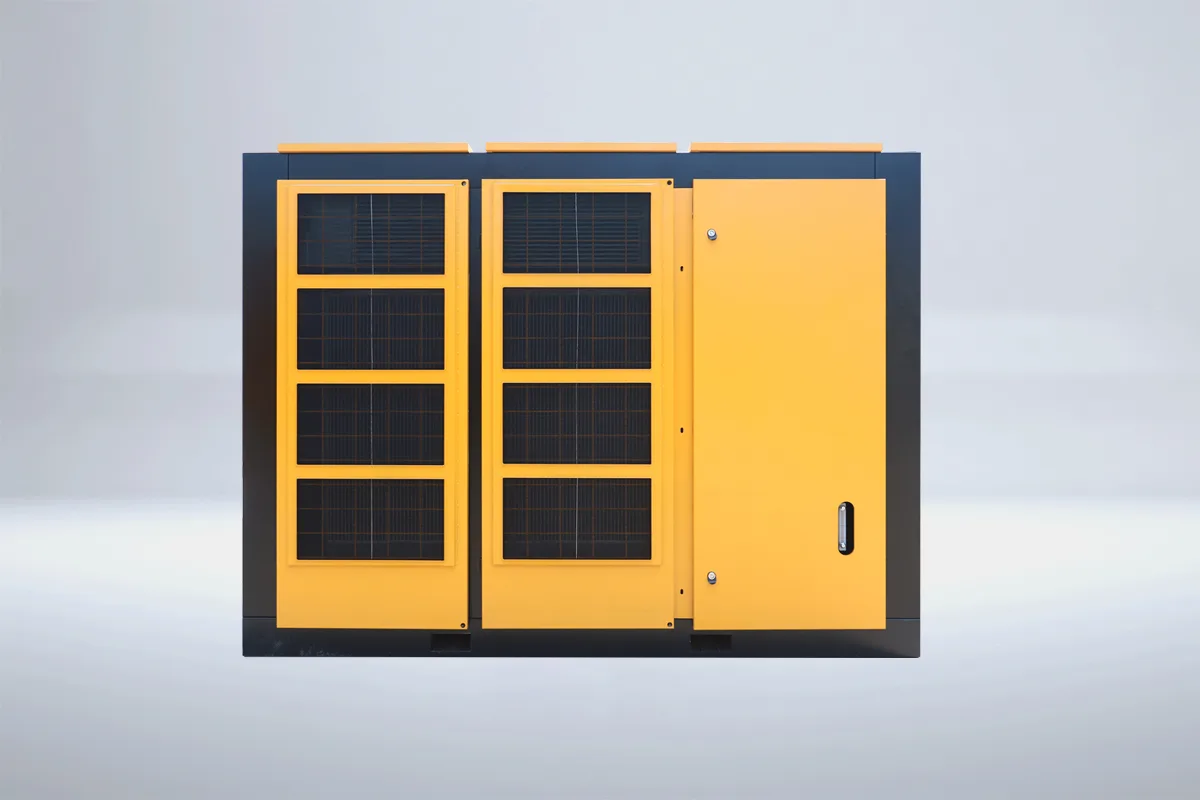
QiAir, a Chinese manufacturer and supplier of screw air compressors, sizes shipyard air from the coincident blasting peak, because blasting demand, not workshop average, decides whether the farthest dock holds pressure. The sections below follow the air from the compressor house to the hull.
Blasting: the peak that sizes the whole yard
Abrasive blasting is the shipyard's defining air load: high flow, continuous during a blasting shift, and highly sensitive to pressure, because a blasting nozzle that loses pressure loses cutting power, produces an uneven profile and wastes abrasive and time. Several blasting teams working at once produce a coincident peak that must be calculated team by team, nozzle by nozzle, at working pressure, plus a margin for leaks across a long, exposed distribution network. A yard that sizes on workshop average will hold pressure everywhere except where blasting actually happens.
Blasting air also needs treatment for the coating that follows it: dry, filtered air protects the blasted surface and the coating application, because moisture or oil carried into a coating system becomes a coating failure that only appears after the ship returns to service. Coating-support air therefore goes through staged filtration and drying, with a dew point suited to the coldest line on the dock, and the blasting and coating air quality should be checked at the nozzle and the spray gun, not only at the compressor house.
Salt air, abrasive dust and a distribution network that reaches
Salt air and abrasive dust are the shipyard's environmental test. A compressor house near the water draws in salt-laden air that corrodes coolers and internals unless intake filtration and cooler materials suit a marine environment, and abrasive dust from blasting loads any unprotected intake in the same shift. The compressor house should sit in the cleanest available position on the yard, with staged intake filtration, regular cooler cleaning and a discharge-temperature log that catches fouling before it becomes a trip. Outdoor distribution adds pressure loss across long dock runs, so pipe sizing must be calculated for the farthest dock at peak blasting load, with receivers near heavy-use docks to absorb local peaks.
Welding and dock work add steadier, distributed loads: welding auxiliaries, cutting support, heavy torque tools, tank cleaning and onboard testing, each drawing in its own pattern across the yard. A VFD machine follows the yard rhythm across blasting shifts and quieter fitting-out periods better than a fixed-speed machine, and duty-standby capacity protects the blasting peak where a yard cannot afford a lost blasting shift. Header pressure logging at the farthest dock during a full blasting shift is the proof that matters.
- Size on coincident blasting demand, team by team, nozzle by nozzle.
- Protect intakes from salt air and abrasive dust, and clean coolers on schedule.
- Size dock pipework for the farthest dock at peak load, with local receivers.
Buying from China: the shipyard sizing sheet
Before ordering from China, a shipyard buyer should document the coincident blasting peak, the coating-support air quality requirements, the required pressure at the farthest dock, the salt-air and dust conditions at the compressor house, and voltage and frequency. QiAir sizes export shipyard orders from that sheet, and confirms the distribution and redundancy arrangement against the yard's blasting schedule rather than quoting a single machine. Get the blasting peak in writing, and the system that arrives holds pressure at the hull instead of merely at the compressor house.
Frequently asked questions
Why does blasting size a whole shipyard system?
Because several blasting teams at once produce a coincident peak far above workshop average, and a nozzle that loses pressure loses cutting power and wastes abrasive and time.
What threatens shipyard compressors most?
Salt air corroding coolers and abrasive dust loading intakes, unless the compressor house sits in clean air with staged filtration and scheduled cooler cleaning.
What air does coating need after blasting?
Dry, filtered air checked at the spray gun, so moisture and oil never reach a freshly blasted surface or a coating system.
Related reading
- Screw Air Compressor Maintenance Checklist from a China Manufacturer
- How to Size a Screw Compressor: Air Demand Calculation Before You Buy from China
QiAir is a Chinese manufacturer and supplier of screw air compressors. If you are sourcing a screw compressor from China — for a factory, a textile mill, a construction site or a new production line — contact QiAir for a sized quotation, documented performance data and export support.