
TL;DR — Direct answer: A hydroelectric plant depends on compressed air for the controls that decide whether it generates or not: turbine governor systems, intake gate and valve actuation, cooling and drainage auxiliaries, and the dam control systems that must work in a remote location through floods, storms and winter cold. The working system delivers dry, filtered air at 7 to 8 bar on duty-standby machines, with a receiver sized for gate and governor peaks, and a standby arrangement that has been tested under load, because a dam that cannot move a gate on demand has lost control of its water.
A hydro plant looks like a civil engineering story — dam, intake, penstock, turbine — but the operating story is a controls story. Governors hold turbine speed against load changes, intake gates and valves control water into the turbines, drainage and cooling systems keep the powerhouse dry and cool, and all of those systems draw on compressed air. When air fails, the plant does not just lose efficiency; it loses the ability to control water and generation safely.
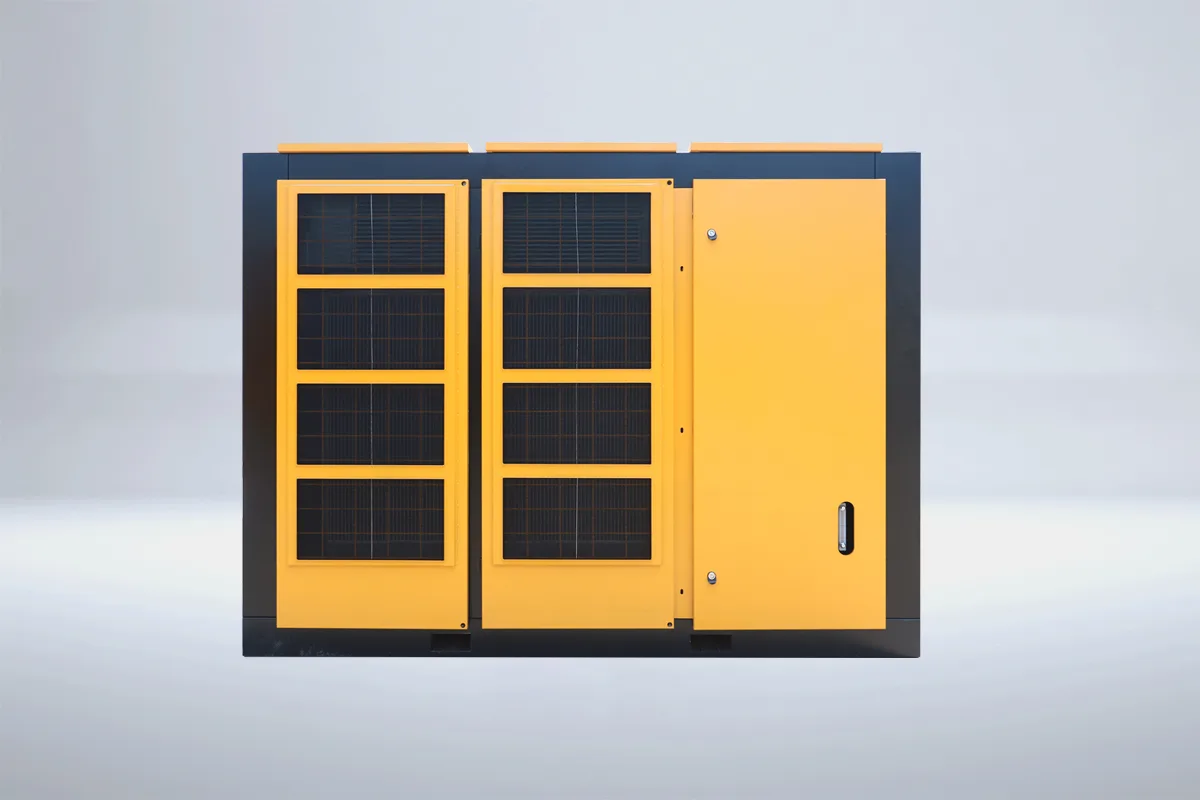
QiAir, a Chinese manufacturer and supplier of screw air compressors, sizes hydro-plant air from the governor, gate and auxiliary list, because a plant that sizes air as a generic powerhouse utility will find its weak point during a flood or a load-rejection event. The sections below follow the water from intake to turbine.
Governor air: speed control that cannot sag
Governor air is the most time-critical air duty in a hydro plant. Turbine governors adjust guide vanes and runner blades against load changes, and a governor that responds slowly because header pressure dipped can overspeed or underspeed a unit during a load rejection, which is exactly when the governor matters most. Governor air typically runs at 7 to 8 bar, must arrive clean and dry to protect governor valves and positioners, and must hold pressure through coincident events such as a unit start, a gate movement and a cooling-system cycle happening together. The sizing sheet should list every governor and control user, its flow at working pressure, and the coincident event the plant is designed for, not just the steady-state load.
A receiver sized for governor and gate peaks — typically 1,500 litres or more on a mid-size powerhouse — absorbs those coincident events while the compressor responds, and a VFD machine follows powerhouse load across seasons better than a fixed-speed machine idling through low-water months. Pressure should be confirmed at the farthest governor during a simulated load-rejection or unit-start event, not at the compressor outlet during a quiet shift, because the governor test that matters is the one that reproduces the event the governor exists for.
Intake gates, valves and dam remote operation
Intake gates, penstock valves, spillway auxiliaries and drainage systems are the second air duty, and they are bursty, high-flow and often remote from the powerhouse. A gate that must move on demand during a flood or a maintenance drawdown cannot wait for a compressor to catch up, so gate circuits need a receiver near the gate where pipe runs are long, drops sized for the gate actuator at peak, and pressure confirmed at the gate during a full travel test. A gate actuator that moves slowly because of a long, undersized pipe run is a dam-safety finding, not a minor pressure loss.
Remote operation shapes the whole design. Many hydro plants sit far from service centres, in valleys where winter cold, humidity and flood risk all affect the air system. Compressor rooms need drainage and flood protection, intake air drawn from a clean location away from powerhouse humidity and dust, and pipework protected against cold, moisture and corrosion. Drains must handle real water volumes, dew point must suit the coldest line the air will see so instrument lines do not freeze or block, and the plant should hold spares and a written plan for gate and governor operation if one machine is lost.
- Size governor air on the coincident load-rejection event, not steady state.
- Put a receiver near remote gates and confirm pressure at the gate during travel.
- Dry air for the coldest line so instrument lines do not freeze or block.
Redundancy, testing and the export buying check
Redundancy in a hydro plant is part of dam safety, not just maintenance convenience. Governor and gate air needs duty-and-standby capacity with automatic changeover tested monthly under load, duplex dryers so one train can be serviced while the other runs, and a service arrangement that reflects the plant remoteness. Changeover tests should be logged alongside turbine and gate maintenance records, and the plant should rehearse the loss of one machine so operators know which units and gates keep running and which pause. A standby machine that has sat through a quiet season may have a flat battery or a stale fault waiting for the flood season.
Before ordering from China, a hydro-plant buyer should document the governor, gate and auxiliary list with coincident demand, gate distances and pipe lengths, required pressure at the farthest governor and gate, site cold, humidity and flood conditions, and voltage and frequency. QiAir sizes export hydro orders from that sheet, and confirms standby and receiver sizing against the plant event case. Get the governor and gate list in writing, and the system that arrives holds control of water and generation when it matters most.
Frequently asked questions
Why is governor air time-critical in a hydro plant?
Governors hold turbine speed against load changes; a pressure sag during a load rejection can overspeed or underspeed a unit at exactly the wrong moment.
What pressure do hydro governor and gate systems need?
Typically 7 to 8 bar. Size on the coincident governor and gate event, with pressure confirmed at the farthest governor and gate.
How should a remote dam handle standby air?
Duty-and-standby machines with changeover tested monthly under load, a receiver for gate peaks, on-site spares and a written plan for operation if one machine is lost.
Related reading
- Screw Air Compressor Maintenance Checklist from a China Manufacturer
- How to Size a Screw Compressor: Air Demand Calculation Before You Buy from China
QiAir is a Chinese manufacturer and supplier of screw air compressors. If you are sourcing a screw compressor from China — for a factory, a textile mill, a construction site or a new production line — contact QiAir for a sized quotation, documented performance data and export support.