
TL;DR — Direct answer: A glass plant runs a furnace that never sleeps, and its compressed air must be just as continuous: furnace combustion and control air, forming-machine actuators that cycle thousands of times a shift, annealing lehr controls and cutting and handling equipment all draw on one header, and a pressure dip during a forming cycle produces defects across a whole production run. The working system is sized on the forming peak, protected against furnace heat and glass dust, and built with duty-standby capacity, because a glass furnace cannot be paused while a compressor is repaired.
A glass furnace runs for months or years without stopping, and everything downstream of it inherits that continuity requirement. Forming machines shape molten glass on precise pneumatic timing, annealing lehrs cool finished glass on controlled profiles, and cutting, handling and packaging equipment runs in step with the forming rhythm. Compressed air is the timing utility across all of it, and a sag or a wet-air event shows up immediately as forming faults, lehr control errors or handling damage.
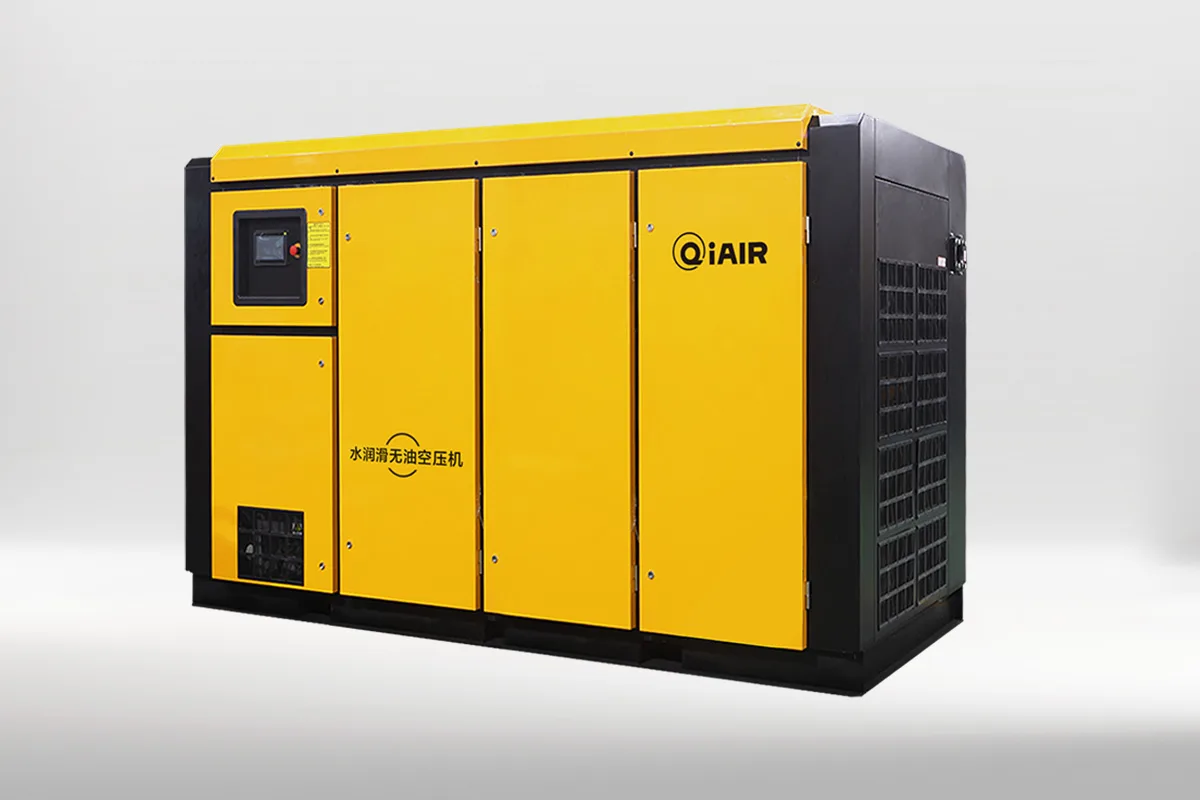
QiAir, a Chinese manufacturer and supplier of screw air compressors, sizes glass-plant air from the forming-machine peak and the furnace control load, because those two loads decide whether the header holds pressure through the hottest, busiest hour. The sections below follow the glass from furnace to pack-out.
Furnace control air and the cost of a pressure dip
Furnace air serves combustion controls, fuel and air-ratio valves, and the instrumentation that keeps a melting furnace on temperature. The load is steady rather than bursty, but it is critical: a control valve that responds slowly because header pressure sagged can push a furnace zone off temperature, and a furnace that drifts off temperature produces glass quality problems that persist long after pressure recovers. Critical furnace air therefore belongs on duty-standby machines with automatic changeover, duplex dryers and filtration that protects delicate valve positioners from dust and moisture.
Heat is the siting problem. A compressor room beside a furnace hall draws in hot, dusty air unless its intake is placed in clean, cooler air and the room is ventilated for the machine's full heat load. Discharge temperatures climb in summer, coolers foul with glass dust, and a machine that was adequate in winter trips on high temperature in July. Intake filtration, regular cooler cleaning and a discharge-temperature trend log are not extras in a glass plant; they are what keeps a continuous furnace supplied through the hot season.
Forming, annealing and handling: the cycle peak
Forming machines are the air peak in a glass plant, and they cycle fast. Each forming cycle draws air in a sharp pattern, and several machines cycling together produce a coincident peak far above the plant average. The sizing sheet must list every forming machine, its flow at working pressure and which machines truly run together at full production, plus a margin for leaks and a future line, because a header sized on average forming demand sags exactly when the plant is producing fastest. A receiver of 2,000 to 5,000 litres on a mid-size plant absorbs cycle peaks, and a VFD machine follows the forming rhythm better than a fixed-speed machine idling between runs.
Annealing lehrs and handling add steadier loads with their own sensitivity: lehr controls need dry, stable air to hold cooling profiles, and handling equipment needs clean air to avoid marking or damaging finished glass. Moisture is the quiet defect source here, condensing in cooler handling lines and corroding fittings, so the dew point must suit the coldest line in the plant and be checked at the far header. Dust control matters at the compressor intake and at point-of-use filters, because glass dust is abrasive and it finds its way into any unprotected opening.
- Size on the coincident forming peak, not the plant average.
- Put furnace control air on duty-standby machines with tested changeover.
- Keep intakes in clean, cool air and log discharge temperatures through summer.
Buying from China: the glass-plant sizing sheet
Before ordering from China, a glass buyer should document the forming-machine coincident demand, the furnace control air list, the required pressure at the farthest forming machine, the hottest ambient the compressor room will see, and voltage and frequency. QiAir sizes export glass-plant orders from that sheet, and confirms the redundancy and heat arrangements against the furnace's continuous operation rather than quoting a single machine. Get the forming peak and the furnace control list in writing, and the system that arrives keeps a continuous furnace supplied instead of merely covering an average.
Frequently asked questions
Why is glass-plant air sized on the forming peak?
Because forming machines cycle together at full production and produce a coincident peak far above the plant average; sizing on the average sags exactly when output is highest.
What threatens glass-plant compressors most?
Furnace heat and glass dust at the intake, which raise discharge temperatures and foul coolers unless intakes sit in clean, cool air and coolers are cleaned on schedule.
How much redundancy does a glass furnace need?
Duty-standby capacity with automatic changeover for furnace control air, tested under load, because a furnace cannot pause for a compressor repair.
Related reading
- Screw Air Compressor Maintenance Checklist from a China Manufacturer
- How to Size a Screw Compressor: Air Demand Calculation Before You Buy from China
QiAir is a Chinese manufacturer and supplier of screw air compressors. If you are sourcing a screw compressor from China — for a factory, a textile mill, a construction site or a new production line — contact QiAir for a sized quotation, documented performance data and export support.