
TL;DR — Direct answer: Glass and ceramics plants run continuously, often 24 hours a day, with furnaces that cannot be paused when the air system falters. Their compressed air serves forming machines, handling robots, burners and dust extraction controls, and the plant's enemies are heat, silica and glaze dust, and the cost of any interruption to a furnace campaign. The right system pairs a reliable screw compressor with heat-resistant siting, aggressive dust protection, and a backup arrangement that keeps forming lines running through a service event.
A glass furnace or a ceramics kiln does not stop for a compressor fault. Once a furnace is hot, it stays hot for a campaign lasting months, and the forming lines downstream depend on compressed air every minute of that campaign. A two-hour air outage does not just pause production; it can scrap a run of ware, damage moulds, and in the worst case disturb furnace operations that take days to recover.
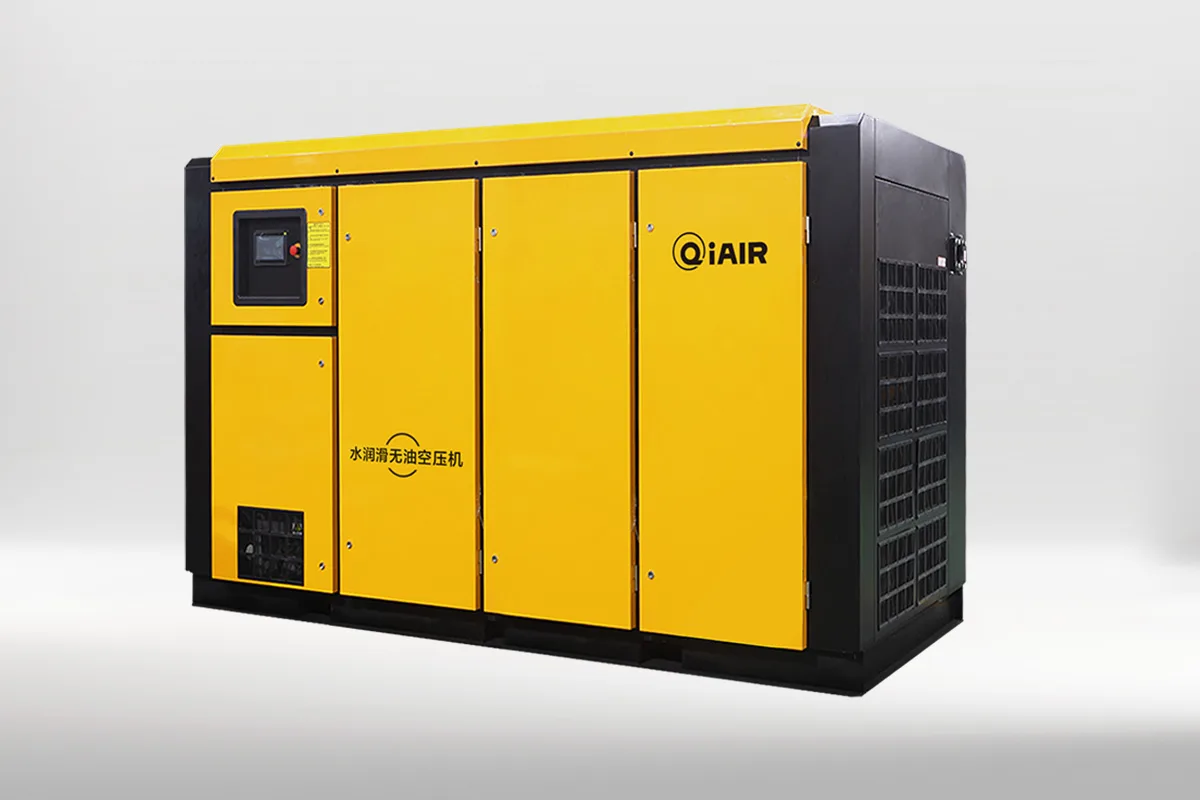
QiAir, a Chinese manufacturer and supplier of screw air compressors, works with glass and ceramics producers in export markets where the buying conversation starts with continuity, not price. The questions that matter are how the machine survives heat and dust, what happens when it needs service, and how air quality affects the finished ware.
Heat, dust and where to put the machine
Furnace halls are hot, and a compressor that breathes 45-degree air delivers less air and runs hotter than its datasheet promises, because every 10 degrees of intake temperature rise cuts output noticeably and pushes discharge temperature toward its trip point. Site the compressor in the coolest available room, duct intake air from outside the furnace hall where possible, and ventilate the compressor room so hot discharge air does not recirculate. A machine in a cool side room with ducted intake will outlast the same machine baking beside a furnace.
Dust is the second threat: silica dust in glass plants and glaze and clay dust in ceramics plants clog intake filters and coat coolers, exactly as in other dusty industries but with finer, more abrasive particles. Fit a pre-filter or cyclone in the dustiest areas, inspect intake filters monthly, and blow out coolers on the same visit. The cost of that discipline is an hour a month; the cost of skipping it is a high-temperature trip in the middle of a production run.
Forming lines: steady pressure and clean air
Forming machines — presses, blow moulds, IS machines in glass, jiggering and casting lines in ceramics — need steady pressure, because a pressure dip changes forming force and produces thin walls, incomplete fills or dimensional drift. A receiver sized to smooth forming pulses, a compressor setpoint that covers treatment and piping losses with margin, and a control system that responds to demand changes in seconds rather than minutes are what hold forming quality stable across a shift.
Air quality reaches the product here too. Oil mist on glass moulds causes surface defects, and moisture in forming air can mark ware or disturb glaze application. A coalescing filter and a refrigerated dryer are the minimum for forming circuits, with point-of-use filtration at sensitive machines. Where compressed air contacts ware directly, such as in handling or cooling, treat that circuit to the same standard as a food-contact line: clean, dry and verified by periodic sampling.
- Duct compressor intake from the coolest available air, away from furnaces.
- Inspect intake filters and coolers monthly in silica and glaze dust.
- Size receivers to smooth forming-machine pulses and hold pressure steady.
Continuity: backup for a plant that never stops
A continuous plant needs a continuity plan, not just a compressor. The standard arrangement is duty plus standby, or two machines sharing load so that either can carry essential forming and furnace services alone. Load-sharing also evens wear and lets one machine be serviced without stopping the plant, which matters when a furnace campaign runs for months and no shutdown window exists.
Service planning follows the same logic: hold filters, separator elements and a set of seals on site, agree a response time with the supplier in hours, and schedule major service around the rare planned furnace or kiln stops. QiAir helps export glass and ceramics customers plan that spares holding and service calendar at order stage, because a continuous plant that discovers its spares gap during a fault has already lost the production it was trying to protect.
Frequently asked questions
Why does furnace-hall heat hurt compressor output?
Hot intake air reduces delivered volume and raises discharge temperature toward trip limits. Cool, ducted intake air and a ventilated compressor room restore rated performance.
What air quality do forming lines need?
Steady pressure plus dry, oil-free air: moisture and oil cause forming defects, thin walls and surface marks. Coalescing filtration and refrigerated drying are the minimum.
How do continuous plants handle compressor service?
With duty plus standby or load-sharing machines, on-site spares, and major service timed to planned furnace or kiln stops so production never waits on maintenance.
Related reading
- Screw Air Compressor Maintenance Checklist from a China Manufacturer
- How to Size a Screw Compressor: Air Demand Calculation Before You Buy from China
QiAir is a Chinese manufacturer and supplier of screw air compressors. If you are sourcing a screw compressor from China — for a factory, a textile mill, a construction site or a new production line — contact QiAir for a sized quotation, documented performance data and export support.