
TL;DR — Direct answer: Footwear manufacturing needs clean dry air at 7 to 8 bar for lasting, moulding, bonding, stitching and packing, with a pressure dew point of 3 degrees C and filtration that keeps oil and water away from uppers, adhesives and finished shoes. Size on the coincident peak of lasting, moulding and bonding lines, commonly 4 to 10 cubic metres per minute for a mid-size factory, and use a variable speed drive because lines start and stop in batches. This is footwear assembly, not leather tanning: the air touches finished materials, so quality matters more than raw flow. QiAir, a Chinese screw compressor manufacturer and supplier, sizes machines for this duty.
A shoe is made in small steps, and most of them use air. Lasting machines pull and staple the upper over the last, moulding presses shape soles and heels, bonding lines press upper and sole together with adhesive, stitching machines use air for clamping and feeding, and packing lines use it for boxing and strapping. A pressure dip at the lasting station leaves a wrinkle, wet air at the bonding line weakens the glue joint, and oil on an upper is a reject that no amount of cleaning fixes. QiAir is a Chinese manufacturer and supplier of screw air compressors, and its machines for footwear factories are specified around clean, steady air at the workstation rather than maximum flow in the compressor room.
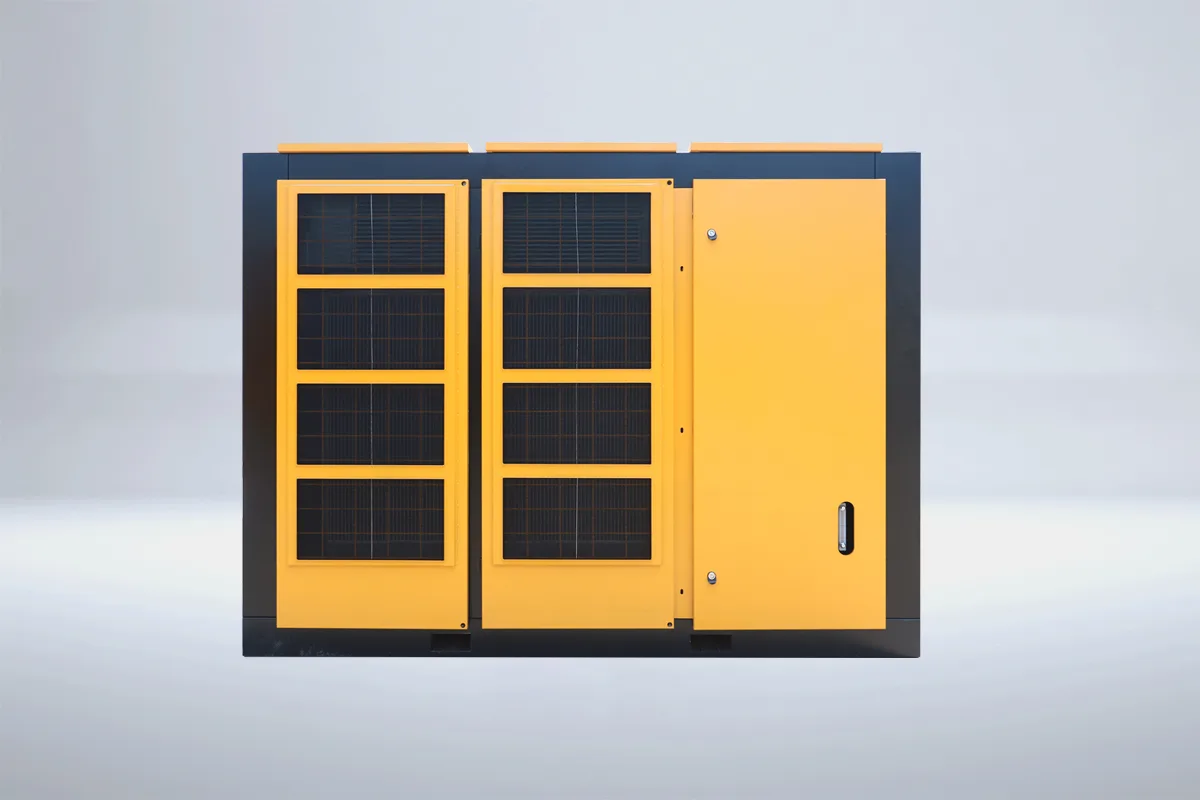
Footwear is seasonal and order-driven, which changes the sizing question. A factory that runs three lines for one brand this month and five for another next month needs a compressor that follows the load, not one that is sized for a single fixed day. This guide maps the footwear air users, explains how to size for batch lines, covers adhesive and material protection, and sets out a sizing sheet for a China supplier.
Where Air Is Used: Lasting, Moulding, Bonding, Stitching and Packing
Lasting is the most pressure-sensitive user. Lasting machines use air for clamping, pulling and stapling, and the force must be the same on every shoe, or the fit varies across a batch. Moulding adds a different load: presses and injection moulding machines use air for clamping, ejection and mould temperature control, and a sag can leave a sole half formed or a mould stuck. These two areas set the pressure standard for the whole factory, and they are the reason the far-end pressure matters more than the receiver pressure.
Bonding, stitching and packing add the volume. Bonding lines use air for pressing, heating controls and adhesive application, stitching machines use it for clamping, feeding and thread trimming, and packing lines use it for boxing, labelling and strapping. Bonding is the most air-quality sensitive of the three: oil or moisture at the glue joint weakens adhesion and only shows up when the shoe is flexed, which is too late to fix cheaply.
- Lasting and moulding: clamping, pulling, stapling and press control where steady pressure sets fit and form.
- Bonding: pressing and adhesive application where oil or moisture weakens the glue joint.
- Stitching and packing: clamping, feeding, thread trimming, boxing and strapping across the finishing lines.
Sizing for Batch Lines That Start and Stop Together
List the lines that run together on a real order, not the lines that exist in the building. A mid-size footwear factory typically peaks at 4 to 10 cubic metres per minute at 7 to 8 bar, roughly a 30 to 55 kW screw compressor, and a variable speed drive earns its keep because lines start after a changeover, stop for a material change, and restart in a different combination through the day. A fixed-speed machine that unloads for hours between batches wastes power, while a variable speed machine follows the load and keeps pressure steady for the lasting machines.
Keep the pressure drop to the farthest lasting station under 0.3 bar at peak, fit a 500 to 1000 litre receiver per 10 cubic metres per minute to absorb changeover spikes, and fit a pressure regulator at each lasting and bonding line so one line cannot starve another. Log pressure at the lasting line during a changeover for a week, because that log is the honest record of whether the compressor is big enough, and it settles the question faster than any catalogue figure.
- Size on the lines that run together on a real order, with a variable speed drive for the batch pattern.
- Regulate each lasting and bonding line separately, and keep far-end drop under 0.3 bar.
- Log pressure at the lasting line during changeovers for a week to prove the sizing in production.
Adhesives, Uppers and Dry Air
Bonding is where air quality becomes product quality. Oil aerosol or moisture at the glue joint weakens adhesion, and the failure only appears when the shoe is worn, which makes it the most expensive air fault in the factory. The treatment chain is a pre-filter, a refrigerated dryer to a 3 degree C pressure dew point, a coalescing filter to 0.01 micron, and an activated-carbon filter where the adhesive supplier specifies oil-free quality air. Test the air at the bonding line quarterly, and change elements on pressure drop, not on a calendar guess.
Dust and heat are the other enemies. Cutting and buffing produce fine dust that clogs an intake filter, and moulding halls run hot, so site the compressor in a clean ventilated room away from cutting lines, duct the intake from clean air, and check the filter weekly. Slope lines to drain legs, fit automatic zero-loss drains, and keep the compressor room free of the adhesive fumes that can attack seals and electronics. Size the dryer for the hottest, most humid month, because a marginal dryer in summer passes wet air into the bonding line at the busiest time of year.
- Fit pre-filter, refrigerated dryer, 0.01 micron coalescing filter and carbon filter where oil-free air is specified.
- Test air at the bonding line quarterly, and change filter elements on pressure drop.
- Site the compressor away from cutting dust and moulding heat, and size the dryer for peak summer humidity.
Buying from China: Sizing Sheet for a Footwear Factory Compressor
QiAir is a Chinese manufacturer and supplier of screw air compressors, and a footwear order should start with a line sheet. Send the supplier the number of lasting, moulding and bonding lines, the coincident peak at 7 to 8 bar, the adhesive and material air-quality requirements, ambient temperature and dust level, and the distance to the farthest lasting station. Ask for a variable-speed quotation with the part-load power curve, and ask the supplier to state the filtration grades and dryer duty in writing, because those are what protect the glue joint.
Agree the acceptance test before shipment: a full-load run at rated pressure, a dew point reading at the dryer outlet, and an oil-aerosol check at the filter outlet. On arrival, install on a level plinth with clear cooler airflow, connect drains before the first run, and survey pressure at the farthest lasting station during a changeover in the first production week. Keep a log of pressure, dew point and filter changes, and review it monthly, because a slow rise in dew point is the earliest warning before bonding failures appear.
- Send the supplier line counts, coincident peak, adhesive air-quality requirements and farthest-station distance.
- Ask for variable-speed pricing with the part-load curve, and confirm filtration and dryer duty in writing.
- Accept on a full-load test plus dew point and oil checks, then survey lasting-line pressure at a changeover in week one.
Frequently asked questions
What size screw compressor does a footwear factory need?
A mid-size footwear factory typically needs 4 to 10 cubic metres per minute at 7 to 8 bar, roughly a 30 to 55 kW screw compressor. Size on the lasting, moulding and bonding lines that run together on a real order, and use a variable speed drive because lines start and stop in batches.
Why does bonding need such clean air?
Oil or moisture at the glue joint weakens adhesion, and the failure only shows when the shoe is flexed, which is too late to fix cheaply. A pre-filter, refrigerated dryer, 0.01 micron coalescing filter and carbon filter protect the joint, and quarterly air tests at the bonding line catch a failing filter early.
How is footwear assembly different from leather tanning for air?
Tanning is wet chemistry with heavy wash and drum loads, while footwear assembly is dry precision work at lasting, moulding and bonding stations. The air in a footwear factory touches finished uppers and adhesives directly, so pressure stability and oil-free quality matter more than raw flow.
Related reading
- Screw Air Compressor Maintenance Checklist from a China Manufacturer
- How to Size a Screw Compressor: Air Demand Calculation Before You Buy from China
QiAir is a Chinese manufacturer and supplier of screw air compressors. If you are sourcing a screw compressor from China — for a factory, a food plant, a construction site or a new production line — contact QiAir for a sized quotation, documented performance data and export support.