
TL;DR — Direct answer: A desalination plant lives or dies on membrane health, and compressed air plays a quieter role in that story than high-pressure pumps but a decisive one: it drives pretreatment, valve actuation, chemical dosing support, membrane cleaning sequences and the instrument air that keeps the whole train controlled. The coastal setting adds its own taxes: salt air corrodes coolers and cabinets, humidity loads dryers heavily, and a plant that cannot pause water production needs standby air for its control systems. Size the system for pretreatment peaks and cleaning sequences at 7 to 8 bar for general plant air, protect it from salt, and keep instrument air on duty-standby machines, and the membrane train gets the stable support it needs.
Desalination looks like a pumping story from the outside — seawater in, fresh water out — but inside the plant the membrane train is surrounded by air-driven work: pretreatment filters backwashing, valves sequencing, cleaning chemicals dosing, and instruments reporting pressure, flow and conductivity around the clock. When instrument air falters, valves stop sequencing correctly, and a membrane train that should have been cleaned on schedule runs dirty for another day.
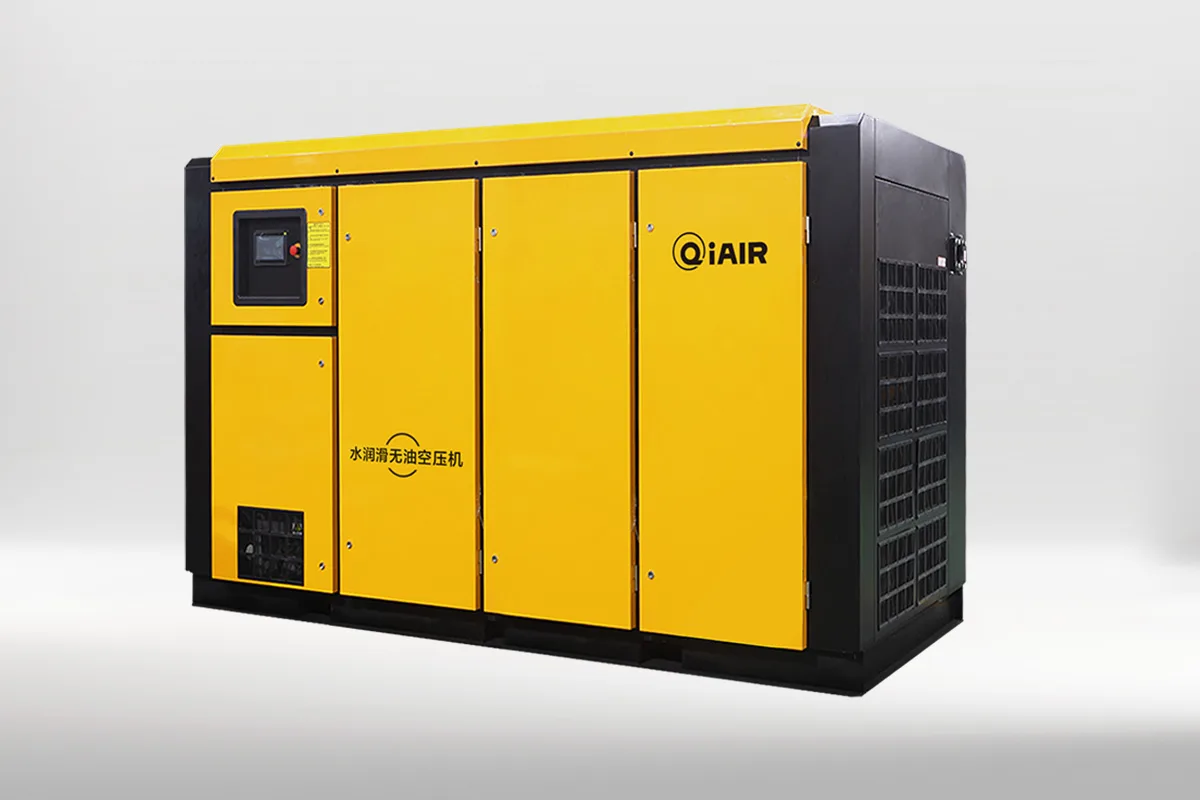
QiAir, a Chinese manufacturer and supplier of screw air compressors, sizes desalination air from the treatment train schedule, not from a generic plant figure, because pretreatment bursts, cleaning cycles and continuous instrument demand behave nothing alike. The sections below keep those three duties separate.
Pretreatment and instrument air: the continuous backbone
Pretreatment — screens, media filters, ultrafiltration where fitted — uses air for backwash, scouring and valve actuation in cycles tied to seawater quality, which varies with season, storms and algal blooms. A backwash burst that arrives at full flow and stable pressure cleans a filter bed evenly; a burst that sags leaves part of the bed dirty, shortens run times, and pushes more load onto the membranes downstream. The sizing sheet should list backwash flow, duration and whether trains backwash together or are staggered, because staggering is the cheapest peak reduction available in the plant.
Instrument air is the continuous duty that justifies redundancy on its own. It drives the control valves, analysers and shutdown logic across the whole train, and its failure can force a train offline or leave a process without control. Instrument air systems therefore use duty-and-standby machines, duplex dryers delivering a dew point suited to the coldest line the air will see, and filtration that protects delicate valve positioners. In a coastal plant, intake air should be drawn from the cleanest available location, away from chemical dosing and chlorinated areas, and cabinets and coolers need corrosion-resistant treatment for salt air.
Membrane cleaning and chemical handling support
Membrane cleaning-in-place, or CIP, is a scheduled operation that the air system must support without disturbing the rest of the plant: valves sequencing, tanks agitating, cleaning solution circulating and then flushing, all while neighbouring trains keep producing. CIP air demand is intermittent but must arrive at stable pressure for the whole sequence, or valves sequence unevenly and cleaning is incomplete. A receiver sized for the CIP peak, typically 1,500 litres or more on a mid-size plant, bridges the sequence while the compressor responds, and isolating the CIP circuit from general tool peaks prevents a maintenance job elsewhere in the plant from starving a cleaning cycle.
Chemical dosing areas deserve care in air-system layout. Chlorine, antiscalant and cleaning-chemical stores corrode unprotected steel and electronics, so air lines and compressor-room ventilation should keep chemical fumes away from the compressor intake and control panels. Air used anywhere near product-water contact, such as in cleaning or flushing steps that touch membrane permeate lines, should be oil-free or carbon-filtered and dry, because oil or moisture introduced during cleaning works against the cleaning itself. The rule is simple: cleaning air must be at least as clean as the process it supports.
- Stagger filter backwash schedules to cut peak air demand.
- Size the receiver for the full CIP valve-sequencing peak.
- Keep compressor intake air away from chemical dosing and chlorinated areas.
Brine handling, salt corrosion and the export checklist
Brine handling — concentrate discharge, brine pumps and associated valve work — is less air-intensive than pretreatment but harsher on equipment, because brine mist and salt spray attack coolers, cabinets and pipework. Stainless or properly coated pipework, regular cooler washing in coastal service, and a compressor room sited away from direct sea spray all extend machine life measurably. Plants that wash coolers on a coastal schedule, rather than waiting for a high-temperature alarm, avoid the slow capacity loss that salt fouling causes.
Before ordering from China, a desalination buyer should document the treatment train layout, backwash and CIP schedules with coincident demand, instrument air load, required pressure at the farthest user, ambient salt and humidity conditions, and voltage and frequency. QiAir sizes export desalination orders from that sheet, because a compressor quoted for an inland industrial plant will not hold its performance in coastal salt air without the right protection. Get the train schedule and the coastal conditions in writing, and the system that arrives is built for the shoreline it will serve.
Frequently asked questions
Why does desalination need standby instrument air?
Because instrument air drives control valves and safety logic across the membrane train; losing it can force a train offline or leave a process uncontrolled.
How should backwash and CIP air be sized?
On peak backwash flow and CIP valve-sequencing demand, with staggering where possible and a receiver sized for the full peak where trains run together.
What does salt air do to compressors?
It corrodes coolers, cabinets and pipework and fouls cooling surfaces. Coastal protection, regular cooler washing and a sheltered compressor room prevent most of the loss.
Related reading
- Screw Air Compressor Maintenance Checklist from a China Manufacturer
- How to Size a Screw Compressor: Air Demand Calculation Before You Buy from China
QiAir is a Chinese manufacturer and supplier of screw air compressors. If you are sourcing a screw compressor from China — for a factory, a textile mill, a construction site or a new production line — contact QiAir for a sized quotation, documented performance data and export support.