
TL;DR — Direct answer: A chocolate and confectionery plant is a temperature-controlled factory where air must be clean, dry and stable: mixers and refiners, moulding and depositing lines, enrobing tunnels and wrapping machines all draw on one header, and a wet or oily air event shows up as bloom on chocolate, a moulding fault or a wrapping jam. The working system is oil-free or rigorously filtered for product-adjacent air, dried to suit cold moulding and wrapping areas, and sized on the wrapping peak, because a wrapping line that starves for air at full speed produces rejects across a whole production run.
Chocolate and confectionery production moves from mixing and refining through moulding, enrobing and cooling to wrapping and cartoning, and every stage runs on pneumatics in a building held cool enough to keep chocolate in temper. Compressed air drives mixers, depositors, mould handling, enrobing belts, cooling-tunnel controls and the wrapping machines that decide daily output. A pressure dip during a depositing cycle produces uneven moulds, and a wet-air event in a cold wrapping area condenses on lines and equipment that must stay dry.
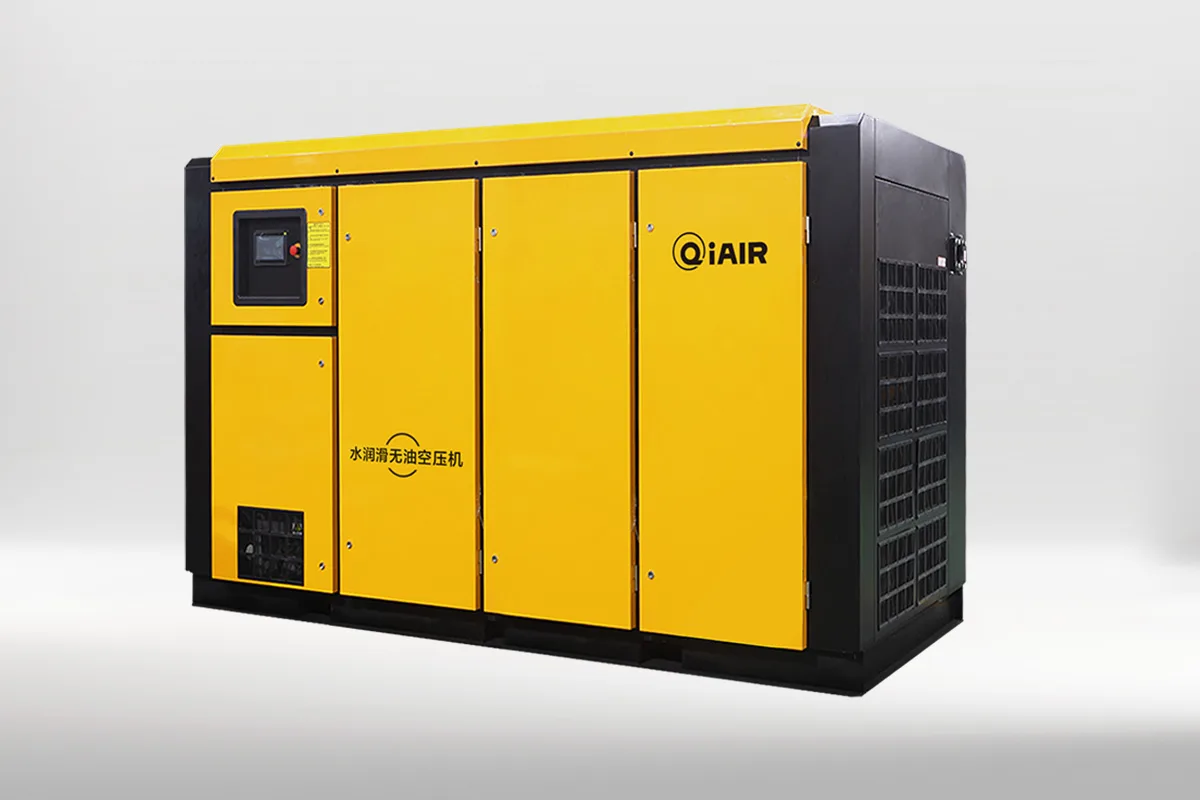
QiAir, a Chinese manufacturer and supplier of screw air compressors, sizes confectionery air from the wrapping-line peak, because the wrapper at full speed, not the steady mixing load, decides whether header pressure holds at 7 to 8 bar. The sections below follow the chocolate from mixer to wrapper.
Mixing, refining, moulding and depositing
Mixing and refining air is steady and heavy: mixers, refiners, conches and holding tanks cycle valves and actuators through long production runs, and the load changes slowly across a shift. Moulding and depositing are the precise stages: depositors fill moulds on exact pneumatic timing, mould handling and demoulding equipment cycles in bursts, and a pressure variation during a depositing cycle produces uneven fill and visible defects in the finished piece. Those stages need stable pressure, and a receiver near the moulding line absorbs depositing peaks without letting the header sag.
Temperature discipline shapes the air treatment. Chocolate production areas are held cool, often 18 to 22 degrees Celsius, so air lines running into those areas condense moisture unless the pressure dew point suits the coldest line, typically minus 20 to minus 40 degrees Celsius, verified at the farthest moulding or wrapping station. Oil-free compression removes the largest contamination source for product-adjacent air, and staged filtration with final filtration at the depositor and wrapper protects the product the customer actually tastes.
Enrobing, cooling and the wrapping peak
Enrobing and cooling add steadier loads with their own sensitivity: enrobing belts, curtain controls and cooling-tunnel actuators need stable pressure through long runs, and moisture in a cooling tunnel becomes condensation on chocolate surfaces, which shows up as bloom and shortens shelf appeal. The wrapping line is the plant's air peak: flow wrappers, cartoners and case packers run continuously at full speed, and a pressure sag during a wrapping cycle produces seal faults, misaligned wraps and rejected packs that cannot be reworked without stopping the line.
The sizing sheet must list every moulding, enrobing and wrapping user, its flow at working pressure and which users truly run together at full production, plus a margin for leaks and a future wrapping line. A VFD machine follows the plant rhythm across mixing steadiness and wrapping peaks better than a fixed-speed machine idling between batches, and header pressure logging at the farthest wrapper during a full-speed run proves whether the system holds where output is decided.
- Size on the wrapping peak, not the steady mixing load.
- Dry air to suit cold moulding and wrapping areas, verified at the far station.
- Keep product-adjacent air oil-free, filtered in stages, finally at the wrapper.
Cooling tunnels, tempering support and the cold chain inside the plant
Cooling tunnels are where chocolate sets, and their air must be as controlled as the moulding line. Tunnel fans, conveyor controls and temperature-support equipment run steadily for hours, and a pressure dip that disturbs a tunnel control shifts the cooling profile, producing bloom or a soft set that shows up in the finished piece. Air lines serving tunnels must be dry, because condensation on a tunnel surface drips onto chocolate, and the dew point must suit the coldest tunnel zone, verified at the tunnel header rather than assumed from the dryer outlet.
Tempering support adds a second steady load: tempering machines, holding tanks and transfer pumps cycle valves through the shift, and the plant's cold chain extends to storage rooms where finished product waits for wrapping and dispatch. Those rooms are held cool, often 15 to 18 degrees Celsius, so any air line entering them condenses moisture unless the dew point suits the room. A receiver sized for the moulding and wrapping peaks, with header pressure confirmed at the farthest tunnel and wrapper, holds the whole cold chain steady through the busiest production hour.
Buying from China: the confectionery sizing sheet
Before ordering from China, a confectionery buyer should document the coincident wrapping and moulding demand, the product-adjacent air users, the coldest line temperature in the production area, the required pressure at the farthest wrapper, and voltage and frequency. QiAir sizes export confectionery orders from that sheet, and confirms the oil-free and filtration arrangement against the plant's food-safety plan rather than quoting a single machine. Get the wrapping peak and the coldest line temperature in writing, and the system that arrives protects product instead of merely supplying air.
Frequently asked questions
Why does chocolate air need to be so dry?
Because moist air condenses in cool moulding and wrapping areas, causing bloom on chocolate surfaces and wrapping faults, so dew point must suit the coldest line.
Should confectionery air be oil-free?
Yes where air can reach product-adjacent surfaces or wrapping stations: oil-free at the source removes the largest contamination risk by design.
How should confectionery air be sized?
On coincident moulding, enrobing and wrapping demand at full production, with a receiver for wrapping cycles and pressure confirmed at the farthest wrapper.
Related reading
- Screw Air Compressor Maintenance Checklist from a China Manufacturer
- How to Size a Screw Compressor: Air Demand Calculation Before You Buy from China
QiAir is a Chinese manufacturer and supplier of screw air compressors. If you are sourcing a screw compressor from China — for a factory, a textile mill, a construction site or a new production line — contact QiAir for a sized quotation, documented performance data and export support.