
TL;DR — Direct answer: High discharge temperature is the most common screw compressor trip, and it has a short list of usual causes: blocked coolers, low or degraded oil, poor room ventilation, a faulty temperature sensor, or a machine running beyond its rating. Working through those causes in order, with temperature and pressure readings at each step, finds the fault faster than replacing parts at random, and prevents the air-end damage that repeated overheating causes.
A screw compressor that trips on high discharge temperature is protecting itself, but every trip also stops production and shortens component life if the cause is ignored. The frustrating part is that the same symptom has several different causes, and the wrong fix, such as replacing a sensor when the cooler is blocked, wastes a service visit without solving anything.
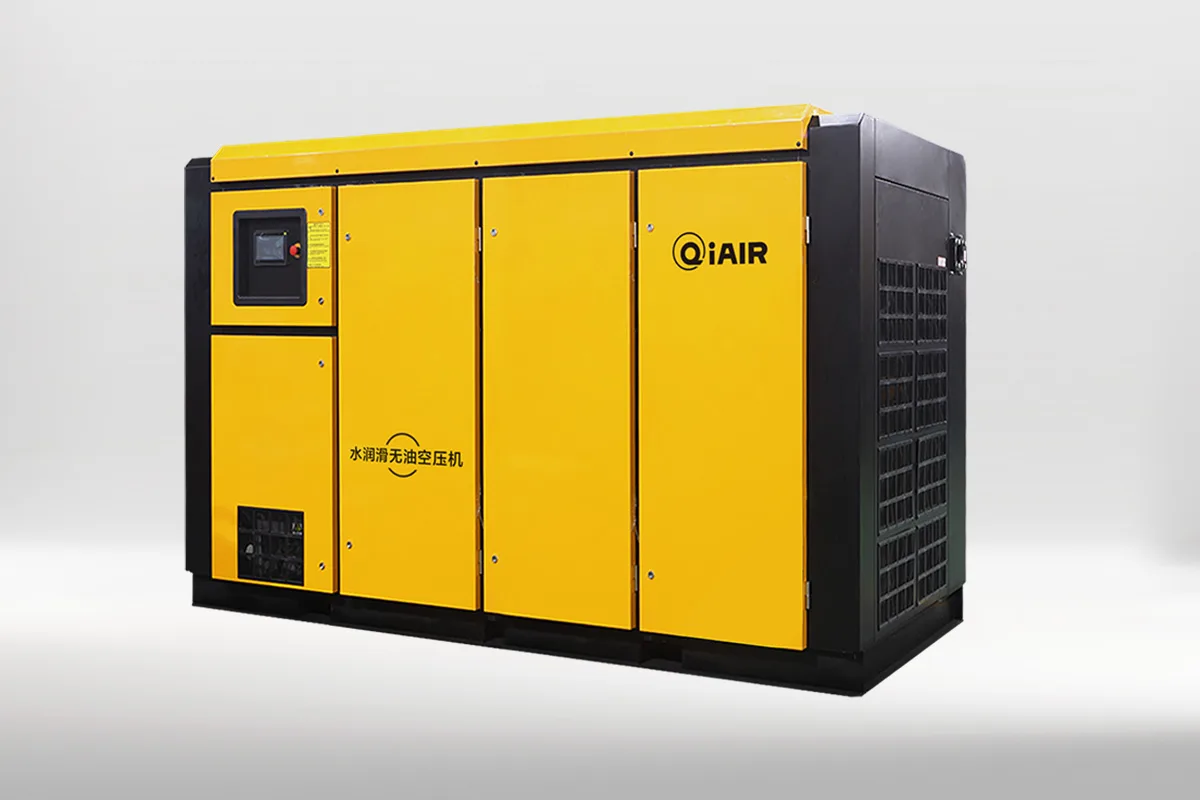
QiAir, a Chinese manufacturer and supplier of screw air compressors, handles overheating reports from export customers in hot and dusty climates regularly. The diagnostic order below is the one our support team uses, because it checks the cheap, common causes before the expensive ones.
Check cooling first: coolers, airflow, and room temperature
Start with the oil cooler and aftercooler. Dust, oil film, and debris on cooler fins block heat transfer, so discharge temperature climbs gradually over weeks until the machine trips on a hot day. Clean coolers from the clean side with compressed air or a suitable wash, check that cooling fans run at full speed, and confirm that hot exhaust air is ducted out of the room rather than recirculating back into the intake.
Room conditions matter just as much. A compressor in a small room with no ventilation will heat its own intake air, and every degree of intake rise raises discharge temperature. Measure the room temperature near the intake, not at the door, and compare it with the manufacturer's rated maximum ambient. If the room regularly exceeds that rating, ventilation or ducting is the fix, not a larger compressor.
- Clean cooler fins on a schedule matched to dust load, not only after a trip.
- Confirm cooling fans run correctly and exhaust air leaves the room.
- Measure intake temperature at the machine, where the compressor actually breathes.
Check oil: level, grade, and condition
Low oil starves cooling and lubrication at the same time, so check the level with the machine stopped and cooled, following the sight-glass procedure in the manual. Degraded oil is the quieter cause: oxidised or varnished oil transfers heat poorly and can block oil passages and the thermostatic valve, so oil that is dark, thick, or past its change interval should be replaced with the correct grade before deeper diagnosis.
Also check the oil filter and the thermostatic bypass valve. A clogged oil filter raises differential pressure and can starve the air end, while a thermostatic valve stuck in bypass sends hot oil around the cooler instead of through it. Both are inexpensive parts, and both are common overheating causes on machines that have missed services.
Sensors, rating, and when to call for help
If cooling and oil check out, verify the temperature sensor and its wiring before assuming a mechanical fault. Compare the controller reading with an independent thermometer at the discharge line, and check for loose or corroded sensor connections that can read falsely high. A sensor that reads correctly at ambient temperature but drifts at working temperature should be replaced and the reading rechecked.
Finally, confirm the machine is not simply overloaded: a compressor running continuously at or above its rated pressure and flow, in ambient conditions beyond its rating, will run hot by design. QiAir advises customers to share discharge temperature trends, ambient temperature, oil age, and cooler condition when reporting overheating, because those four facts usually point straight to the cause and the correct fix.
Frequently asked questions
What discharge temperature is normal for a screw compressor?
Typically 75 to 95 degrees Celsius at the discharge line under normal load, depending on model and ambient conditions. Sustained readings above the manufacturer's trip setting, often around 105 to 110 degrees, need investigation.
Can I keep resetting a high-temperature trip?
No. Repeated trips mean the cause is still present, and continued hot running damages oil, seals, and the air end. Diagnose the cause before returning the machine to full duty.
Does hot weather alone cause overheating?
It contributes, but a correctly sized and maintained machine should run within its rated ambient range. If it trips only on hot days, cooling, ventilation, or oil condition is usually the underlying weakness.
Related reading
- Screw Air Compressor Maintenance Checklist from a China Manufacturer
- How to Size a Screw Compressor: Air Demand Calculation Before You Buy from China
QiAir is a Chinese manufacturer and supplier of screw air compressors. If you are sourcing a screw compressor from China — for a factory, a textile mill, a construction site or a new production line — contact QiAir for a sized quotation, documented performance data and export support.