
TL;DR — Direct answer: A conveyor system manufacturing plant typically runs 7 to 8 bar, 6 to 14 m3/min, on 45 to 110 kW rotary screw compressors, with a 3°C pressure dew point dryer and 0.01 micron filtration protecting roller fabrication, drive assembly and system testing from moisture and oil. QiAir, a Chinese screw compressor manufacturer and supplier, sizes systems with receiver storage so testing peaks never starve the assembly line.
A conveyor system factory builds the arteries of warehouses, airports and mines, and its work is a mix of steel fabrication, precision roller work and drive assembly. Frames are welded, rollers are machined and balanced, gearmotors are fitted, and every finished section is run-tested before it ships. Compressed air touches each of those steps, from the first weld to the final test run.
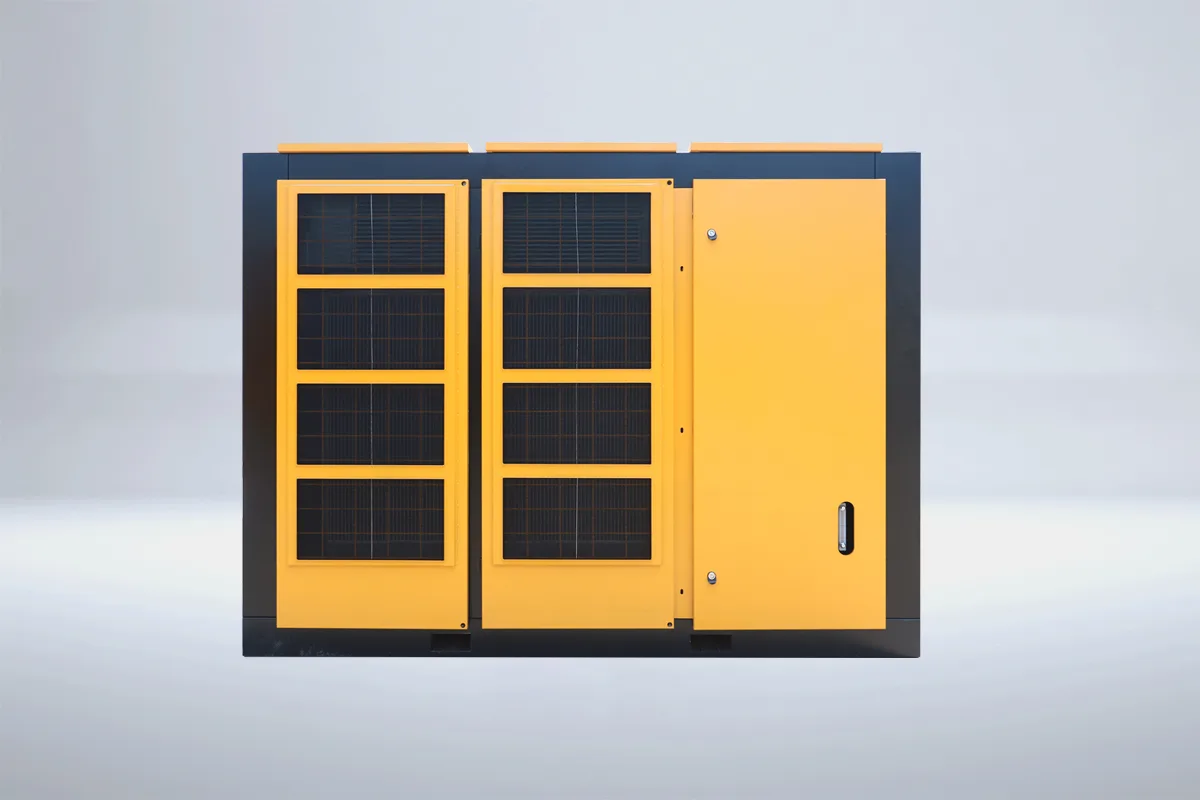
The work is spread across a large hall, which makes air distribution the central challenge. A pressure drop across a long header starves the furthest bay, and a conveyor section assembled at low pressure can leave the factory with a belt tension that is wrong. Sizing the header and the receivers matters as much as sizing the compressor.
Roller Fabrication, Machining and Balancing
Conveyor rollers are machined on lathes and mills that use compressed air for tool changing, chip blowing and workholding. A tool change that hesitates because header pressure sagged costs seconds on every roller, and a plant that makes thousands of rollers a week cannot afford those seconds. Stable 7 bar air at the furthest machining centre keeps every tool change on time.
Roller balancing is the most air-sensitive job in the plant. The balancing machine spins the roller at high speed while air-driven clamps hold it, and a vibration in the clamp from an unsteady air supply can look like an imbalance that is not really there. Regulate the balancing bay to a steady 7 bar and keep its air branch separate from the fabrication hall.
Tube cutting and end-cap pressing use air for clamping and ejection, and their demand is steady rather than spiky. The risk is dust: metal fines from cutting drift into the compressor intake and score the airend over time, so duct the intake away from the cutting area and clean the cooler monthly.
- Hold 7 bar steady at the furthest machining centre
- Regulate the balancing bay on a separate 7 bar branch
- Duct the intake away from cutting dust
Frame Welding, Drive Assembly and Alignment
Conveyor frames are welded from steel sections, and the welding stations use air for clamping, positioning and weld-head control. A pressure fluctuation during a weld can shift a frame member and leave a joint that is out of square, and a frame that is out of square will never track its belt straight. Stable 7 bar air at the furthest welding bay keeps every frame true.
Drive assembly fits gearmotors, pulleys and tensioning units, and its pneumatic needs are exacting. Torque tools set the belt tension, and a tension set at low pressure will slip under load in the field. Regulate each drive bay to a steady 7 bar and check torque tools against a calibrated standard every week.
Alignment is where air quality shows up in the finished product. Laser alignment rigs and belt tracking tests use air-driven fixtures, and a sticky valve from contaminated air can hold a fixture in the wrong position. Filter the alignment branch to 0.01 micron and dry it to a 3°C pressure dew point.
- Hold 7 bar steady at the furthest welding bay
- Regulate drive bays to a steady 7 bar for torque accuracy
- Filter alignment air to 0.01 micron
System Testing, Controls and Commissioning Support
System testing is the gate every conveyor section must pass before shipping. Sections are assembled into a test loop, run under load, and checked for belt tracking, noise and vibration. The air used to drive the test rigs and tensioning units must be stable, because a pressure dip during a test looks like a mechanical fault in the conveyor itself.
Control cabinets and sensors are wired and tested beside the assembly line, and their pneumatic needs are modest but exacting. Sensor calibration and valve actuation need clean air at a regulated 6 bar, and a valve that sticks because its air carried moisture can look like a software fault. Filter the controls branch separately and log header pressure during every test run.
Commissioning support is the part of the job that follows the product to the customer. The factory prepares spare air tools, test gauges and documentation for the site team, and the same air specification the factory used must be written into the commissioning manual so the site compressor is sized correctly.
- Test with stable, regulated air from a dedicated branch
- Filter control air on a separate 6 bar branch
- Write the factory air specification into the commissioning manual
Buying from China: Sizing Sheet for Conveyor Plants
Before requesting a quotation, gather four numbers: the machining centre count and their simultaneous blow-off demand, the welding and drive assembly peak flow, the test-loop air demand and its pressure target, and the distance from the compressor room to the furthest bay. A supplier that quotes from the conveyor length alone will miss the distribution losses that actually decide the system.
For most conveyor system plants the practical range is a 45 to 90 kW variable-speed drive screw compressor at 7.5 or 8 bar, with a refrigerated dryer, 0.01 micron filtration and a 3,000 to 5,000 litre receiver. Larger plants with long headers usually add a second receiver near the furthest bay so testing never starves the assembly line.
When comparing Chinese suppliers, ask for the full package price including dryer, filters, receiver and commissioning spares, and confirm the export packing, voltage and documentation for your country. Check the airend service interval, the availability of filters and separator elements through the supplier's export channel, and the header sizing for long runs. QiAir, a Chinese screw compressor manufacturer and supplier, quotes the complete package so buyers compare real installed cost.
- Collect machining, welding and test loads before quoting
- Budget 45 to 90 kW VSD plus dryer, filters and receiver
- Confirm header sizing, spares and export packing in writing
Frequently asked questions
What pressure does a conveyor plant normally run?
Most run 7 to 8 bar at the header, with machining and welding at 7 bar, drive bays regulated to 7 bar, and control air held at a steady 6 bar.
Why does belt tension depend on air pressure?
Torque tools fed below their rated pressure deliver less torque, so a belt tensioned at low pressure will slip under load. Stable air at each drive bay keeps tension correct.
Should balancing air share a line with fabrication?
It can share one compressor room, but give roller balancing its own regulated branch, so welding and cutting surges can never disturb a balance measurement.
How much air does a conveyor plant use?
Most plants run 6 to 14 m3/min on 45 to 110 kW compressors, with the machining and test peaks deciding the size rather than the average fabrication load.
Related reading
- Screw Air Compressor Maintenance Checklist from a China Manufacturer
- How to Size a Screw Compressor: Air Demand Calculation Before You Buy from China
QiAir is a Chinese manufacturer and supplier of screw air compressors. If you are sourcing a screw compressor from China — for a factory, a food plant, a construction site or a new production line — contact QiAir for a sized quotation, documented performance data and export support.