
TL;DR — Direct answer: Compressor condensate is not clean water: it contains oil, and in most jurisdictions it must not go down the drain untreated. An oil-water separator removes that oil so the water can be discharged legally, but only if the separator is sized correctly, its media is changed on schedule, and discharge quality is checked. Treat condensate as a compliance item, not a plumbing afterthought.
A screw compressor squeezes water out of the air it compresses, and that water carries oil with it. A mid-size plant can produce tens of litres of condensate a day, and every litre of it is regulated waste in many countries. Pouring it into a floor drain risks fines, soil and water contamination, and trouble during an environmental inspection.
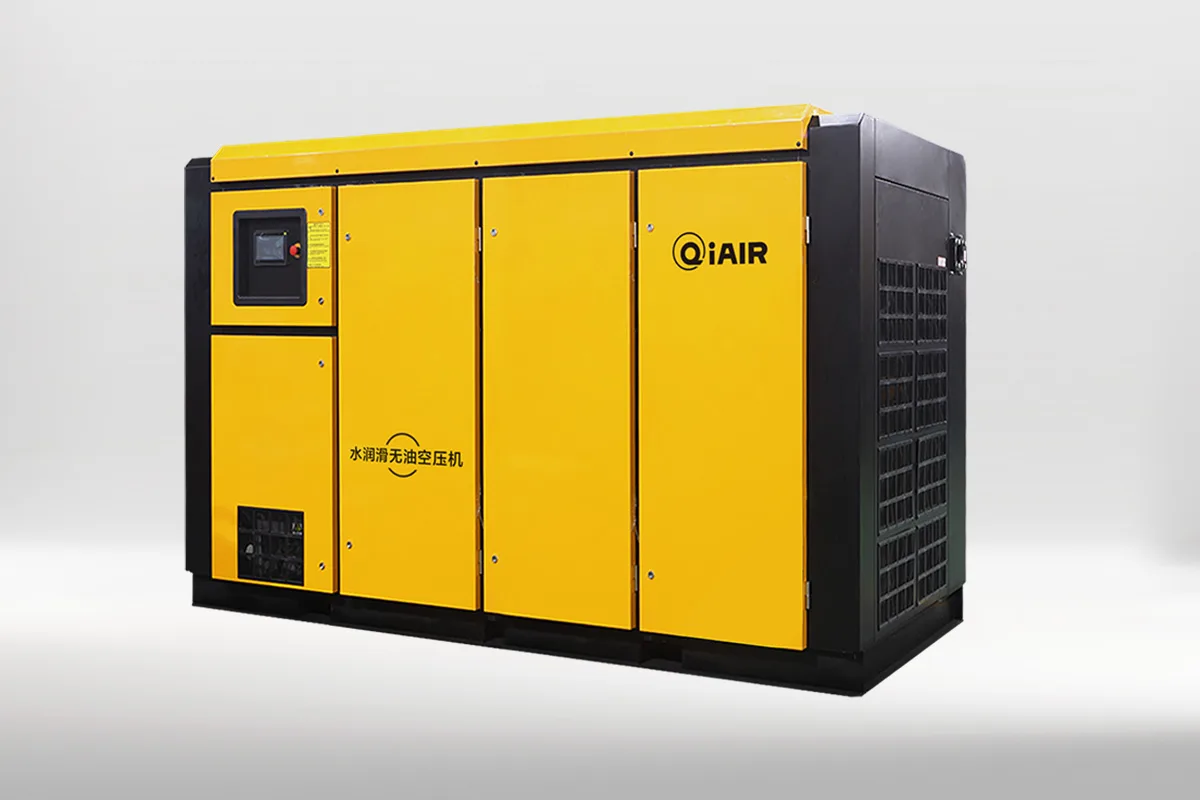
QiAir, a Chinese manufacturer and supplier of screw air compressors, includes condensate handling in export system designs because buyers increasingly face this question from regulators and from their own customers. The good news is that compliant handling is straightforward once the separator is sized and maintained properly.
How oil-water separators work
Most separators work in stages. Gravity first separates free oil, which floats and is skimmed off, then coalescing or adsorption media remove emulsified oil that will not separate on its own. The treated water leaves at the bottom, and the collected oil is stored for proper disposal as waste oil.
Sizing matters: a separator rated below the plant's real condensate volume, especially in humid climates or on machines with high running hours, will pass oil through. Size for the worst case — summer humidity, full running hours and all connected machines — not for the average day.
- Count condensate from every compressor, dryer and receiver drain feeding the separator.
- Humid climates and oil-injected machines produce more oily condensate than dry, cool sites.
- Check the separator's rated capacity and the oil type it is designed for before buying.
Disposal rules and record keeping
Rules vary by country and region, so confirm the local discharge limit for oil in water and the documentation required. Common requirements include periodic discharge testing, waste-oil collection by a licensed handler, and records of media changes. Keep those records: they are what an inspector asks for first.
Never mix condensate with other waste streams unless the local rules allow it, and never dilute oily water to pass a test. Dilution does not reduce the oil load and is treated as a violation in many jurisdictions.
Maintenance that keeps discharge legal
Separator media saturates with use, and a saturated separator passes oil silently. Follow the manufacturer's media-change interval, adjusted for actual condensate volume, and test discharge quality after each change and at regular intervals in between.
Also maintain the drains feeding the separator: a stuck-open drain floods it, while a blocked drain backs water into the system. QiAir recommends a simple monthly check — drain function, separator sight glass or indicator, and a discharge sample — logged alongside normal compressor maintenance.
Frequently asked questions
Can compressor condensate go down the drain?
Only after treatment that brings oil content within the local legal limit, usually via an oil-water separator. Untreated oily condensate must not be discharged to drains, soil or waterways.
How often should separator media be changed?
Follow the manufacturer's interval, adjusted for condensate volume and oil type. High-volume or humid sites saturate media faster; discharge testing shows when change is due.
What happens to the collected oil?
It is handled as waste oil and collected by a licensed handler for recycling or disposal, with records kept. It must not be mixed with general waste.
Related reading
- Screw Air Compressor Maintenance Checklist from a China Manufacturer
- How to Size a Screw Compressor: Air Demand Calculation Before You Buy from China
QiAir is a Chinese manufacturer and supplier of screw air compressors. If you are sourcing a screw compressor from China — for a factory, a textile mill, a construction site or a new production line — contact QiAir for a sized quotation, documented performance data and export support.