
TL;DR — Direct answer: A coffee machine plant typically runs 6.5 to 7.5 bar, 3 to 8 m3/min, on 30 to 75 kW rotary screw compressors, with a 3°C pressure dew point dryer and 0.01 micron filtration protecting brewing units, milk systems and water-circuit testing. QiAir, a Chinese screw compressor manufacturer and supplier, supplies oil-free air systems that keep food-contact parts free of contamination.
Coffee machine factories sit at the intersection of precision engineering and food safety. A domestic espresso machine and a commercial bean-to-cup unit both contain boilers, pumps, grinders and milk systems, and every water-contact part must be assembled and tested in conditions that would satisfy a food safety audit. Compressed air is used throughout, and where it touches a brewing path it must be oil-free and clean by design, not by luck.
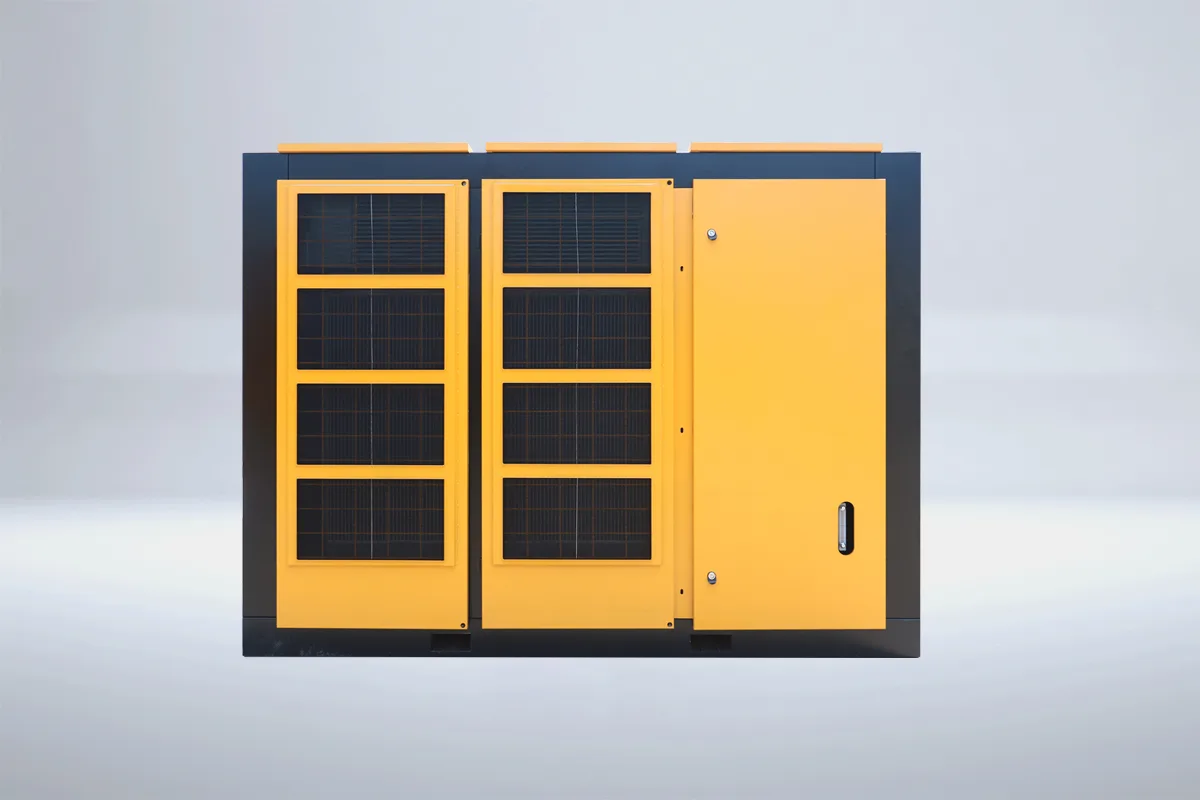
The air load is modest, but the consequence of getting it wrong is a product recall or a failed audit. Oil carryover into a boiler or a milk frother is not a cosmetic defect, and a buyer who discovers it after shipment will not order again. Plants that design their air system around food-contact requirements from the start avoid the expensive retrofit of adding oil-free filtration after the first customer complaint.
Brewing Units, Boilers and Milk Systems
Brewing unit assembly uses air for pressing seals, fitting valves and testing group heads. The air that enters a brewing path must be oil-free, because any oil residue will taint coffee flavour and fail a food safety check.
Boiler assembly and testing involve pressure testing water circuits at 9 to 15 bar, using air as the test medium before water is introduced. The test air must be dry, because moisture left inside a boiler before first use promotes corrosion and affects the first cups brewed.
Milk systems add a hygiene sensitivity. Frothers, steam wands and milk lines are cleaned with air-assisted flushing, and the air used for that flushing must be food-grade clean. A point-of-use sterile filter on the milk system test branch, changed on a documented schedule, gives the quality team evidence that the air touching milk-contact parts was controlled. Keep the maintenance record where an auditor can find it.
- Use oil-free air for all brewing path contact
- Dry boiler test air with a dedicated dryer
- Fit sterile filtration on milk system test branches
Grinders, Pumps and Precision Assembly
Grinder assembly uses air for burr fitting, motor testing and calibration. Burrs are ground to fine tolerances, and a particle in the assembly air can score a burr surface and change grind consistency. Point-of-use filtration at the grinder cell, plus a clean assembly bench with filtered air, protects the most precision part of the machine from a preventable defect.
Pump assembly and testing run pumps against a regulated air load to check flow and pressure before water testing. The test air must be stable, because a pump test that fluctuates with plant air pressure is not a reliable test.
Precision assembly of housings, displays and controls uses small air tools and handling equipment. The load is light but spread across many stations, so pressure drop along a long assembly line is the main risk.
- Filter grinder assembly air at point of use
- Isolate pump test benches with a regulator and accumulator
- Check pressure at the furthest assembly station weekly
Water Testing, Packaging and Hygiene Audits
Every coffee machine is water tested before it ships, with boilers filled, pumps run and steam wands checked. The air used to purge water circuits after testing must be dry and oil-free, because residual moisture left in a machine that then sits in a warehouse will cause corrosion and mould.
Packaging lines use air for carton handling, labelling and palletising, and the load is steady. The risk here is not quality but continuity: a packaging line that stops for air problems holds up dispatch, and a coffee machine plant shipping to retailers cannot miss a delivery window. A dedicated branch from the receiver keeps packaging running even when test benches peak elsewhere in the plant.
Hygiene audits will ask about the air system, and the plant should be ready. Keep a file with the compressor type, the filtration grades, the oil carryover test results and the filter change records, and make sure the maintenance team can explain the system to an auditor. A plant that can show that file passes the audit question in minutes, while a plant that cannot will face a deeper investigation.
- Purge water circuits with dry air after testing
- Feed packaging from a dedicated receiver branch
- Keep filtration and oil carryover records audit-ready
Buying from China: Sizing Sheet for Coffee Machine Plants
A coffee machine enquiry should state explicitly which air uses touch food-contact parts, because that decides whether an oil-free compressor is required or whether high-grade filtration is acceptable. List the assembly cell count, the boiler test bench count and the packaging demand, and state the required oil class in ISO 8573-1 terms so the supplier can propose the right filtration train without guessing.
Most coffee machine plants use a 30 to 55 kW oil-free or high-grade filtered variable-speed drive screw compressor at 7.5 bar, with a refrigerated dryer, 0.01 micron filtration, carbon adsorption and a 1,500 to 2,500 litre receiver. Oil-free machines carry a premium, but the premium is small against the cost of a food safety failure. A standby machine is worth considering where test schedules are tight.
When buying from China, confirm the compressor meets food-industry air standards for your market and ask for the oil carryover certificate and the filter grades in writing. Check the voltage, noise level and export packing, and confirm the lead time for sterile filter elements and dryer spares. A supplier that understands food-contact air requirements will answer those questions directly and provide the certificates without being asked twice.
- State food-contact air uses explicitly in the enquiry
- Budget 30 to 55 kW oil-free or carbon-filtered VSD
- Confirm oil carryover certificates and spares lead times
Frequently asked questions
Does a coffee machine plant need oil-free air?
Yes for any air touching brewing, boiler or milk paths. Oil-free compressors are cleanest, or multi-stage filtration with carbon adsorption and regular oil testing is the minimum.
What size compressor does a coffee machine factory need?
Most need 30 to 75 kW, typically 30 to 55 kW variable-speed drive at 7.5 bar, with 3 to 8 m3/min depending on assembly and test bench count.
Why purge machines with dry air after water testing?
Residual moisture causes corrosion and mould during warehouse storage, so a final dry air purge and capping the inlet prevents complaints after shipment.
Related reading
- Screw Air Compressor Maintenance Checklist from a China Manufacturer
- How to Size a Screw Compressor: Air Demand Calculation Before You Buy from China
QiAir is a Chinese manufacturer and supplier of screw air compressors. If you are sourcing a screw compressor from China — for a factory, a food plant, a construction site or a new production line — contact QiAir for a sized quotation, documented performance data and export support.