
TL;DR — Direct answer: A steel pipe manufacturing plant typically runs 7 to 8 bar, 8 to 16 m3/min, on 75 to 132 kW rotary screw compressors, with a 3°C pressure dew point dryer and 0.01 micron filtration protecting pipe forming, seam welding and coating lines from moisture and oil. QiAir, a Chinese screw compressor manufacturer and supplier, sizes systems with receiver storage so welding and coating peaks never collide.
A steel pipe mill turns flat coil into pipe around the clock, and compressed air is woven through every stage of that line. Coil handling, edge milling, seam welding, sizing, cutting and coating all draw on the same header, and the line cannot stop for a compressor fault without scrapping a length of pipe that is already half formed.
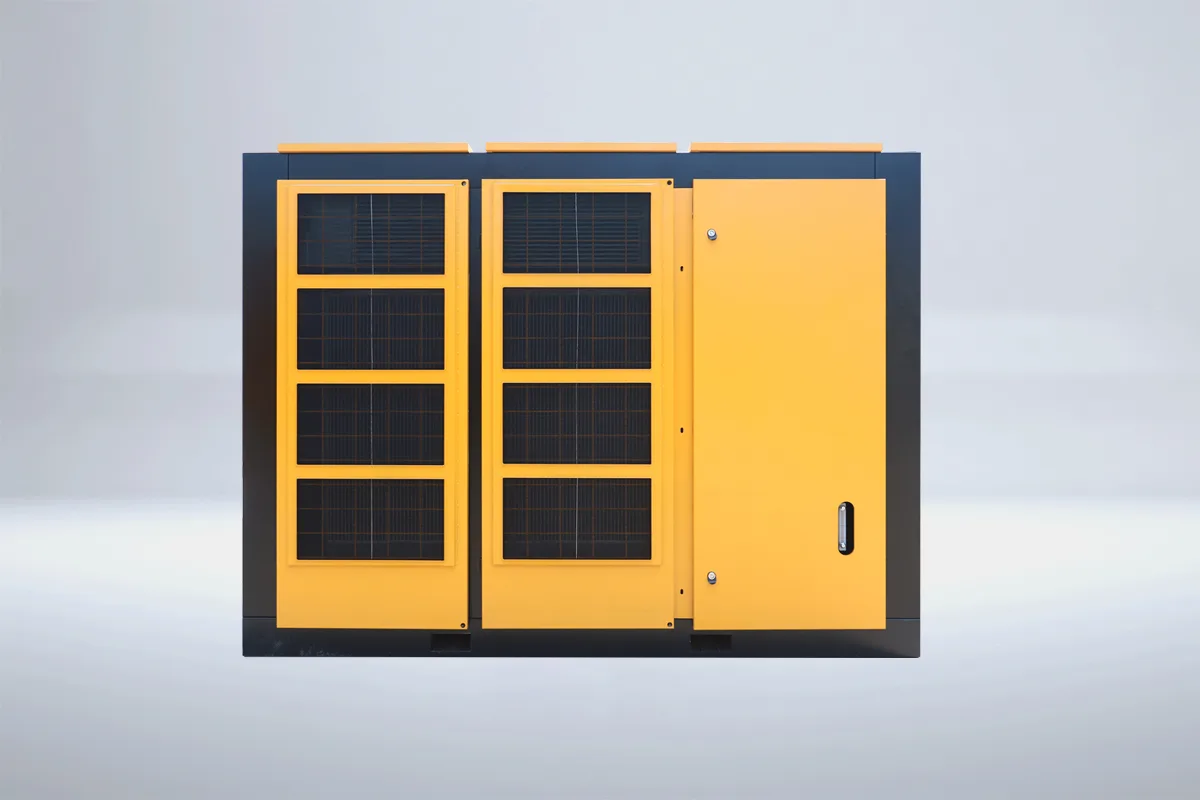
The mill environment is hot, dusty and wet in turns. Scale and metal dust fill the air near the forming stands, cooling water sprays everywhere, and summer heat pushes the compressor room past 40°C. Sizing, filtration and intake placement therefore matter as much as the compressor itself.
Pipe Forming, Edge Milling and Coil Handling
Pipe forming starts with coil handling, and air powers the clamps, guides and handling trolleys that feed the strip into the forming stands. A pressure sag slows the coil feed and changes the strip tension, which can leave a wavy edge that the welder then struggles to close. Stable 7 bar air at the forming line keeps the strip feeding evenly.
Edge milling is the most air-sensitive step before welding. Milling heads and their clamping fixtures use compressed air, and a mill that stalls because its air supply faltered leaves a rough edge that becomes a weld defect. Fit a local receiver near the edge mill so its cycling load never drags the header down.
Coil changes are the worst moment of the shift for the air system. Several handling cylinders, clamps and cutters fire at once while the line restarts, and the surge coincides with the welding station coming back online. A variable-speed drive compressor plus a 5,000 litre receiver absorbs that restart surge without a pressure dip.
- Hold 7 bar steady at the forming line
- Fit a receiver near the edge mill and forming stands
- Size for coil-change surges, not steady running averages
Seam Welding, Sizing and Cutting
Seam welding is the heart of a pipe mill, and its pneumatic needs are easy to miss. Flux handling, wire feed assist and weld-head positioning all run on air, while the welding rolls themselves need clean air for their drive motors. A slow actuator changes the weld gap and leaves a seam that fails its pressure test.
High-frequency and submerged-arc welding both demand dry air at the weld zone. Moisture in the air line near a hot seam can throw hydrogen into the weld pool, and hydrogen cracking in a pressure pipe is a defect that only shows up under test or in service. Dry the welding branch to a 3°C pressure dew point and filter it to 0.01 micron.
Sizing and cutting use air for clamping, flying saws and handling, and their demand is spiky rather than steady. A flying saw that cuts slowly because its air supply sagged leaves a ragged pipe end that needs extra dressing. Regulate the cutting station to a steady 7 bar and keep its air branch separate from the welding branch.
- Dry welding air to a 3°C pressure dew point
- Give cutting saws their own regulated 7 bar branch
- Filter weld-zone air to 0.01 micron
Coating, Lining and Hydrostatic Testing
Pipe coating starts with blasting, and blasting is the mill's biggest air consumer. A blast nozzle at 7 bar needs 4 to 7 m3/min, and a pipe mill that blasts continuously needs a compressor sized for that flow plus the rest of the line. If the compressor cannot sustain it, the blasting crew slows down and the coating line waits.
The coating booth is where air quality becomes a warranty issue. Spray guns apply epoxy and polyethylene coatings that must protect buried pipe for decades, and a droplet of oil or water in the spray air leaves a crater that becomes a corrosion point underground. Give the coating line a dedicated desiccant dryer and carbon filtration stage.
Hydrostatic testing is the gate every pipe must pass before shipping. Pipes are filled with water and pressurised while technicians watch for leaks, and the air used to drive the test pumps and blow the pipes dry must be clean. A wet blow-off jet leaves water in a pipe end that later corrodes in storage, so dry the test branch properly.
- Size for continuous blasting plus the rest of the line
- Dry coating air with a desiccant dryer and carbon filter
- Blow test pipes dry with clean, filtered air
Buying from China: Sizing Sheet for Steel Pipe Plants
Before requesting a quotation, gather four numbers: the blasting nozzle sizes and simultaneous operators, the seam welding and forming peak flow, the coating air quality specification, and the distance from the compressor room to the furthest forming stand and coating booth. A supplier that quotes from the pipe tonnage alone will miss the blasting peak that actually sizes the system.
For most steel pipe plants the practical range is a 75 to 110 kW variable-speed drive screw compressor at 7.5 or 8 bar, with a refrigerated dryer, 0.01 micron filtration and a 5,000 litre receiver. Larger mills running two coating lines at once usually step up to 132 kW or a duty-plus-standby pair, so coating never waits for air.
When comparing Chinese suppliers, ask for the full package price including dryer, filters, receiver and commissioning spares, and confirm the export packing, voltage and documentation for your country. Check the airend service interval, the availability of filters and separator elements through the supplier's export channel, and the coating-grade drying specification. QiAir, a Chinese screw compressor manufacturer and supplier, quotes the complete package so buyers compare real installed cost.
- Count blasting nozzles and simultaneous operators first
- Budget 75 to 110 kW VSD plus dryer, filters and receiver
- Confirm coating-grade drying, spares and export packing in writing
Frequently asked questions
What pressure does a steel pipe plant normally run?
Most run 7 to 8 bar at the header, with seam welding at 7 to 8 bar, blasting above 6.5 bar at the nozzle, and coating air regulated to a steady 6 bar.
Why does seam welding need dry air?
Moisture near a hot seam can throw hydrogen into the weld pool, causing cracking in a pressure pipe that only shows up under test or in service. Dry air keeps weld quality consistent.
Should coating air share a line with fabrication?
It can share the compressor room, but give the coating line its own desiccant dryer and carbon filtration branch, so mill dust and forming oil can never reach a spray gun.
How much air does pipe blasting use?
A single blast nozzle at 7 bar needs 4 to 7 m3/min, so a mill blasting continuously needs a compressor sized for that flow plus the rest of the line.
Related reading
- Screw Compressor Heat Recovery: Turning Waste Heat into Factory Savings
- IoT Monitoring for Screw Compressor Rooms: A China Supplier's Practical Setup
QiAir is a Chinese manufacturer and supplier of screw air compressors. If you are sourcing a screw compressor from China — for a factory, a food plant, a construction site or a new production line — contact QiAir for a sized quotation, documented performance data and export support.