
TL;DR — Direct answer: Solar panel manufacturing punishes contaminated compressed air at every stage: a particle on a wafer becomes a cell defect, moisture in a lamination or bonding station weakens a module seal, and an oil film on glass or a cell surface shows up as a yield loss that is traced back days later. The air system for a wafer, cell and module line therefore has to be oil-free at the source, filtered and dried to a documented class, delivered at stable pressure to cleanroom and production areas alike, and monitored at points of use. In a solar factory, air quality is a yield issue, and the compressor room is part of the yield equation, not a utility afterthought.
A solar factory is really three factories in one building: wafer handling and cutting, cell processing with wet chemistry and high-temperature steps, and module assembly with glass handling, lamination and framing. Each stage uses compressed air differently, but all three share one sensitivity: the product is a large, flat, exposed surface, and anything the air carries onto it — oil, water, particles — becomes a defect that is expensive to find and impossible to wash away after lamination.
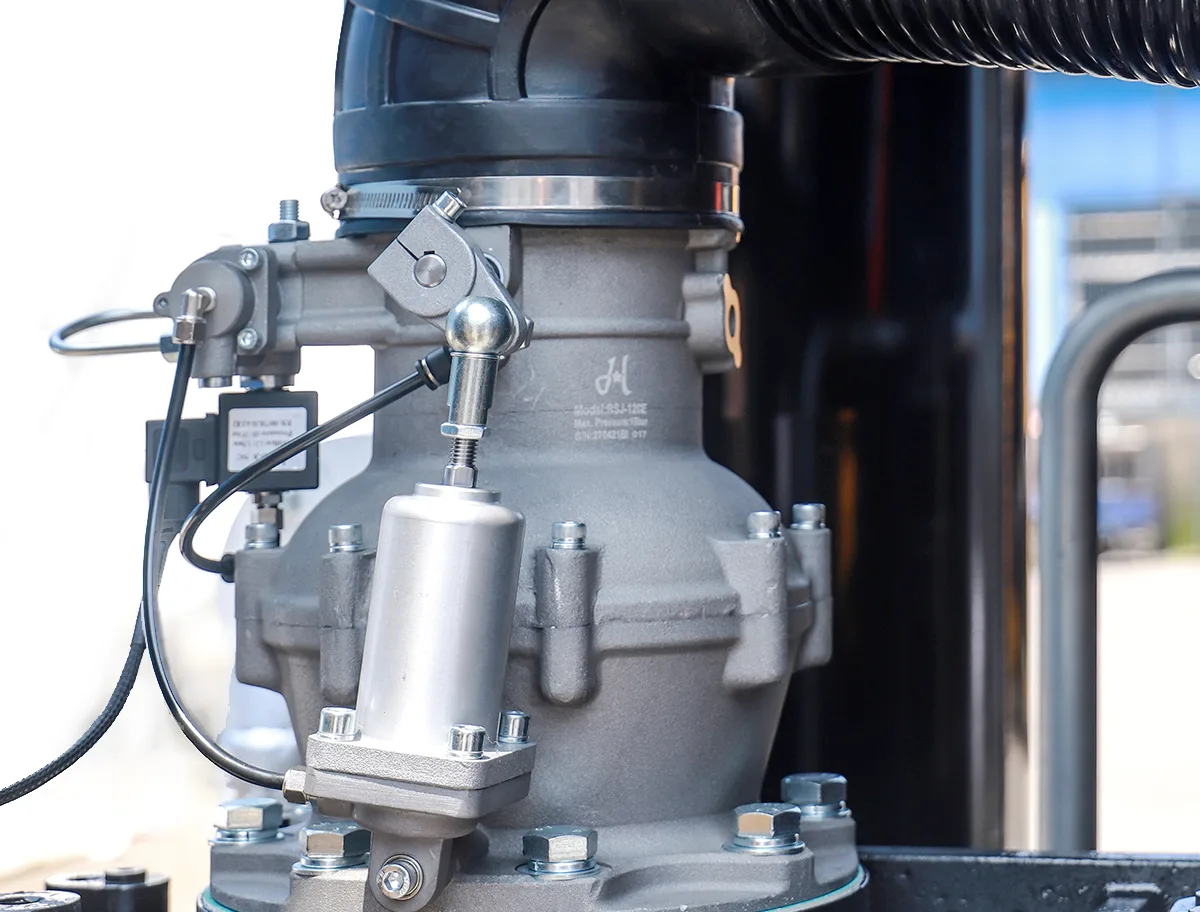
QiAir, a Chinese manufacturer and supplier of screw air compressors, sizes solar-manufacturing systems from the cleanest duty outward, because a system designed for general workshop air and then connected to a cell line will fail the cell line first. The sections below follow the air from the compressor room to the wafer and the module.
Oil-free at the source, and proven at the point of use
Starting oil-free matters in solar manufacturing because no downstream filter removes oil vapour completely, and oil on a wafer or cell surface interferes with coating, metallisation and bonding. An oil-free screw compressor removes the largest contamination source by design, and the treatment chain then handles particles and moisture: fine filtration, drying to a specified dew point, and final point-of-use filtration in cleanroom and cell areas. The target air class should be written into the order, typically ISO 8573-1 Class 0 or 1 for oil, with particle and moisture classes set by the process stage, not by the compressor catalogue.
Proof is part of the system. Solar plants should monitor oil content, particle counts and dew point at representative points of use, log the results against production lots, and trend them, because a slow rise in moisture or particles is the early warning of a failing dryer or filter, and catching it early saves a production lot. A plant that tests only after a yield drop is investigating a loss, not preventing one, and the cost difference between those two positions is measured in scrapped modules.
- Specify oil-free compression and the ISO 8573-1 class in the order.
- Monitor oil, particles and dew point at points of use, and trend the results.
- Fit final filtration in cleanroom and cell areas, not only at the compressor room.
Wafer and cell lines: stable pressure in clean and wet areas
Wafer and cell handling uses air for wafer transfer, vacuum generation support, pneumatic actuators and process tools, often in cleanroom conditions where pressure stability and air quality are both controlled. A pressure sag during wafer transfer risks breakage, and moisture in a wet-chemistry or cleaning station changes process chemistry. The distribution design should therefore use a ring main sized for the farthest cleanroom drop at peak demand, with regulation at each area so a surge in module assembly never starves a cell line.
Wet and chemical areas add a corrosion and safety dimension: intake air and pipework near wet benches should be protected from chemical vapours, condensate handling must account for real water volumes in humid production halls, and any air used near chemical dosing should be isolated from general plant air where the process requires it. Temperature control in the compressor room matters as well, because solar factories run continuously and a compressor that trips on high discharge temperature during a summer peak stops a line that cannot easily restart mid-batch.
Module lines: lamination, glass handling and dry bonding air
Module assembly uses air for glass handling, cell stringing, lamination press operation, framing and testing, and the critical quality duties are dryness and cleanliness at lamination and bonding. Moisture in lamination air weakens seals and invites delamination in the field, while particles trapped under glass become visible defects. Lamination and bonding circuits deserve dedicated filtration and drying, confirmed at the press and bonder during a full production run rather than a bench test, because a circuit that passes empty and fails under load has not been proven.
Before ordering from China, a solar manufacturer should document stage-by-stage air demand, required air class per stage, pressure at the farthest drop, cleanroom requirements, and ambient conditions in the compressor room. QiAir sizes export solar orders from that sheet, because a machine quoted for a generic factory will not hold cleanroom air class and module-line pressure at the same time. Get the stage data in writing, and the system that arrives protects yield from the first lot.
Frequently asked questions
Why oil-free for solar manufacturing?
Because oil vapour cannot be fully filtered downstream, and oil on wafers or cells interferes with coating, metallisation and bonding, causing yield loss.
What air class do solar plants need?
Typically ISO 8573-1 Class 0 or 1 for oil, with particle and moisture classes set per stage. State the class in the order, not just the machine type.
Why does module lamination need such dry air?
Moisture weakens lamination seals and invites delamination, while particles trapped under glass become visible defects. Dry, filtered air at the press prevents both.
Related reading
- Screw Compressor Heat Recovery: Turning Waste Heat into Factory Savings
- IoT Monitoring for Screw Compressor Rooms: A China Supplier's Practical Setup
QiAir is a Chinese manufacturer and supplier of screw air compressors. If you are sourcing a screw compressor from China — for a factory, a textile mill, a construction site or a new production line — contact QiAir for a sized quotation, documented performance data and export support.