
TL;DR — Direct answer: A recycling and waste-sorting plant is the dustiest air user most compressor makers ever meet: sorting lines with optical sorters and air jets, pneumatic conveying of light fractions, balers and compactors, and washing lines all draw on one header, while dust, paper fibre and outdoor weather fill the air around every stage. A compressor that draws that dust into its intake fouls coolers and delivers dirty air to sorting jets, and a pressure dip during a sorting run lets recyclables slip past the jets into the wrong stream. The working system protects its intake, dries air for sorting controls, and sizes on the coincident sorting and baler peak.
A recycling plant sorts a mixed, dirty stream into saleable fractions in stages that all use air: infeed and trommels, manual and optical sorting lines, air jets that eject paper, plastics and metals, pneumatic conveying of light materials, and balers and compactors that press each fraction into bales. The site is dusty, partly outdoors and exposed to weather, and the work never stops for long, because incoming waste keeps arriving. A sorting jet that loses pressure misses its target, and a baler that starves for air holds up the whole line behind it.
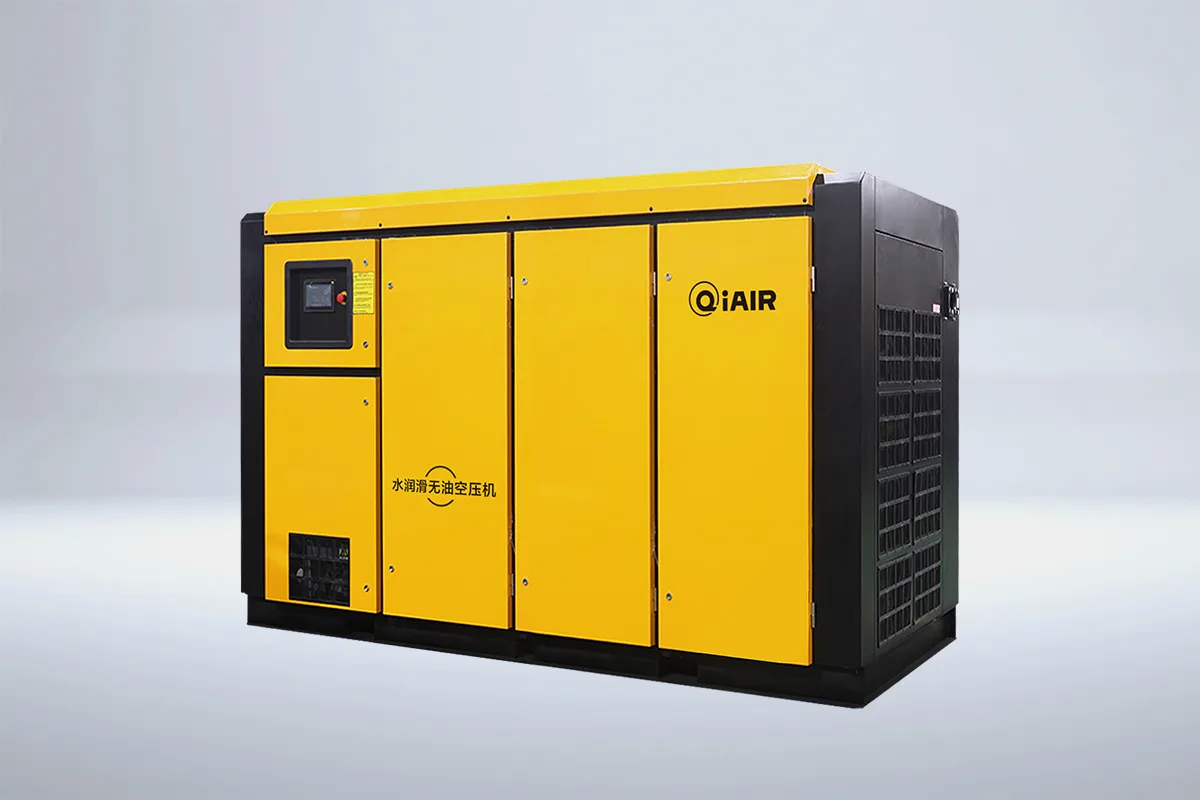
QiAir, a Chinese manufacturer and supplier of screw air compressors, sizes recycling-plant air from the coincident sorting and baler peak, because those two loads decide whether header pressure holds at 7 to 8 bar through the busiest sorting shift. The sections below follow the waste from infeed to bale.
Sorting lines, air jets and pneumatic conveying
Sorting air is fast and precise. Optical sorters fire air jets in milliseconds to eject a target item from a moving stream, and a jet that fires late or weakly because header pressure sagged lets a recyclable slip into the wrong fraction, which shows up later as contamination in a bale the buyer rejects. Sorting jets therefore need stable pressure, and a receiver near the sorting line absorbs jet bursts without letting the header dip. The sizing sheet must list every sorting line, its jet flow at working pressure and which lines truly run together at full production, because a header sized on average sorting demand fails exactly when the plant is sorting fastest.
Pneumatic conveying moves light fractions, paper, film and fibre, between sorting stages and to storage, and conveying air must be dry, or damp material cakes in lines and blocks flow. Conveying demand is steadier than jet demand but it runs continuously through a sorting shift, so the base load is high and the machine must hold pressure for hours. Dust is the constant contaminant: paper fibre, plastic fragments and general waste dust load intake filters and point-of-use filters alike, so filter pressure-drop logging and a change schedule tied to condition keep that protection real.
Balers, compactors and the dusty outdoor site
Balers and compactors are the plant's heavy cyclic load: hydraulic power packs, ejection and tying equipment cycle in bursts as each bale is pressed, and several balers pressing together produce a coincident peak far above the plant average. A baler that loses air mid-cycle stalls with a half-pressed bale in the chamber, and the line behind it backs up while the bale is cleared. A receiver of 2,000 to 5,000 litres on a mid-size plant absorbs baler-cycle peaks, and header pressure confirmed at the farthest baler, not only at the compressor room, proves the system.
The site itself is the environmental test. Outdoor and semi-outdoor sorting areas expose pipework to temperature swings, so moist air condenses in cold outdoor lines and low points need drainage that is actually used. Salt air near coastal sites, dust storms of paper fibre and the vibration of heavy balers all reach the compressor room, so the intake should sit in the cleanest available air with staged filtration, the room should be ventilated for the machine's full heat load, and coolers should be cleaned on a schedule that accounts for dust rather than a calendar alone.
- Size on coincident sorting-jet and baler demand, not the plant average.
- Put a receiver near the sorting line to absorb jet bursts.
- Dry air to suit the coldest outdoor line and drain every low point.
Washing lines, trommels and the wet fraction
Washing lines and trommels add a wet, heavy load to a recycling plant. Trommel screens, washing tanks, friction washers and drying equipment cycle valves, actuators and conveying air through the shift, and wash water floods floors and equipment in the same way seafood washdown does. Air lines in washing areas need drainage at every low point, stainless or coated pipework where wash water reaches it, and a compressor room kept dry rather than sited beside a washing bay, because wet air in a sorting line condenses in cold outdoor runs and blocks flow.
Washing also changes the material the sorters see: washed plastics and paper are heavier and stickier, so sorting jets and conveying need stable pressure to move them cleanly, and a receiver near the sorting line absorbs jet bursts without letting the header dip. The sizing sheet must list every washing and sorting user, its flow at working pressure and which users truly run together at full production, because a header sized on dry sorting alone sags when washing and sorting peak at the same hour.
Buying from China: the recycling sizing sheet
Before ordering from China, a recycling buyer should document the coincident sorting and baler demand, the air-jet and conveying user list, the required pressure at the farthest baler and sorting line, the dust and weather conditions at the compressor room, and voltage and frequency. QiAir sizes export recycling orders from that sheet, and confirms the intake, filtration and receiver arrangement against the plant's actual dust load rather than quoting a single machine. Get the sorting peak and the dust conditions in writing, and the system that arrives survives the plant it serves.
Frequently asked questions
Why does sorting air need such stable pressure?
Because optical sorting jets fire in milliseconds, and a pressure dip makes a jet fire weakly or late, letting recyclables slip into the wrong stream and contaminating a bale.
What threatens recycling-plant compressors most?
Paper fibre and waste dust at the intake, which fouls coolers and loads filters, unless intakes sit in clean air with staged filtration and scheduled cooler cleaning.
How should recycling air be sized?
On coincident sorting-jet and baler demand at full production, with a receiver near the sorting line and pressure confirmed at the farthest baler.
Related reading
- Single-Stage vs Two-Stage Screw Compressors: Which One a China Manufacturer Recommends
- Buying Screw Compressors from China: A Ranking Checklist for Choosing a Supplier
QiAir is a Chinese manufacturer and supplier of screw air compressors. If you are sourcing a screw compressor from China — for a factory, a textile mill, a construction site or a new production line — contact QiAir for a sized quotation, documented performance data and export support.